Thank you for visiting SNEWPapers!
Sign up free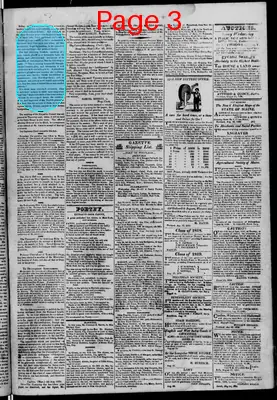
Editorial
August 22, 1820
The Portland Gazette
Portland, Cumberland County, Maine
What is this article about?
Critique of inconsistencies in British journals, particularly the Edinburgh Review, which portrays Scottish peasantry harshly in literary reviews but praises English peasantry's virtue when discussing emigration, warning against further immigration if the positive view is accurate.
Clipping
OCR Quality
95%
Excellent
Full Text
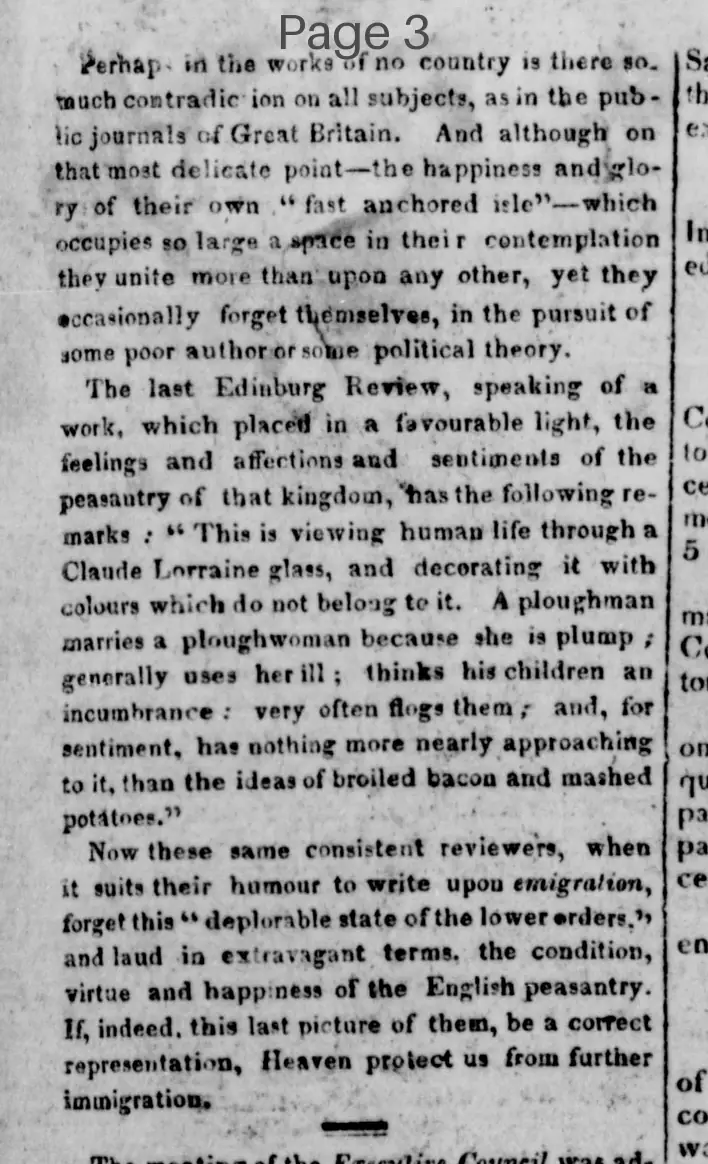
Perhaps, in the works of no country is there so much contradiction on all subjects, as in the public journals of Great Britain. And although on that most delicate point—the happiness and glory of their own "fast anchored isle"—which occupies so large a space in their contemplation they unite more than upon any other, yet they occasionally forget themselves, in the pursuit of some poor author or some political theory.
The last Edinburgh Review, speaking of a work, which placed in a favourable light, the feelings and affections and sentiments of the peasantry of that kingdom, has the following remarks: "This is viewing human life through a Claude Lorraine glass, and decorating it with colours which do not belong to it. A ploughman marries a ploughwoman because she is plump; generally uses her ill; thinks his children an incumbrance: very often flogs them; and, for sentiment, has nothing more nearly approaching to it, than the ideas of broiled bacon and mashed potatoes."
Now these same consistent reviewers, when it suits their humour to write upon emigration, forget this "deplorable state of the lower orders", and laud in extravagant terms, the condition, virtue and happiness of the English peasantry. If, indeed, this last picture of them, be a correct representation, heaven protect us from further immigration.
The last Edinburgh Review, speaking of a work, which placed in a favourable light, the feelings and affections and sentiments of the peasantry of that kingdom, has the following remarks: "This is viewing human life through a Claude Lorraine glass, and decorating it with colours which do not belong to it. A ploughman marries a ploughwoman because she is plump; generally uses her ill; thinks his children an incumbrance: very often flogs them; and, for sentiment, has nothing more nearly approaching to it, than the ideas of broiled bacon and mashed potatoes."
Now these same consistent reviewers, when it suits their humour to write upon emigration, forget this "deplorable state of the lower orders", and laud in extravagant terms, the condition, virtue and happiness of the English peasantry. If, indeed, this last picture of them, be a correct representation, heaven protect us from further immigration.
What sub-type of article is it?
Satire
Social Reform
Immigration
What keywords are associated?
Edinburgh Review
Peasantry
Emigration
British Journals
Social Conditions
Hypocrisy
What entities or persons were involved?
Edinburgh Review
British Public Journals
Peasantry
Editorial Details
Primary Topic
Inconsistency In British Journals' Portrayal Of Peasantry
Stance / Tone
Ironic Critique Of Hypocrisy
Key Figures
Edinburgh Review
British Public Journals
Peasantry
Key Arguments
British Journals Show Contradictions On Various Subjects
Edinburgh Review Harshly Depicts Scottish Peasantry In Literary Critique
Same Reviewers Praise English Peasantry's Virtue In Emigration Discussions
Warns Against Immigration If Positive Portrayal Is True