Thank you for visiting SNEWPapers!
Sign up free
Fowle's New Hampshire Gazette And General Advertiser
Portsmouth, Rockingham County, New Hampshire
What is this article about?
From Paris: M. de Bradier of Guadeloupe has introduced Quinquina Piton, a new bitter bark thinner and browner than Peru's Jesuits Bark since 1649. It acts as an emetic, better for intermittent fevers, prevents obstructions and disorders from overuse of the common bark. A Paris physician published a pamphlet on it two weeks ago.
Clipping
OCR Quality
Full Text
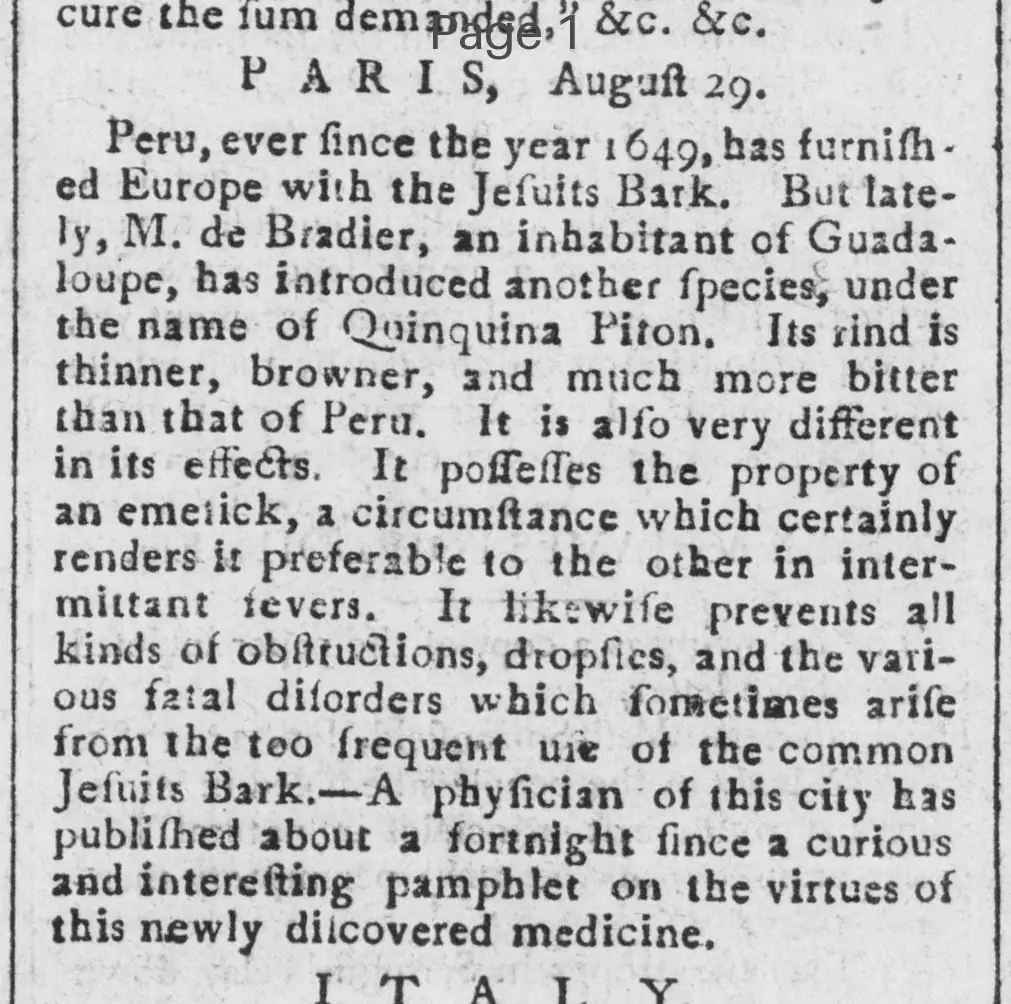
Peru, ever since the year 1649, has furnished Europe with the Jesuits Bark. But lately, M. de Bradier, an inhabitant of Guadeloupe, has introduced another species, under the name of Quinquina Piton. Its rind is thinner, browner, and much more bitter than that of Peru. It is also very different in its effects. It possesses the property of an emetic, a circumstance which certainly renders it preferable to the other in intermittent fevers. It likewise prevents all kinds of obstructions, dropsies, and the various fatal disorders which sometimes arise from the too frequent use of the common Jesuits Bark.--A physician of this city has published about a fortnight since a curious and interesting pamphlet on the virtues of this newly discovered medicine.
What sub-type of article is it?
What keywords are associated?
What entities or persons were involved?
Where did it happen?
Foreign News Details
Primary Location
Guadeloupe
Event Date
Lately
Key Persons
Outcome
introduction of quinquina piton as preferable for fevers and preventing disorders; pamphlet published.
Event Details
M. de Bradier from Guadeloupe introduced Quinquina Piton, a new species of bark thinner, browner, and more bitter than Peru's Jesuits Bark. It has emetic properties, making it better for intermittent fevers, and prevents obstructions, dropsies, and fatal disorders from overuse of the common bark. A Paris physician published a pamphlet on its virtues about a fortnight ago.