Thank you for visiting SNEWPapers!
Sign up free
Literary
January 17, 1878
The Wichita City Eagle
Wichita, Sedgwick County, Kansas
What is this article about?
An essay idealizing the 'sweet woman' who devotedly loves her husband, cherishes her children without regret, remains pure and loyal, serves as a confidante and friend, and radiates affection in society, contrasting with more ambitious or flirtatious women. From Boston Herald.
Clipping
OCR Quality
95%
Excellent
Full Text
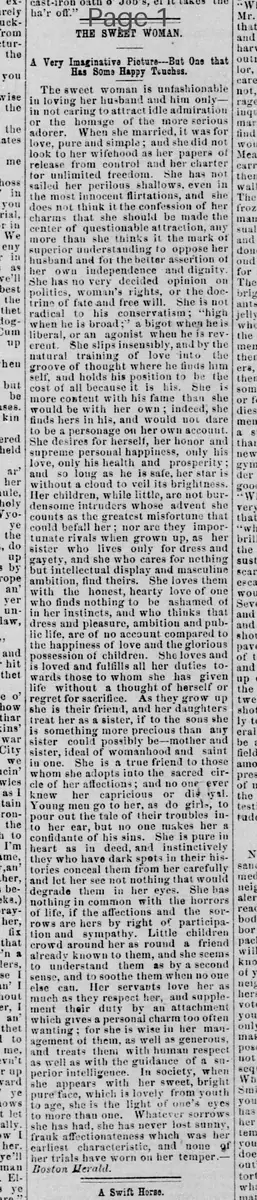
THE SWEET WOMAN.
A Very Imaginative Picture—But One that Has Some Happy Touches.
The sweet woman is unfashionable in loving her husband and him only—in not caring to attract idle admiration or the homage of the more serious adorer. When she married, it was for love, pure and simple; and she did not look to her wifehood as her passport of release from control and her charter for unlimited freedom. She has not sailed her perilous shallows, even in the most innocent flirtations, and she does not think it the confession of her charms that she should be made the center of questionable attraction, any more than she thinks it the mark of superior understanding to oppose her husband and for the better assertion of her own independence and dignity.
She has no very decided opinion on politics, woman's rights, or the doctrine of fate and free will. She is not radical to his conservatism; "high when he is broad;" a bigot when he is liberal, or an agonist when he is reverent. She slips insensibly, and by the natural training of love into the groove of thought where he finds himself, and holds his position to be the best of all because it is his. She is more content with his fame than she would be with her own; indeed, she finds hers in his, and would not dare to be a personage on her own account.
She desires for herself, her honor and supreme personal happiness, only his love, only his health and prosperity; and so long as he is safe, her star is without a cloud to veil its brightness.
Her children, while little, are not burdensome intruders whose advent she counts as the greatest misfortune that could befall her; nor are they unfortunate rivals when grown up, as her sister who lives only for dress and gayety, and she who cares for nothing but intellectual display and masculine ambition, find theirs. She loves them with the honest, hearty love of one who finds nothing to be ashamed of in her instincts, and who thinks that dress and pleasure, ambition and public life, are of no account compared to the happiness of love and the glorious possession of children. She loves and is loved and fulfills all her duties towards those to whom she has given life without a thought of herself or regret for sacrifice. As they grow up she is their friend, and her daughters treat her as a sister, if to the sons she is something more precious than any sister could possibly be—mother and sister, ideal of womanhood and saint in one.
She is a true friend to those whom she adopts into the sacred circle of her affections; and no one ever knew her capricious or disloyal. Young men go to her, as do girls, to pour out the tale of their troubles into her ear, but no one makes her a confidante of his sins. She is pure in heart as in deed, and instinctively they who have dark spots in their histories conceal them from her carefully and let her see nothing that would degrade them in her eyes. She has nothing in common with the horrors of life, if the affections and the sorrows are hers by right of participation and sympathy. Little children crowd around her as round a friend already known to them, and she seems to understand them as by a second sense, and to soothe them when no one else can. Her servants love her as much as they respect her, and supplement their duty by an attachment which gives a personal charm too often wanting; for she is wise in her management of them, as well as generous, and treats them with human respect as well as with the guidance of a superior intelligence.
In society, when she appears with her sweet, bright pure face, which is lovely from youth to age, she is the light of one's eyes to more than one. Whatever sorrows she has had, she has never lost sunny, frank affectionateness which was her earliest characteristic, and none of her trials have worn on her temper.
Boston Herald.
A Very Imaginative Picture—But One that Has Some Happy Touches.
The sweet woman is unfashionable in loving her husband and him only—in not caring to attract idle admiration or the homage of the more serious adorer. When she married, it was for love, pure and simple; and she did not look to her wifehood as her passport of release from control and her charter for unlimited freedom. She has not sailed her perilous shallows, even in the most innocent flirtations, and she does not think it the confession of her charms that she should be made the center of questionable attraction, any more than she thinks it the mark of superior understanding to oppose her husband and for the better assertion of her own independence and dignity.
She has no very decided opinion on politics, woman's rights, or the doctrine of fate and free will. She is not radical to his conservatism; "high when he is broad;" a bigot when he is liberal, or an agonist when he is reverent. She slips insensibly, and by the natural training of love into the groove of thought where he finds himself, and holds his position to be the best of all because it is his. She is more content with his fame than she would be with her own; indeed, she finds hers in his, and would not dare to be a personage on her own account.
She desires for herself, her honor and supreme personal happiness, only his love, only his health and prosperity; and so long as he is safe, her star is without a cloud to veil its brightness.
Her children, while little, are not burdensome intruders whose advent she counts as the greatest misfortune that could befall her; nor are they unfortunate rivals when grown up, as her sister who lives only for dress and gayety, and she who cares for nothing but intellectual display and masculine ambition, find theirs. She loves them with the honest, hearty love of one who finds nothing to be ashamed of in her instincts, and who thinks that dress and pleasure, ambition and public life, are of no account compared to the happiness of love and the glorious possession of children. She loves and is loved and fulfills all her duties towards those to whom she has given life without a thought of herself or regret for sacrifice. As they grow up she is their friend, and her daughters treat her as a sister, if to the sons she is something more precious than any sister could possibly be—mother and sister, ideal of womanhood and saint in one.
She is a true friend to those whom she adopts into the sacred circle of her affections; and no one ever knew her capricious or disloyal. Young men go to her, as do girls, to pour out the tale of their troubles into her ear, but no one makes her a confidante of his sins. She is pure in heart as in deed, and instinctively they who have dark spots in their histories conceal them from her carefully and let her see nothing that would degrade them in her eyes. She has nothing in common with the horrors of life, if the affections and the sorrows are hers by right of participation and sympathy. Little children crowd around her as round a friend already known to them, and she seems to understand them as by a second sense, and to soothe them when no one else can. Her servants love her as much as they respect her, and supplement their duty by an attachment which gives a personal charm too often wanting; for she is wise in her management of them, as well as generous, and treats them with human respect as well as with the guidance of a superior intelligence.
In society, when she appears with her sweet, bright pure face, which is lovely from youth to age, she is the light of one's eyes to more than one. Whatever sorrows she has had, she has never lost sunny, frank affectionateness which was her earliest characteristic, and none of her trials have worn on her temper.
Boston Herald.
What sub-type of article is it?
Essay
What themes does it cover?
Love Romance
Moral Virtue
Social Manners
What keywords are associated?
Sweet Woman
Ideal Wife
Family Love
Moral Purity
Social Grace
Literary Details
Title
The Sweet Woman.
Subject
A Very Imaginative Picture—But One That Has Some Happy Touches.
Form / Style
Prose Reflection On Ideal Womanhood
Key Lines
The Sweet Woman Is Unfashionable In Loving Her Husband And Him Only—In Not Caring To Attract Idle Admiration Or The Homage Of The More Serious Adorer.
She Desires For Herself, Her Honor And Supreme Personal Happiness, Only His Love, Only His Health And Prosperity; And So Long As He Is Safe, Her Star Is Without A Cloud To Veil Its Brightness.
She Loves Them With The Honest, Hearty Love Of One Who Finds Nothing To Be Ashamed Of In Her Instincts, And Who Thinks That Dress And Pleasure, Ambition And Public Life, Are Of No Account Compared To The Happiness Of Love And The Glorious Possession Of Children.
She Is Pure In Heart As In Deed, And Instinctively They Who Have Dark Spots In Their Histories Conceal Them From Her Carefully And Let Her See Nothing That Would Degrade Them In Her Eyes.
In Society, When She Appears With Her Sweet, Bright Pure Face, Which Is Lovely From Youth To Age, She Is The Light Of One's Eyes To More Than One.