Thank you for visiting SNEWPapers!
Sign up free
Editorial
December 23, 1842
Carroll Free Press
Carrollton, Carroll County, Ohio
What is this article about?
An editorial critiquing the treatment of poverty as a crime and advocating for social reforms to protect the poor from oppression, drawing lessons from Europe to prevent class hatred and revolt in America. Emphasizes just laws, education, and respect for labor to elevate all classes.
Clipping
OCR Quality
96%
Excellent
Full Text
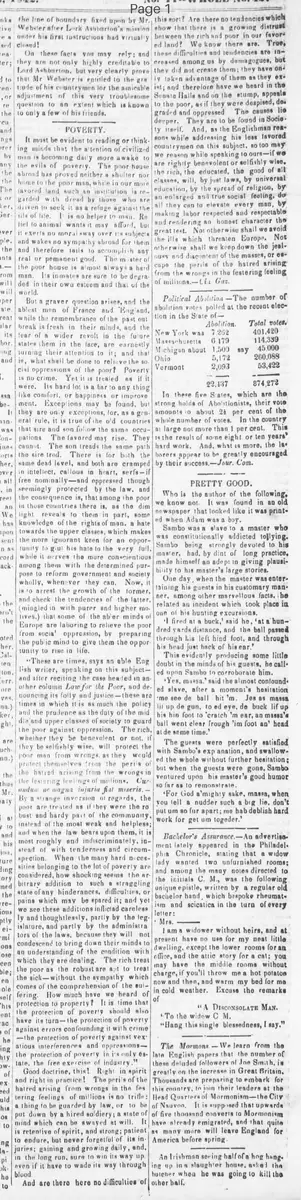
POVERTY.
It must be evident to reading or thinking minds that the attention of civilized man is becoming daily more awake to the evils of poverty. The poor house abroad has proved neither a shelter nor home to the poor man, while in our more favored land such an institution is regarded with dread by those who are driven to seek it as a refuge against the ills of life. It is no helper to man. Relief to animal wants it may afford, but it exerts no moral sway over its subjects and wakes no sympathy abroad for them and therefore fails to accomplish any real or permanent good. The master of the poor house is almost always a hard man. Its inmates are sure to be degraded in their own esteem and that of the world.
But a graver question arises, and the ablest men of France and England, while the remembrance of the past outbreak is fresh in their minds, and the fear of a wider revolt in the future stares them in the face, are earnestly turning their attention to it; and that is, what shall be done to relieve the social oppressions of the poor? Poverty is no crime. Yet it is treated as if it were. Its hard lot is a bar to any thing like comfort, or happiness or improvement. Exceptions may be found, but they are only exceptions, for, as a general rule, it is true of the old countries that sire and son follow the same occupations. The favored may rise. They cannot. The son treads the same path the sire trod. There is for both the same dead level, and both are cramped in intellect, callous in heart, serfs—if free nominally—and oppressed though seemingly protected by the law, and the consequence is, that among the poor in those countries there is, as the dim light reveals to them in part, some knowledge of the rights of man, a hate towards the upper classes, which makes the more ignorant keen for an opportunity to give his hate to the very full, while it nerves the more conscientious among them with the determined purpose to reform government and society wholly, whenever they can. Now, it is to arrest the growth of the former, and check the tendencies of the latter, (mingled in with purer and higher motives,) that some of the abler minds of Europe are laboring to relieve the poor from social oppression, by preparing the public mind to give them the opportunity to rise in life.
These are times, says an able English writer, speaking on this subject—and after reciting the case headed in another column "Law for the Poor," and denouncing its folly and injustice—these are times in which it is as much the policy and the prudence as the duty of the middle and upper classes of society to guard the poor against oppression. The rich, whether they be benevolent or not, if they be selfishly wise, will protect the poor man from wrongs, as they would protect themselves from the perils of the hatred arising from the wrongs in the festering feelings of millions. Curundum ne magna iniuria fiat miseris.—By a strange inversion of regards, the poor are treated as if they were the robust and hardy part of the community, instead of the most weak and helpless; and when the law bears upon them, it is most roughly and indiscriminately, instead of with tenderness and circumspection. When the many hard necessities belonging to the lot of poverty are considered, how shocking seems the arbitrary addition to such a struggling state of any hinderances, difficulties, or pains which may be spared it; and yet we see these additions inflicted carelessly and thoughtlessly, partly by the legislature, and partly by the administrators of the laws, because they will not condescend to bring down their minds to an understanding of the condition with which they are dealing. The rich treat the poor as the robust are apt to treat the sick—without the sympathy which comes of the comprehension of the suffering. How much have we heard of protection to property? It is time that the protection of poverty should also have its turn—the protection of poverty against errors confounding it with crime—the protection of poverty against vexatious interferences and oppressions—the protection of poverty in its only estate, the free exercise of industry."
Good doctrine, this! Right in spirit and right in practice! The perils of the hatred arising from wrongs in the festering feelings of millions is no trifle: a thing to be guarded by law, or to be put down by a hired soldiery; a state of mind which can be swayed at will. It is retentive of spirit, and strong; patient to endure, but never forgetful of its injuries; gaining and growing daily, and, in the long run, sure to win its way up, even if it have to wade its way through blood.
And are there here no difficulties of this sort? Are there no tendencies which show that there is a growing distrust between the rich and poor in our favored land? We know there are. True these difficulties and tendencies are increased among us by demagogues, but they did not create them; they have only taken advantage of them as they exist; and therefore have we heard in the Senate Halls and on the stump, appeals to the poor, as if they were despised, degraded and oppressed. The causes lie deeper. They are to be found in Society itself. And, as the Englishman reasons while addressing his less favored countrymen on this subject, so too may we reason while speaking to ours—if we are rightly benevolent or selfishly wise. The rich, the educated, the good of all classes, will, by just laws, by universal education, by the spread of religion, by an enlarged and true social feeling, do all they can to elevate every man, by making labor respected and respectable and rendering an honest character the great test. Not otherwise shall we avoid the ills which threaten Europe. Not otherwise shall we keep down the jealousy and discontent of the masses, or escape the perils of the hatred arising from the wrongs in the festering feeling of millions.—Lit. Gaz.
It must be evident to reading or thinking minds that the attention of civilized man is becoming daily more awake to the evils of poverty. The poor house abroad has proved neither a shelter nor home to the poor man, while in our more favored land such an institution is regarded with dread by those who are driven to seek it as a refuge against the ills of life. It is no helper to man. Relief to animal wants it may afford, but it exerts no moral sway over its subjects and wakes no sympathy abroad for them and therefore fails to accomplish any real or permanent good. The master of the poor house is almost always a hard man. Its inmates are sure to be degraded in their own esteem and that of the world.
But a graver question arises, and the ablest men of France and England, while the remembrance of the past outbreak is fresh in their minds, and the fear of a wider revolt in the future stares them in the face, are earnestly turning their attention to it; and that is, what shall be done to relieve the social oppressions of the poor? Poverty is no crime. Yet it is treated as if it were. Its hard lot is a bar to any thing like comfort, or happiness or improvement. Exceptions may be found, but they are only exceptions, for, as a general rule, it is true of the old countries that sire and son follow the same occupations. The favored may rise. They cannot. The son treads the same path the sire trod. There is for both the same dead level, and both are cramped in intellect, callous in heart, serfs—if free nominally—and oppressed though seemingly protected by the law, and the consequence is, that among the poor in those countries there is, as the dim light reveals to them in part, some knowledge of the rights of man, a hate towards the upper classes, which makes the more ignorant keen for an opportunity to give his hate to the very full, while it nerves the more conscientious among them with the determined purpose to reform government and society wholly, whenever they can. Now, it is to arrest the growth of the former, and check the tendencies of the latter, (mingled in with purer and higher motives,) that some of the abler minds of Europe are laboring to relieve the poor from social oppression, by preparing the public mind to give them the opportunity to rise in life.
These are times, says an able English writer, speaking on this subject—and after reciting the case headed in another column "Law for the Poor," and denouncing its folly and injustice—these are times in which it is as much the policy and the prudence as the duty of the middle and upper classes of society to guard the poor against oppression. The rich, whether they be benevolent or not, if they be selfishly wise, will protect the poor man from wrongs, as they would protect themselves from the perils of the hatred arising from the wrongs in the festering feelings of millions. Curundum ne magna iniuria fiat miseris.—By a strange inversion of regards, the poor are treated as if they were the robust and hardy part of the community, instead of the most weak and helpless; and when the law bears upon them, it is most roughly and indiscriminately, instead of with tenderness and circumspection. When the many hard necessities belonging to the lot of poverty are considered, how shocking seems the arbitrary addition to such a struggling state of any hinderances, difficulties, or pains which may be spared it; and yet we see these additions inflicted carelessly and thoughtlessly, partly by the legislature, and partly by the administrators of the laws, because they will not condescend to bring down their minds to an understanding of the condition with which they are dealing. The rich treat the poor as the robust are apt to treat the sick—without the sympathy which comes of the comprehension of the suffering. How much have we heard of protection to property? It is time that the protection of poverty should also have its turn—the protection of poverty against errors confounding it with crime—the protection of poverty against vexatious interferences and oppressions—the protection of poverty in its only estate, the free exercise of industry."
Good doctrine, this! Right in spirit and right in practice! The perils of the hatred arising from wrongs in the festering feelings of millions is no trifle: a thing to be guarded by law, or to be put down by a hired soldiery; a state of mind which can be swayed at will. It is retentive of spirit, and strong; patient to endure, but never forgetful of its injuries; gaining and growing daily, and, in the long run, sure to win its way up, even if it have to wade its way through blood.
And are there here no difficulties of this sort? Are there no tendencies which show that there is a growing distrust between the rich and poor in our favored land? We know there are. True these difficulties and tendencies are increased among us by demagogues, but they did not create them; they have only taken advantage of them as they exist; and therefore have we heard in the Senate Halls and on the stump, appeals to the poor, as if they were despised, degraded and oppressed. The causes lie deeper. They are to be found in Society itself. And, as the Englishman reasons while addressing his less favored countrymen on this subject, so too may we reason while speaking to ours—if we are rightly benevolent or selfishly wise. The rich, the educated, the good of all classes, will, by just laws, by universal education, by the spread of religion, by an enlarged and true social feeling, do all they can to elevate every man, by making labor respected and respectable and rendering an honest character the great test. Not otherwise shall we avoid the ills which threaten Europe. Not otherwise shall we keep down the jealousy and discontent of the masses, or escape the perils of the hatred arising from the wrongs in the festering feeling of millions.—Lit. Gaz.
What sub-type of article is it?
Social Reform
Moral Or Religious
What keywords are associated?
Poverty
Social Oppression
Class Hatred
Poor Protection
Social Reform
Labor Respect
Universal Education
What entities or persons were involved?
The Poor
The Rich
Abler Minds Of Europe
Able English Writer
Editorial Details
Primary Topic
Relief Of Social Oppressions Of The Poor
Stance / Tone
Advocacy For Protecting The Poor To Prevent Class Hatred And Revolt
Key Figures
The Poor
The Rich
Abler Minds Of Europe
Able English Writer
Key Arguments
Poverty Is No Crime But Treated As Such
Poor Houses Degrade Inmates Without Moral Benefit
Social Oppression Leads To Hatred And Potential Revolt Among The Poor
Upper Classes Should Protect The Poor Out Of Duty And Self Interest
Laws And Administration Often Oppress The Poor Without Sympathy
America Faces Similar Growing Distrust Between Rich And Poor
Reforms Needed: Just Laws, Universal Education, Respect For Labor