Thank you for visiting SNEWPapers!
Sign up free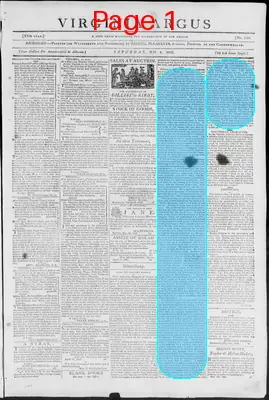
Literary
May 9, 1807
Virginia Argus
Richmond, Virginia
What is this article about?
An anonymous article praises French writer Marmontel's moral and delightful works, including his autobiography. It excerpts a chapter where Marmontel, on a coach journey, rebukes a vain young marquis for his boasting about nobility and wealth, using wit to teach humility and modesty.
Clipping
OCR Quality
98%
Excellent
Full Text
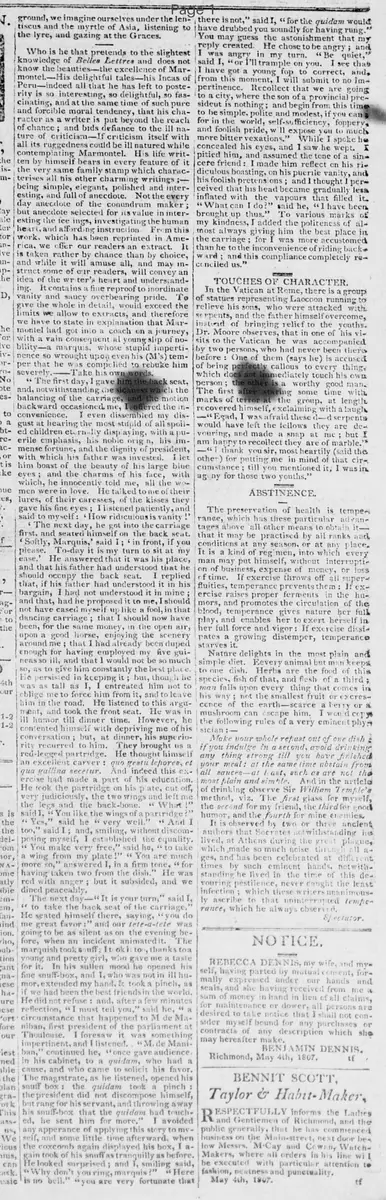
Who is he that pretends to the slightest knowledge of Belles Lettres and does not know the beauties—the excellence of Marmontel.—His delightful tales—his Incas of Peru—indeed all that he has left to posterity is so interesting, so delightful, so fascinating, and at the same time of such pure and forcible moral tendency, that his character as a writer is put beyond the reach of chance: and bids defiance to the ill-nature of criticism—If criticism itself with all its ruggedness could be ill natured while contemplating Marmontel. His life written by himself bears in every feature of it the very same family stamp which characterizes all his other charming writings;—being simple, elegant, polished and interesting, and full of anecdote. Not the every day anecdote of the conundrum maker; but anecdote selected for its value in interesting the feelings, investigating the human heart, and affording instruction. From this work, which has been reprinted in America, we offer our readers an extract. It is taken rather by chance than by choice, and while it will amuse all, and may instruct some of our readers, will convey an idea of the writer's heart and understanding. It contains a fine reproof to inordinate vanity and saucy overbearing pride. To give the whole in detail, would exceed the limits we allow to extracts, and therefore we have to state in explanation that Marmontel had got into a coach on a journey, with a vain conceited young slip of nobility—a marquis, whose stupid impertinence so wrought upon even his (M's) temper that he was compelled to rebuke him severely.—Take his own words.
"The first day, I gave him the back seat, and, notwithstanding the sickness which the balancing of the carriage, and the motion backward occasioned me, I suffered the inconvenience. I even dissembled my disgust at hearing the most stupid of all spoiled children eternally displaying, with a puerile emphasis, his noble origin, his immense fortune, and the dignity of president, with which his father was invested. I let him boast of the beauty of his large blue eyes; and the charms of his face, with which, he innocently told me, all the women were in love. He talked to me of their lures, of their caresses, of the kisses they gave his fine eyes; I listened patiently, and said to myself: How ridiculous is vanity!
The next day, he got into the carriage first, and seated himself on the back seat. 'Softly, Marquis,' said I; 'in front, if you please. To-day it is my turn to sit at my ease.' He answered that it was his place, and that his father had understood that he should occupy the back seat. I replied that, if his father had understood it in his bargain, I had not understood it in mine; and that, had he proposed it to me, I should not have encased myself up like a fool, in that dancing carriage; that I should now have been, for the same money, in the open air, upon a good horse, enjoying the scenery around me; that I had already been duped enough for having employed my five guineas so ill, and that I would not be so much so, as to give him constantly the best place. He persisted in keeping it; but, though he was as tall as I, I entreated him not to oblige me to force him from it, and to leave him in the road. He listened to this argument, and took the front seat. He was in ill humor till dinner time. However, he contented himself with depriving me of his conversation; but, at dinner, his superiority recurred to him. They brought us a red-legged partridge. He thought himself an excellent carver: quo gestu lefores, et qua gallina secetur. And indeed this exercise had made a part of his education. He took the partridge on his plate, cut off, very judiciously, the two wings and left me the legs and the back-bone. "What!" said I, "You like the wings of a partridge?" "Yes" said he "very well." "And I too," said I; and, smiling, without discomposing myself, I established the equality. "You make very free," said he, "to take a wing from my plate!" "You are much more so," answered I, in a firm tone, "for having taken two from the dish." He was red with anger; but it subsided, and we dined peaceably.
The next day—"It is your turn," said I, "to take the back seat of the carriage." He seated himself there, saying, "you do me great favor:" and our tete-a-tete was going to be as silent as on the evening before, when an incident animated it. The marquis took snuff; I took to it, thanks to a young and pretty girl, who gave me a taste for it. In his sullen mood he opened his fine snuff-box, and I, who was not in ill humor, extended my hand, & took a pinch, as if we had been the best friends in the world. He did not refuse: and, after a few minutes reflection, "I must tell you," said he, "a circumstance that happened to M. de Maniban, first president of the parliament at Toulouse. I foresaw it was something impertinent, and I listened. . "M. de Maniban," continued he, "once gave audience in his cabinet, to a guildam, who had a cause, and who came to solicit his favor. The magistrate, as he listened, opened his snuff box: the guildam took a pinch: the president did not discompose himself, but rang for his servant, and throwing away his snuff-box that the guildam had touched, he sent him for more." I avoided any appearance of applying this story to myself, and some little time afterward, when the coxcomb again displayed his box, I again took of his snuff as tranquilly as before. He looked surprised; and I, smiling said, "Why don't you ring, marquis?" "Here is no bell." "You are very fortunate that there is not," said I, "for the guildam would have drubbed you soundly for having rung. You may guess the astonishment that my reply created. He chose to be angry; and I was angry in my turn. "Be quiet," said I, "or I'll trample on you. I see that I have got a young fop to correct, and, from this moment, I will submit to no impertinence. Recollect that we are going to a city, where the son of a provincial president is nothing: and begin from this time to be simple, polite and modest, if you can; for in the world, self-sufficiency, foppery, and foolish pride, will expose you to much more bitter vexations." While I spoke he concealed his eyes, and I saw he wept. I pitied him, and assumed the tone of a sincere friend: I made him reflect on his ridiculous boasting, on his puerile vanity, and his foolish pretensions: and I thought I perceived that his head became gradually less inflated with the vapours that filled it. "What can I do?" said he, "I have been brought up thus." To various marks of my kindness, I added the politeness of almost always giving him the best place in the carriage: for I was more accustomed than he to the inconvenience of riding backward; and this compliance completely reconciled us."
"The first day, I gave him the back seat, and, notwithstanding the sickness which the balancing of the carriage, and the motion backward occasioned me, I suffered the inconvenience. I even dissembled my disgust at hearing the most stupid of all spoiled children eternally displaying, with a puerile emphasis, his noble origin, his immense fortune, and the dignity of president, with which his father was invested. I let him boast of the beauty of his large blue eyes; and the charms of his face, with which, he innocently told me, all the women were in love. He talked to me of their lures, of their caresses, of the kisses they gave his fine eyes; I listened patiently, and said to myself: How ridiculous is vanity!
The next day, he got into the carriage first, and seated himself on the back seat. 'Softly, Marquis,' said I; 'in front, if you please. To-day it is my turn to sit at my ease.' He answered that it was his place, and that his father had understood that he should occupy the back seat. I replied that, if his father had understood it in his bargain, I had not understood it in mine; and that, had he proposed it to me, I should not have encased myself up like a fool, in that dancing carriage; that I should now have been, for the same money, in the open air, upon a good horse, enjoying the scenery around me; that I had already been duped enough for having employed my five guineas so ill, and that I would not be so much so, as to give him constantly the best place. He persisted in keeping it; but, though he was as tall as I, I entreated him not to oblige me to force him from it, and to leave him in the road. He listened to this argument, and took the front seat. He was in ill humor till dinner time. However, he contented himself with depriving me of his conversation; but, at dinner, his superiority recurred to him. They brought us a red-legged partridge. He thought himself an excellent carver: quo gestu lefores, et qua gallina secetur. And indeed this exercise had made a part of his education. He took the partridge on his plate, cut off, very judiciously, the two wings and left me the legs and the back-bone. "What!" said I, "You like the wings of a partridge?" "Yes" said he "very well." "And I too," said I; and, smiling, without discomposing myself, I established the equality. "You make very free," said he, "to take a wing from my plate!" "You are much more so," answered I, in a firm tone, "for having taken two from the dish." He was red with anger; but it subsided, and we dined peaceably.
The next day—"It is your turn," said I, "to take the back seat of the carriage." He seated himself there, saying, "you do me great favor:" and our tete-a-tete was going to be as silent as on the evening before, when an incident animated it. The marquis took snuff; I took to it, thanks to a young and pretty girl, who gave me a taste for it. In his sullen mood he opened his fine snuff-box, and I, who was not in ill humor, extended my hand, & took a pinch, as if we had been the best friends in the world. He did not refuse: and, after a few minutes reflection, "I must tell you," said he, "a circumstance that happened to M. de Maniban, first president of the parliament at Toulouse. I foresaw it was something impertinent, and I listened. . "M. de Maniban," continued he, "once gave audience in his cabinet, to a guildam, who had a cause, and who came to solicit his favor. The magistrate, as he listened, opened his snuff box: the guildam took a pinch: the president did not discompose himself, but rang for his servant, and throwing away his snuff-box that the guildam had touched, he sent him for more." I avoided any appearance of applying this story to myself, and some little time afterward, when the coxcomb again displayed his box, I again took of his snuff as tranquilly as before. He looked surprised; and I, smiling said, "Why don't you ring, marquis?" "Here is no bell." "You are very fortunate that there is not," said I, "for the guildam would have drubbed you soundly for having rung. You may guess the astonishment that my reply created. He chose to be angry; and I was angry in my turn. "Be quiet," said I, "or I'll trample on you. I see that I have got a young fop to correct, and, from this moment, I will submit to no impertinence. Recollect that we are going to a city, where the son of a provincial president is nothing: and begin from this time to be simple, polite and modest, if you can; for in the world, self-sufficiency, foppery, and foolish pride, will expose you to much more bitter vexations." While I spoke he concealed his eyes, and I saw he wept. I pitied him, and assumed the tone of a sincere friend: I made him reflect on his ridiculous boasting, on his puerile vanity, and his foolish pretensions: and I thought I perceived that his head became gradually less inflated with the vapours that filled it. "What can I do?" said he, "I have been brought up thus." To various marks of my kindness, I added the politeness of almost always giving him the best place in the carriage: for I was more accustomed than he to the inconvenience of riding backward; and this compliance completely reconciled us."
What sub-type of article is it?
Essay
Prose Fiction
Dialogue
What themes does it cover?
Moral Virtue
Social Manners
What keywords are associated?
Marmontel
Vanity
Marquis
Moral Instruction
Autobiography
Snuff Box
Coach Journey
Nobility
Humility
What entities or persons were involved?
Marmontel
Literary Details
Author
Marmontel
Subject
Reproof To Inordinate Vanity And Saucy Overbearing Pride
Form / Style
Autobiographical Anecdote With Dialogue
Key Lines
How Ridiculous Is Vanity!
"You Are Much More So," Answered I, In A Firm Tone, "For Having Taken Two From The Dish."
"Why Don't You Ring, Marquis?"
"Be Quiet," Said I, "Or I'll Trample On You. I See That I Have Got A Young Fop To Correct"
"What Can I Do?" Said He, "I Have Been Brought Up Thus."