Thank you for visiting SNEWPapers!
Sign up free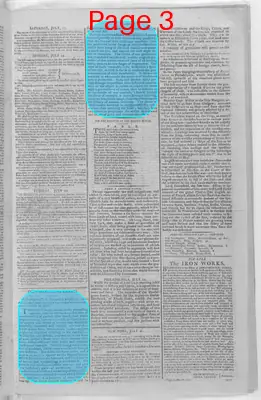
Literary
July 21, 1790
Gazette Of The United States
New York, New York County, New York
What is this article about?
The essay reflects on how the virtues of great men are better appreciated and serve as models after their death, when flaws are overlooked. It praises the Roman practice of displaying ancestral images to inspire heroism and perpetuate national character across generations.
Clipping
OCR Quality
95%
Excellent
Full Text
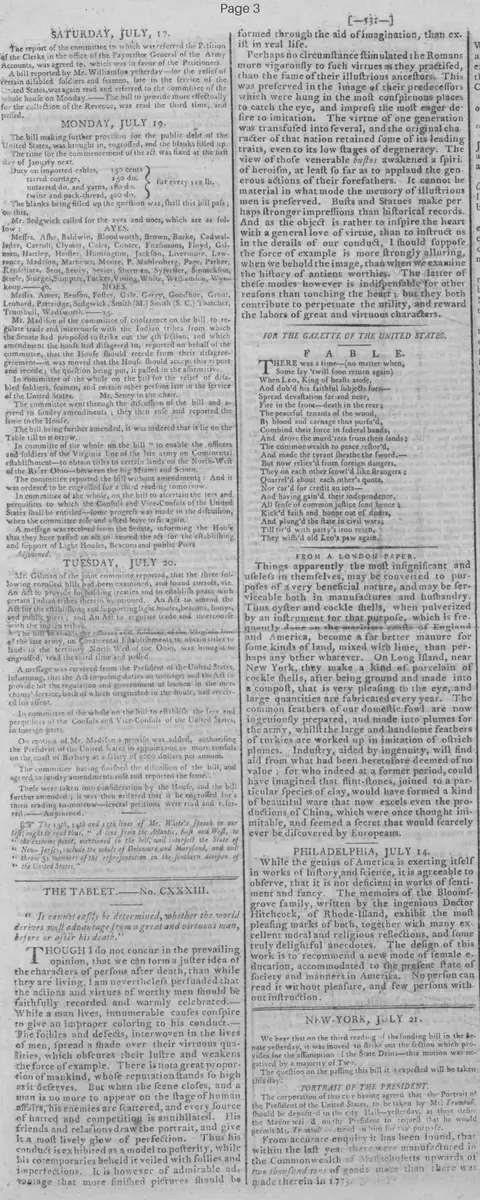
THE TABLET.
No. CXXXIII.
"It cannot easily be determined, whether the world derives most advantage from a great and virtuous man, before or after his death."
THOUGH I do not concur in the prevailing opinion, that we can form a juster idea of the characters of persons after death, than while they are living, I am nevertheless persuaded that the actions and virtues of worthy men should be faithfully recorded and warmly celebrated.—
While a man lives, innumerable causes conspire to give an improper coloring to his conduct.—The foibles and defects, interwoven in the lives of men, spread a shade over their virtuous qualities, which obscures their lustre and weakens the force of example. There is no great proportion of mankind, whose reputation stands so high as it deserves. But when the scene closes, and a man is no more to appear on the stage of human affairs, his enemies are scattered, and every source of hatred and competition is annihilated. His friends and relations draw the portrait, and give it a most lively glow of perfection. Thus his conduct is exhibited as a model to posterity, while his contemporaries beheld it veiled with follies and imperfections. It is however of admirable advantage that more finished pictures should be formed through the aid of imagination, than exist in real life.
Perhaps no circumstance stimulated the Romans more vigorously to such virtues as they practiced, than the fame of their illustrious ancestors. This was preserved in the images of their predecessors which were hung in the most conspicuous places to catch the eye, and impress the mind eager desire to imitation. The virtue of one generation was transfused into several, and the original character of that nation retained some of its leading traits, even to its lowest stages of degeneracy. The view of those venerable bustos awakened a spirit of heroism, at least so far as to applaud the generous actions of their forefathers. It cannot be material in what mode the memory of illustrious men is preserved. Busts and Statues make perhaps stronger impressions than historical records. And as the object is rather to inspire the heart with a general love of virtue, than to instruct us in the details of our conduct, I should suppose the force of example is more strongly alluring, when we behold the image, than when we examine the history of ancient worthies. The latter of these modes however is indispensable for other reasons than touching the heart; but they both contribute to perpetuate the utility, and reward the labors of great and virtuous characters.
No. CXXXIII.
"It cannot easily be determined, whether the world derives most advantage from a great and virtuous man, before or after his death."
THOUGH I do not concur in the prevailing opinion, that we can form a juster idea of the characters of persons after death, than while they are living, I am nevertheless persuaded that the actions and virtues of worthy men should be faithfully recorded and warmly celebrated.—
While a man lives, innumerable causes conspire to give an improper coloring to his conduct.—The foibles and defects, interwoven in the lives of men, spread a shade over their virtuous qualities, which obscures their lustre and weakens the force of example. There is no great proportion of mankind, whose reputation stands so high as it deserves. But when the scene closes, and a man is no more to appear on the stage of human affairs, his enemies are scattered, and every source of hatred and competition is annihilated. His friends and relations draw the portrait, and give it a most lively glow of perfection. Thus his conduct is exhibited as a model to posterity, while his contemporaries beheld it veiled with follies and imperfections. It is however of admirable advantage that more finished pictures should be formed through the aid of imagination, than exist in real life.
Perhaps no circumstance stimulated the Romans more vigorously to such virtues as they practiced, than the fame of their illustrious ancestors. This was preserved in the images of their predecessors which were hung in the most conspicuous places to catch the eye, and impress the mind eager desire to imitation. The virtue of one generation was transfused into several, and the original character of that nation retained some of its leading traits, even to its lowest stages of degeneracy. The view of those venerable bustos awakened a spirit of heroism, at least so far as to applaud the generous actions of their forefathers. It cannot be material in what mode the memory of illustrious men is preserved. Busts and Statues make perhaps stronger impressions than historical records. And as the object is rather to inspire the heart with a general love of virtue, than to instruct us in the details of our conduct, I should suppose the force of example is more strongly alluring, when we behold the image, than when we examine the history of ancient worthies. The latter of these modes however is indispensable for other reasons than touching the heart; but they both contribute to perpetuate the utility, and reward the labors of great and virtuous characters.
What sub-type of article is it?
Essay
What themes does it cover?
Moral Virtue
What keywords are associated?
Virtue
Great Men
Roman Ancestors
Posterity
Example
Heroism
Historical Records
Literary Details
Key Lines
"It Cannot Easily Be Determined, Whether The World Derives Most Advantage From A Great And Virtuous Man, Before Or After His Death."
Perhaps No Circumstance Stimulated The Romans More Vigorously To Such Virtues As They Practiced, Than The Fame Of Their Illustrious Ancestors.
The Virtue Of One Generation Was Transfused Into Several, And The Original Character Of That Nation Retained Some Of Its Leading Traits, Even To Its Lowest Stages Of Degeneracy.