Thank you for visiting SNEWPapers!
Sign up free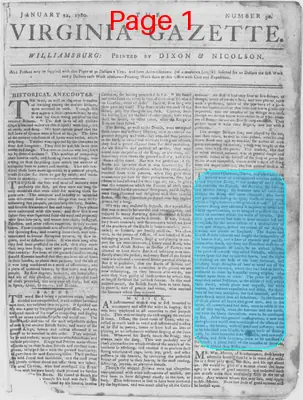
Literary
January 22, 1780
The Virginia Gazette
Richmond, Williamsburg, Richmond County, Virginia
What is this article about?
Description of ancient Germanic and Danish beliefs in a supreme Deity, corruption by polytheism, immortality of the soul, afterlife in Valhalla for heroes and Nifheim for the wicked, and eschatological renewal after a great conflagration.
Clipping
OCR Quality
95%
Excellent
Full Text
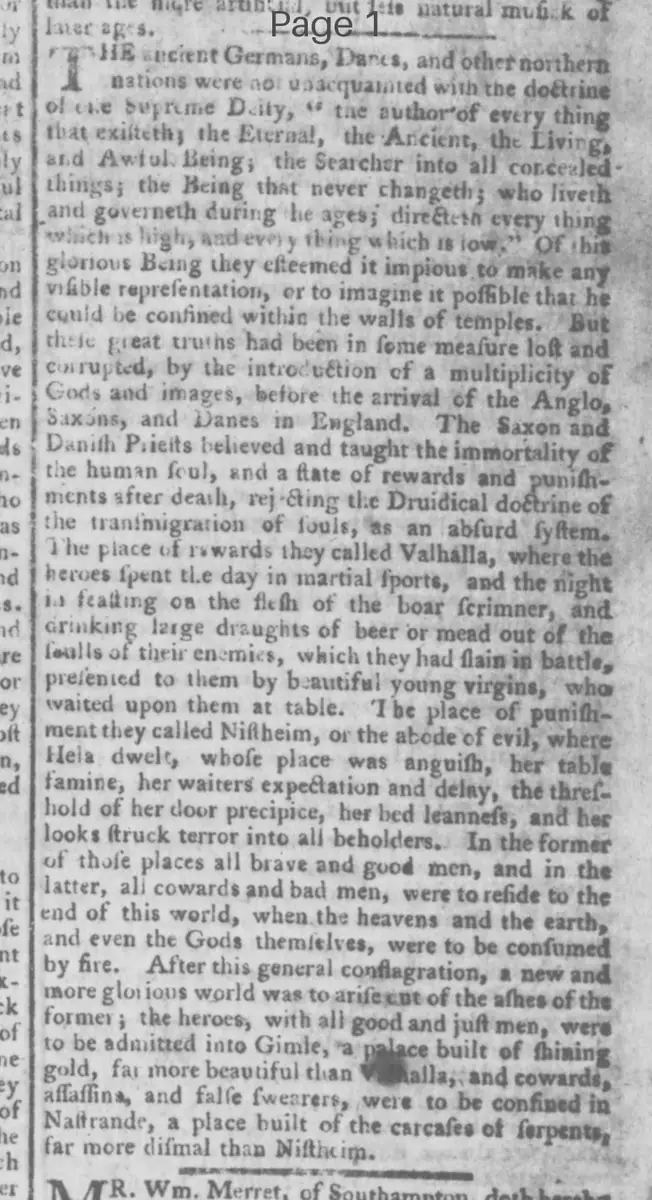
The ancient Germans, Danes, and other northern nations were no unacquainted with the doctrine of one supreme Deity, "the author of every thing that existeth, the Eternal, the Ancient, the Living and Awful Being; the Searcher into all concealed things; the Being that never changeth; who liveth and governeth during the ages; directeth every thing which is high, and every thing which is low." Of his glorious Being they esteemed it impious to make any visible representation, or to imagine it possible that he could be confined within the walls of temples. But these great truths had been in some measure lost and corrupted, by the introduction of a multiplicity of Gods and images, before the arrival of the Anglo Saxons, and Danes in England. The Saxon and Danith Priests believed and taught the immortality of the human soul, and a state of rewards and punishments after death, rejecting the Druidical doctrine of the transmigration of souls, as an absurd system.
The place of rewards they called Valhalla, where the heroes spent the day in martial sports, and the night feasting on the flesh of the boar Crimner, and drinking large draughts of beer or mead out of the skulls of their enemies, which they had slain in battle, presented to them by beautiful young virgins, who waited upon them at table. The place of punishment they called Nifheim, or the abode of evil, where Hela dwelt, whose place was anguish, her table famine, her waiters expectation and delay, the threshold of her door precipice, her bed leanness, and her looks struck terror into all beholders. In the former of those places all brave and good men, and in the latter, all cowards and bad men, were to reside to the end of this world, when the heavens and the earth, and even the Gods themselves, were to be consumed by fire.
After this general conflagration, a new and more glorious world was to arise out of the ashes of the former; the heroes, with all good and just men, were to be admitted into Gimle, a palace built of shining gold, far more beautiful than Valhalla, and cowards, giants, and false swearers, were to be confined in Nastrond, a place built of the carcases of serpents, far more dismal than Nifheim.
The place of rewards they called Valhalla, where the heroes spent the day in martial sports, and the night feasting on the flesh of the boar Crimner, and drinking large draughts of beer or mead out of the skulls of their enemies, which they had slain in battle, presented to them by beautiful young virgins, who waited upon them at table. The place of punishment they called Nifheim, or the abode of evil, where Hela dwelt, whose place was anguish, her table famine, her waiters expectation and delay, the threshold of her door precipice, her bed leanness, and her looks struck terror into all beholders. In the former of those places all brave and good men, and in the latter, all cowards and bad men, were to reside to the end of this world, when the heavens and the earth, and even the Gods themselves, were to be consumed by fire.
After this general conflagration, a new and more glorious world was to arise out of the ashes of the former; the heroes, with all good and just men, were to be admitted into Gimle, a palace built of shining gold, far more beautiful than Valhalla, and cowards, giants, and false swearers, were to be confined in Nastrond, a place built of the carcases of serpents, far more dismal than Nifheim.
What sub-type of article is it?
Essay
What themes does it cover?
Religious
Death Mortality
What keywords are associated?
Germanic Mythology
Supreme Deity
Valhalla
Nifheim
Afterlife
Conflagration
Immortality
Literary Details
Key Lines
"The Author Of Every Thing That Existeth, The Eternal, The Ancient, The Living And Awful Being; The Searcher Into All Concealed Things; The Being That Never Changeth; Who Liveth And Governeth During The Ages; Directeth Every Thing Which Is High, And Every Thing Which Is Low."
The Place Of Rewards They Called Valhalla, Where The Heroes Spent The Day In Martial Sports, And The Night Feasting On The Flesh Of The Boar Crimner, And Drinking Large Draughts Of Beer Or Mead Out Of The Skulls Of Their Enemies, Which They Had Slain In Battle, Presented To Them By Beautiful Young Virgins, Who Waited Upon Them At Table.
The Place Of Punishment They Called Nifheim, Or The Abode Of Evil, Where Hela Dwelt, Whose Place Was Anguish, Her Table Famine, Her Waiters Expectation And Delay, The Threshold Of Her Door Precipice, Her Bed Leanness, And Her Looks Struck Terror Into All Beholders.