Thank you for visiting SNEWPapers!
Sign up free
Literary
January 27, 1903
Evening Times Republican
Marshalltown, Marshall County, Iowa
What is this article about?
A young woman helps an 11-year-old lost girl in a department store waiting room, providing guidance and fare for her ride home, earning praise as the 'best lady.' The narrative reflects on women's inconsistency, contrasting a plea for originality at a Marshalltown women's club with criticism of a woman's outdated hairstyle by the speaker.
Clipping
OCR Quality
95%
Excellent
Full Text
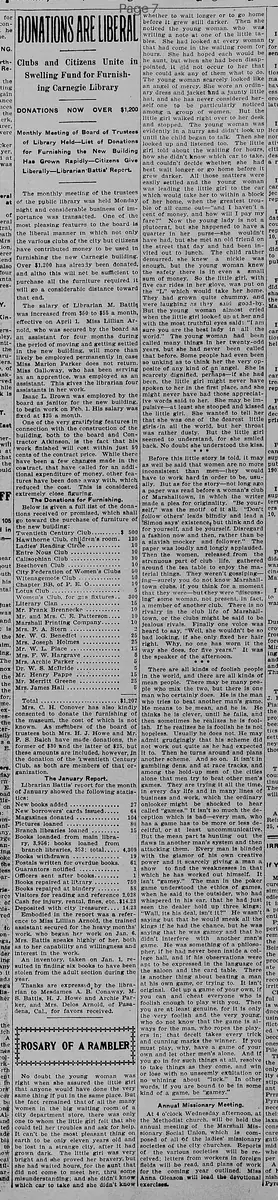
ROSARY OF A RAMBLER
No doubt the young woman was right when she assured the little girl that anyone would have done the very same thing if put in the same place. But the fact remained that of all the many women in the big waiting room of a city department store, there was only one to whom the little girl felt that she could tell her troubles and ask for help.
It can't be the most pleasant thing on earth to be only eleven years old and be lost in a strange city, after it had grown dark. The little girl was very bright and she proved her bravery but she had waited hours for the aunt that did not come to meet her, thru some misunderstanding: and she didn't know which car to take and she didn't know whether to wait longer or to go home before it grew still darker. Then she noticed the young woman, who was writing a note at one of the little tables. She had looked at every woman that had come in the waiting room for hours. She had hoped each would be the aunt, but when she had been disappointed, it did not occur to her that she could ask any of them what to do.
The young woman scarcely looked like an angel of mercy. She wore an ordinary dress and jacket and a jaunty little hat, and she has never considered herself one to be particularly noticed among a group of women. But the little girl walked right over to her desk and stopped. The young woman was evidently in a hurry and didn't look up until the child began to talk. Then she looked up and listened too. The little girl told about the waiting for hours, how she didn't know which car to take, and couldn't decide whether she had best wait longer or go home before it grew darker. All those matters were easily settled and the young woman was leading the little girl to the car which would take her to within a block of her home. when the greatest trouble of all came out-"and I haven't a cent of money, and how will I pay my fare?" Now the young lady is not a plutocrat, but she happened to have a quarter in her purse--she wouldn't have had, but she met an old friend on the street that day and had been invited out to lunch. The child rather demurred, she knew a nickel was enough, but the young woman knew the safety there is in even a small sum of money. So the little girl, with five car rides in her glove, was put on the "L" which would take her home.
They had grown quite chummy, and were laughing as they said good-by But the young woman almost cried when the little girl looked up at her and with the most truthful eyes said: "I am sure you are the best lady in all the world." The young woman had been called many things in her twenty-odd years, but she had never been called that before. Some people had even been so unkind as to think her the very opposite of any kind of an angel. She is scarcely dignified, perhaps--if she had been, the little girl might never have spoken to her in the first place, and she might never have had those appreciative words said to her. She may be impulsive--at least she stooped and kissed the little girl. She wanted to tell her that she was one of the dearest little girls in all the world, but her throat was rather dusty. But the little girl seemed to understand, for she smiled back. No doubt she understood the kiss.
Before this little story is told, it may as well be said that women are no more inconsistent than men--they would have to work hard in order to be, usually. But as for the story--not long ago a paper was read before a woman's club of Marshalltown, in which the writer made a plea for originality. "Be yourself," was the motif of it all. "Don't follow others' leads blindly and lead a Simon says' existence but think and do for yourself, and be yourself. Disregard a fashion now and then, rather than be a slavish mocker and follower." The paper was loudly and longly applauded.
Then the women, released from the strenuous part of club life, gathered around the tea table to enjoy the material things. They weren't gossiping--surely you do not know Marshalltown clubs. if you think for a moment that they were--but they were "discussing" some woman, not present, in fact, a member of another club. There is no rivalry in the club life of Marshalltown, or the clubs might be said to be jealous rivals. Finally one voice was heard to say, "Well, she wouldn't be so bad looking, if she only fixed her hair right. Why, no one has worn it the way she does, for five years." It was the speaker of the afternoon.
No doubt the young woman was right when she assured the little girl that anyone would have done the very same thing if put in the same place. But the fact remained that of all the many women in the big waiting room of a city department store, there was only one to whom the little girl felt that she could tell her troubles and ask for help.
It can't be the most pleasant thing on earth to be only eleven years old and be lost in a strange city, after it had grown dark. The little girl was very bright and she proved her bravery but she had waited hours for the aunt that did not come to meet her, thru some misunderstanding: and she didn't know which car to take and she didn't know whether to wait longer or to go home before it grew still darker. Then she noticed the young woman, who was writing a note at one of the little tables. She had looked at every woman that had come in the waiting room for hours. She had hoped each would be the aunt, but when she had been disappointed, it did not occur to her that she could ask any of them what to do.
The young woman scarcely looked like an angel of mercy. She wore an ordinary dress and jacket and a jaunty little hat, and she has never considered herself one to be particularly noticed among a group of women. But the little girl walked right over to her desk and stopped. The young woman was evidently in a hurry and didn't look up until the child began to talk. Then she looked up and listened too. The little girl told about the waiting for hours, how she didn't know which car to take, and couldn't decide whether she had best wait longer or go home before it grew darker. All those matters were easily settled and the young woman was leading the little girl to the car which would take her to within a block of her home. when the greatest trouble of all came out-"and I haven't a cent of money, and how will I pay my fare?" Now the young lady is not a plutocrat, but she happened to have a quarter in her purse--she wouldn't have had, but she met an old friend on the street that day and had been invited out to lunch. The child rather demurred, she knew a nickel was enough, but the young woman knew the safety there is in even a small sum of money. So the little girl, with five car rides in her glove, was put on the "L" which would take her home.
They had grown quite chummy, and were laughing as they said good-by But the young woman almost cried when the little girl looked up at her and with the most truthful eyes said: "I am sure you are the best lady in all the world." The young woman had been called many things in her twenty-odd years, but she had never been called that before. Some people had even been so unkind as to think her the very opposite of any kind of an angel. She is scarcely dignified, perhaps--if she had been, the little girl might never have spoken to her in the first place, and she might never have had those appreciative words said to her. She may be impulsive--at least she stooped and kissed the little girl. She wanted to tell her that she was one of the dearest little girls in all the world, but her throat was rather dusty. But the little girl seemed to understand, for she smiled back. No doubt she understood the kiss.
Before this little story is told, it may as well be said that women are no more inconsistent than men--they would have to work hard in order to be, usually. But as for the story--not long ago a paper was read before a woman's club of Marshalltown, in which the writer made a plea for originality. "Be yourself," was the motif of it all. "Don't follow others' leads blindly and lead a Simon says' existence but think and do for yourself, and be yourself. Disregard a fashion now and then, rather than be a slavish mocker and follower." The paper was loudly and longly applauded.
Then the women, released from the strenuous part of club life, gathered around the tea table to enjoy the material things. They weren't gossiping--surely you do not know Marshalltown clubs. if you think for a moment that they were--but they were "discussing" some woman, not present, in fact, a member of another club. There is no rivalry in the club life of Marshalltown, or the clubs might be said to be jealous rivals. Finally one voice was heard to say, "Well, she wouldn't be so bad looking, if she only fixed her hair right. Why, no one has worn it the way she does, for five years." It was the speaker of the afternoon.
What sub-type of article is it?
Prose Fiction
Essay
What themes does it cover?
Moral Virtue
Social Manners
Friendship
What keywords are associated?
Lost Child
Kindness
Young Woman
Women Club
Originality
Marshalltown
Inconsistency
Literary Details
Title
Rosary Of A Rambler
Key Lines
"I Am Sure You Are The Best Lady In All The World."
"Be Yourself," Was The Motif Of It All. "Don't Follow Others' Leads Blindly And Lead A Simon Says' Existence But Think And Do For Yourself, And Be Yourself. Disregard A Fashion Now And Then, Rather Than Be A Slavish Mocker And Follower."
"Well, She Wouldn't Be So Bad Looking, If She Only Fixed Her Hair Right. Why, No One Has Worn It The Way She Does, For Five Years." It Was The Speaker Of The Afternoon.