Thank you for visiting SNEWPapers!
Sign up free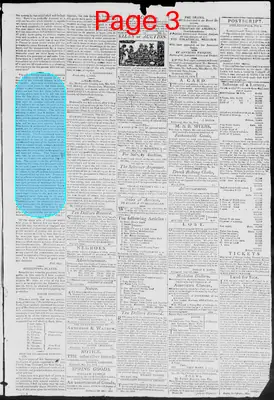
Virginia Argus
Richmond, Virginia
What is this article about?
Pennsylvania act allowing Justices to try civil cases up to $100, detailing summons procedures, referee options, appeals, bonds, constable roles, exceptions for certain actions, and a 5-year duration. Does not alter Philadelphia privileges.
Clipping
OCR Quality
Full Text
(Salem Reg.)
What sub-type of article is it?
What keywords are associated?
Where did it happen?
Domestic News Details
Primary Location
Pennsylvania
Event Details
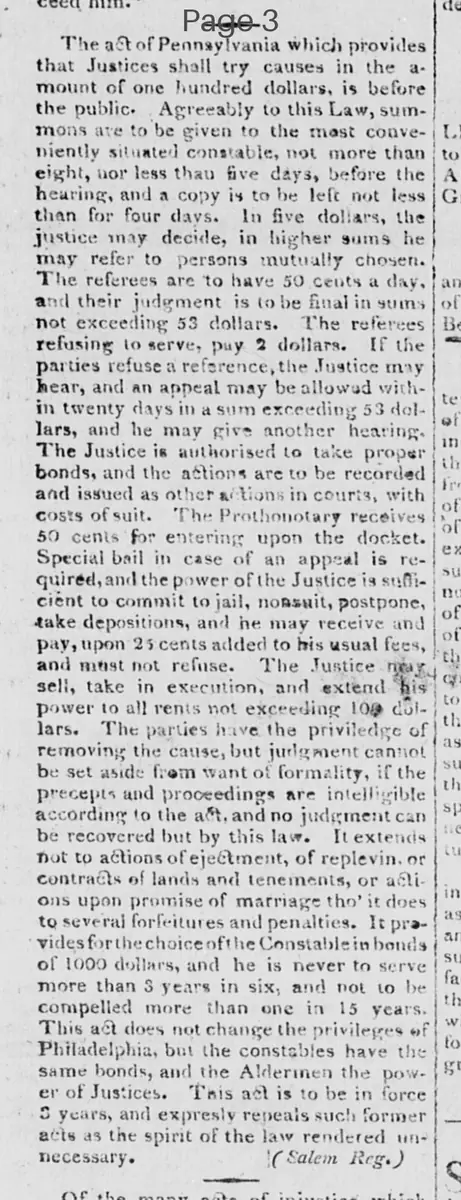
The act of Pennsylvania which provides that Justices shall try causes in the amount of one hundred dollars, is before the public. Agreeably to this Law, summons are to be given to the most conveniently situated constable, not more than eight, nor less than five days, before the hearing, and a copy is to be left not less than four days. In five dollars, the justice may decide, in higher sums he may refer to persons mutually chosen. The referees are to have 50 cents a day, and their judgment is to be final in sums not exceeding 50 dollars. The referees refusing to serve, pay 2 dollars. If the parties refuse a reference, the Justice may hear, and an appeal may be allowed within twenty days in a sum exceeding 50 dollars, and he may give another hearing. The Justice is authorised to take proper bonds, and the actions are to be recorded and issued as other actions in courts, with costs of suit. The Prothonotary receives 50 cents for entering upon the docket. Special bail in case of an appeal is required, and the power of the Justice is sufficient to commit to jail, nonsuit, postpone, take depositions, and he may receive and pay, upon 25 cents added to his usual fees, and must not refuse. The Justice may sell, take in execution, and extend his power to all rents not exceeding 100 dollars. The parties have the privilege of removing the cause, but judgment cannot be set aside from want of formality, if the precepts and proceedings are intelligible according to the act, and no judgment can be recovered but by this law. It extends not to actions of ejectment, of replevin, or contracts of lands and tenements, or actions upon promise of marriage tho' it does to several forfeitures and penalties. It provides for the choice of the Constable in bonds of 1000 dollars, and he is never to serve more than 3 years in six, and not to be compelled more than one in 15 years. This act does not change the privileges of Philadelphia, but the constables have the same bonds, and the Aldermen the power of Justices. This act is to be in force 5 years, and expressly repeals such former acts as the spirit of the law rendered unnecessary.