Thank you for visiting SNEWPapers!
Sign up free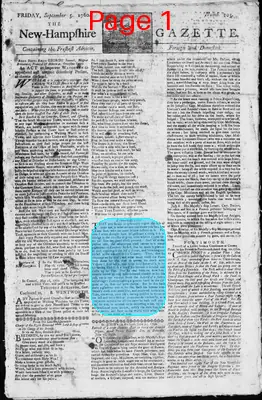
Literary
September 5, 1760
The New Hampshire Gazette
Portsmouth, Rockingham County, New Hampshire
What is this article about?
A consolatory letter to a grieving father, praising his son's heroic death in battle defending his country, which secured his honor, and urging moderation in sorrow to honor his virtues.
Clipping
OCR Quality
98%
Excellent
Full Text
A remarkable Letter.
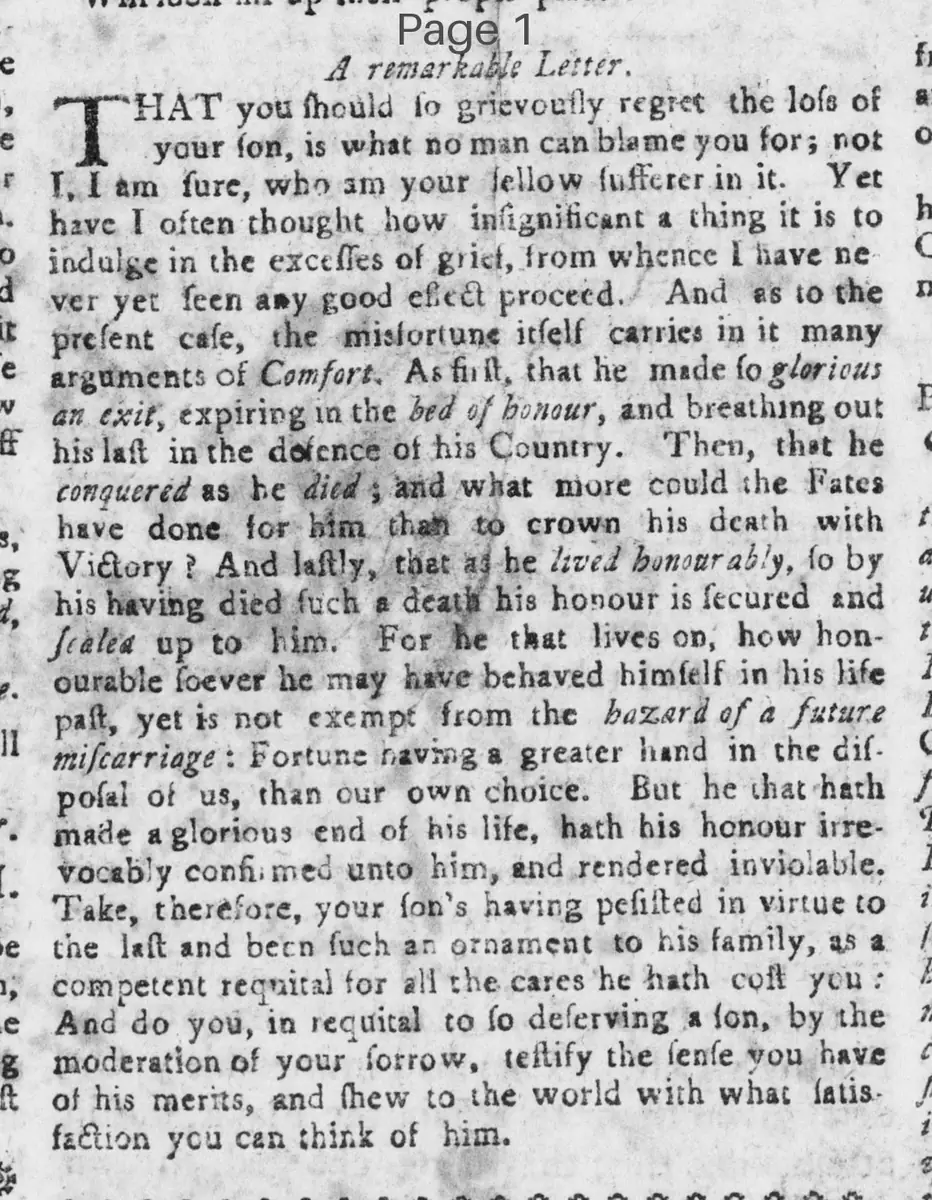
That you should so grievously regret the loss of your son, is what no man can blame you for; not I, I am sure, who am your fellow sufferer in it. Yet have I often thought how insignificant a thing it is to indulge in the excess of grief, from whence I have never yet seen any good effect proceed. And as to the present case, the misfortune itself carries in it many arguments of Comfort. As first, that he made so glorious an exit, expiring in the bed of honour, and breathing out his last in the defence of his Country. Then, that he conquered as he died; and what more could the Fates have done for him than to crown his death with Victory? And lastly, that as he lived honourably, so by his having died such a death his honour is secured and called up to him. For he that lives on, how honourable soever he may have behaved himself in his life past, yet is not exempt from the hazard of a future miscarriage: Fortune having a greater hand in the disposal of us, than our own choice. But he that hath made a glorious end of his life, hath his honour irrevocably confirmed unto him, and rendered inviolable. Take, therefore, your son's having persisted in virtue to the last and been such an ornament to his family, as a competent requital for all the cares he hath cost you: And do you, in requital to so deserving a son, by the moderation of your sorrow, testify the sense you have of his merits, and shew to the world with what satisfaction you can think of him.
That you should so grievously regret the loss of your son, is what no man can blame you for; not I, I am sure, who am your fellow sufferer in it. Yet have I often thought how insignificant a thing it is to indulge in the excess of grief, from whence I have never yet seen any good effect proceed. And as to the present case, the misfortune itself carries in it many arguments of Comfort. As first, that he made so glorious an exit, expiring in the bed of honour, and breathing out his last in the defence of his Country. Then, that he conquered as he died; and what more could the Fates have done for him than to crown his death with Victory? And lastly, that as he lived honourably, so by his having died such a death his honour is secured and called up to him. For he that lives on, how honourable soever he may have behaved himself in his life past, yet is not exempt from the hazard of a future miscarriage: Fortune having a greater hand in the disposal of us, than our own choice. But he that hath made a glorious end of his life, hath his honour irrevocably confirmed unto him, and rendered inviolable. Take, therefore, your son's having persisted in virtue to the last and been such an ornament to his family, as a competent requital for all the cares he hath cost you: And do you, in requital to so deserving a son, by the moderation of your sorrow, testify the sense you have of his merits, and shew to the world with what satisfaction you can think of him.
What sub-type of article is it?
Epistolary
Essay
What themes does it cover?
Death Mortality
Moral Virtue
War Peace
What keywords are associated?
Consolation Letter
Heroic Death
Grief Moderation
Honor Virtue
Battle Victory
Family Loss
Fate Fortune
Literary Details
Title
A Remarkable Letter.
Subject
Consolation On The Heroic Death Of A Son In Battle
Key Lines
That You Should So Grievously Regret The Loss Of Your Son, Is What No Man Can Blame You For; Not I, I Am Sure, Who Am Your Fellow Sufferer In It.
As First, That He Made So Glorious An Exit, Expiring In The Bed Of Honour, And Breathing Out His Last In The Defence Of His Country.
Then, That He Conquered As He Died; And What More Could The Fates Have Done For Him Than To Crown His Death With Victory?
But He That Hath Made A Glorious End Of His Life, Hath His Honour Irrevocably Confirmed Unto Him, And Rendered Inviolable.
Take, Therefore, Your Son's Having Persisted In Virtue To The Last And Been Such An Ornament To His Family, As A Competent Requital For All The Cares He Hath Cost You: