Thank you for visiting SNEWPapers!
Sign up free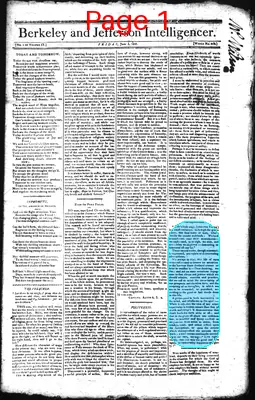
Literary
June 5, 1807
Berkeley And Jefferson Intelligencer
Martinsburg, Berkeley County, Virginia
What is this article about?
A prose reflection quoting Young's meditation on life's transience and the grave as humanity's final home. It admonishes readers to recognize mortality, live virtuously, and consider the afterlife's rewards or punishments. Graveyards instruct on death's equality and the call to righteous living for immortal happiness.
Clipping
OCR Quality
95%
Excellent
Full Text
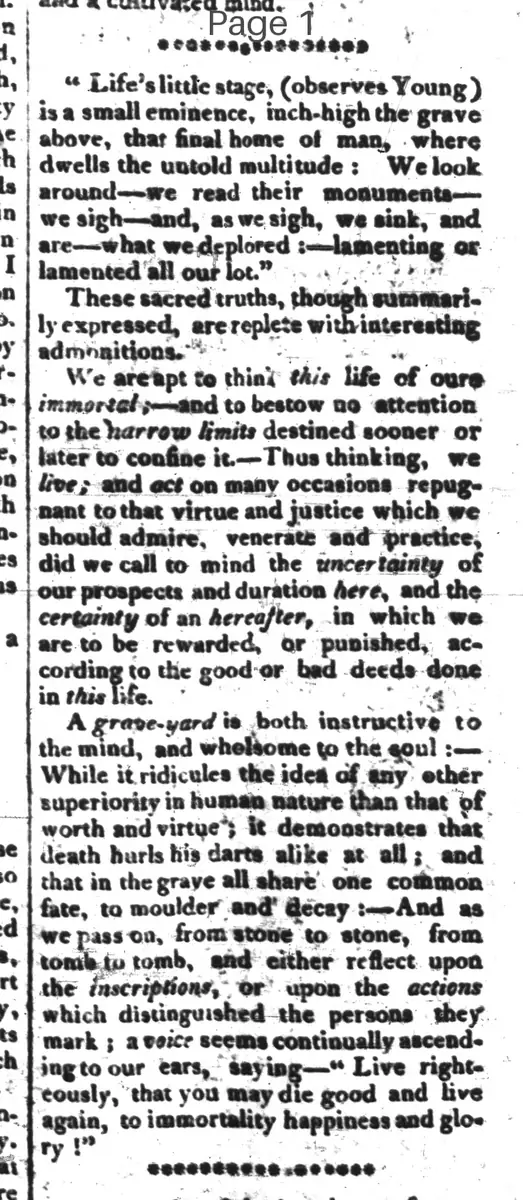
"Life's little stage, (observes Young) is a small eminence, inch-high the grave above, that final home of man, where dwells the untold multitude: We look around--we read their monuments--we sigh--and, as we sigh, we sink, and are--what we deplored:--lamenting or lamented all our lot."
These sacred truths, though summarily expressed, are replete with interesting admonitions.
We are apt to think this life of ours immortal; and to bestow no attention to the narrow limits destined sooner or later to confine it.--Thus thinking, We live; and act on many occasions repugnant to that virtue and justice which we should admire, venerate and practice: did we call to mind the uncertainty of our prospects and duration here, and the certainty of an hereafter, in which we are to be rewarded, or punished, according to the good or bad deeds done in this life.
A grave-yard is both instructive to the mind, and wholesome to the soul:--While it ridicules the idea of any other superiority in human nature than that of worth and virtue; it demonstrates that Death hurls his darts alike at all: and that in the grave all share one common fate, to moulder and decay:--And as we pass on, from stone to stone, from tomb to tomb, and either reflect upon the inscriptions, or upon the actions which distinguished the persons they mark; a voice seems continually ascending to our ears, saying—"Live righteously, that you may die good and live again, to immortality happiness and glory!"
These sacred truths, though summarily expressed, are replete with interesting admonitions.
We are apt to think this life of ours immortal; and to bestow no attention to the narrow limits destined sooner or later to confine it.--Thus thinking, We live; and act on many occasions repugnant to that virtue and justice which we should admire, venerate and practice: did we call to mind the uncertainty of our prospects and duration here, and the certainty of an hereafter, in which we are to be rewarded, or punished, according to the good or bad deeds done in this life.
A grave-yard is both instructive to the mind, and wholesome to the soul:--While it ridicules the idea of any other superiority in human nature than that of worth and virtue; it demonstrates that Death hurls his darts alike at all: and that in the grave all share one common fate, to moulder and decay:--And as we pass on, from stone to stone, from tomb to tomb, and either reflect upon the inscriptions, or upon the actions which distinguished the persons they mark; a voice seems continually ascending to our ears, saying—"Live righteously, that you may die good and live again, to immortality happiness and glory!"
What sub-type of article is it?
Essay
What themes does it cover?
Death Mortality
Moral Virtue
Religious
What keywords are associated?
Mortality
Graveyard
Virtue
Afterlife
Immortality
Righteous Living
Literary Details
Subject
Reflections On Mortality And The Lessons Of Graveyards
Key Lines
"Life's Little Stage, (Observes Young) Is A Small Eminence, Inch High The Grave Above, That Final Home Of Man, Where Dwells The Untold Multitude: We Look Around We Read Their Monuments We Sigh And, As We Sigh, We Sink, And Are What We Deplored: Lamenting Or Lamented All Our Lot."
A Grave Yard Is Both Instructive To The Mind, And Wholesome To The Soul: While It Ridicules The Idea Of Any Other Superiority In Human Nature Than That Of Worth And Virtue; It Demonstrates That Death Hurls His Darts Alike At All:
"Live Righteously, That You May Die Good And Live Again, To Immortality Happiness And Glory!"