Thank you for visiting SNEWPapers!
Sign up free
Literary
September 4, 1947
The Mingo Republican
Williamson, Mingo County, West Virginia
What is this article about?
Article by Garry Cleveland Myers advises mothers on disciplining toddlers who bite, pinch, or pull hair using immediate, consistent slaps to teach boundaries, illustrated with personal anecdotes and a mother's letter.
Clipping
OCR Quality
75%
Good
Full Text
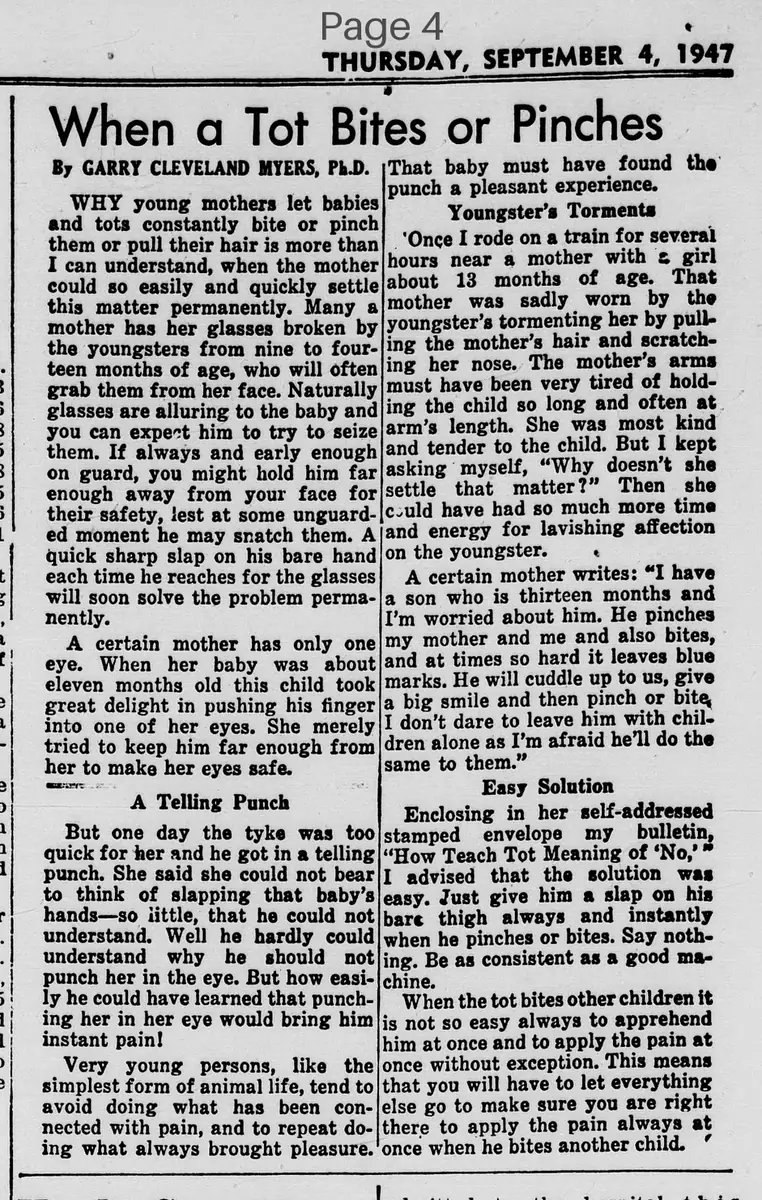
When a Tot Bites or Pinches
By GARRY CLEVELAND MYERS, Ph.D.
That baby must have found the punch a pleasant experience.
WHY young mothers let babies and tots constantly bite or pinch them or pull their hair is more than I can understand, when the mother could so easily and quickly settle this matter permanently. Many a mother has her glasses broken by the youngster's torments.
Youngster's Torments
I can understand. When the mother could so easily and quickly settle this matter permanently. Many a mother has her glasses broken by the youngster's tormenting her by pulling the mother's hair and scratching her nose. The mother's arms grab them from her face. Naturally glasses are alluring to the baby and you can expect him to try to seize them. If always and early enough on guard, you might hold him far enough away from your face for their safety, lest at some unguarded moment he may snatch them. A quick sharp slap on his bare hand each time he reaches for the glasses will soon solve the problem permanently.
A certain mother writes: "I have a son who is thirteen months and I'm worried about him. He pinches my mother and me and also bites, and at times so hard it leaves blue marks. He will cuddle up to us, give a big smile and then pinch or bite. I don't dare to leave him with children alone as I'm afraid he'll do the same to them."
A certain mother has only one eye. When her baby was about eleven months old this child took great delight in pushing his finger into one of her eyes. She merely tried to keep him far enough from her to make her eyes safe.
But one day the tyke was too quick for her and he got in a telling punch. She said she could not bear to think of slapping that baby's hands—so little, that he could not understand. Well he hardly could understand why he should not punch her in the eye. But how easily he could have learned that punching her in her eye would bring him instant pain!
Enclosing in her self-addressed stamped envelope my bulletin, "How Teach Tot Meaning of No," I advised that the solution was easy. Just give him a slap on his bare thigh always and instantly when he pinches or bites. Say nothing. Be as consistent as a good machine.
When the tot bites other children it is not so easy always to apprehend him at once and to apply the pain at once when he bites another child.
Very young persons, like the once without exception. This means simplest form of animal life. tend to that you will have to let everything avoid doing what has been connected with pain, and to repeat do- else go to make sure you are right ing what always brought pleasure. there to apply the pain always at
By GARRY CLEVELAND MYERS, Ph.D.
That baby must have found the punch a pleasant experience.
WHY young mothers let babies and tots constantly bite or pinch them or pull their hair is more than I can understand, when the mother could so easily and quickly settle this matter permanently. Many a mother has her glasses broken by the youngster's torments.
Youngster's Torments
I can understand. When the mother could so easily and quickly settle this matter permanently. Many a mother has her glasses broken by the youngster's tormenting her by pulling the mother's hair and scratching her nose. The mother's arms grab them from her face. Naturally glasses are alluring to the baby and you can expect him to try to seize them. If always and early enough on guard, you might hold him far enough away from your face for their safety, lest at some unguarded moment he may snatch them. A quick sharp slap on his bare hand each time he reaches for the glasses will soon solve the problem permanently.
A certain mother writes: "I have a son who is thirteen months and I'm worried about him. He pinches my mother and me and also bites, and at times so hard it leaves blue marks. He will cuddle up to us, give a big smile and then pinch or bite. I don't dare to leave him with children alone as I'm afraid he'll do the same to them."
A certain mother has only one eye. When her baby was about eleven months old this child took great delight in pushing his finger into one of her eyes. She merely tried to keep him far enough from her to make her eyes safe.
But one day the tyke was too quick for her and he got in a telling punch. She said she could not bear to think of slapping that baby's hands—so little, that he could not understand. Well he hardly could understand why he should not punch her in the eye. But how easily he could have learned that punching her in her eye would bring him instant pain!
Enclosing in her self-addressed stamped envelope my bulletin, "How Teach Tot Meaning of No," I advised that the solution was easy. Just give him a slap on his bare thigh always and instantly when he pinches or bites. Say nothing. Be as consistent as a good machine.
When the tot bites other children it is not so easy always to apprehend him at once and to apply the pain at once when he bites another child.
Very young persons, like the once without exception. This means simplest form of animal life. tend to that you will have to let everything avoid doing what has been connected with pain, and to repeat do- else go to make sure you are right ing what always brought pleasure. there to apply the pain always at
What sub-type of article is it?
Essay
What themes does it cover?
Moral Virtue
What keywords are associated?
Toddler Discipline
Child Biting
Parenting Advice
Pain Correction
Moral Instruction
What entities or persons were involved?
By Garry Cleveland Myers, Ph.D.
Literary Details
Title
When A Tot Bites Or Pinches
Author
By Garry Cleveland Myers, Ph.D.
Subject
Disciplining Toddlers For Biting, Pinching, And Hair Pulling
Form / Style
Prose Advisory Essay On Child Discipline
Key Lines
Why Young Mothers Let Babies And Tots Constantly Bite Or Pinch Them Or Pull Their Hair Is More Than I Can Understand, When The Mother Could So Easily And Quickly Settle This Matter Permanently.
Just Give Him A Slap On His Bare Thigh Always And Instantly When He Pinches Or Bites. Say Nothing. Be As Consistent As A Good Machine.
Very Young Persons... Tend To... Avoid Doing What Has Been Connected With Pain, And To Repeat Doing What Always Brought Pleasure.