Thank you for visiting SNEWPapers!
Sign up free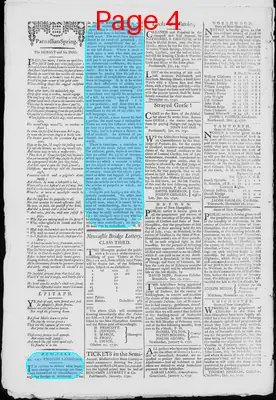
Literary
January 22, 1791
The New Hampshire Gazette And General Advertiser
Portsmouth, Rockingham County, New Hampshire
What is this article about?
An essay observing accidental changes in English language, critiquing misuses like 'honor' for 'accept' in mercantile contexts, confusions between 'subject' and 'object' in revenue terms, and 'intelligible' versus 'intelligent'. Advocates for precise word usage.
Clipping
OCR Quality
95%
Excellent
Full Text
REMARKS
ON
THE ENGLISH LANGUAGE.
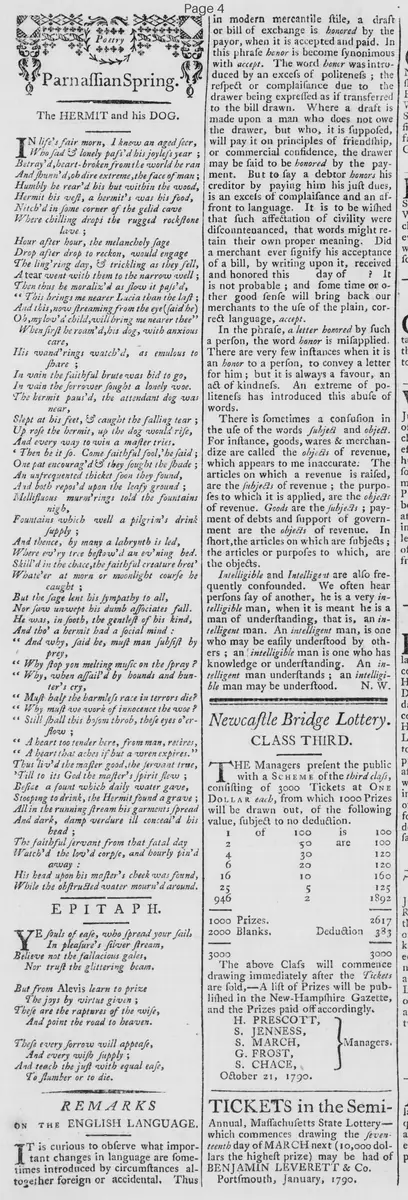
It is curious to observe what important changes in language are sometimes introduced by circumstances altogether foreign or accidental.
Thus in modern mercantile stile, a draught or bill of exchange is honored by the payor, when it is accepted and paid. In this phrase honor is become synonymous with accept. The word honor was introduced by an excess of politeness; the respect or complaisance due to the drawer being expressed as if transferred to the bill drawn.
Where a draft is made upon a man who does not owe the drawer, but who, it is supposed, will pay it on principles of friendship, or commercial confidence, the drawer may be said to be honored by the payment. But to say a debtor honors his creditor by paying him his just dues, is an excess of complaisance and an affront to language. It is to be wished that such affectation of civility were discountenanced, that words might retain their own proper meaning. Did a merchant ever signify his acceptance of a bill, by writing upon it, received and honored this day of It is not probable; and some time or other good sense will bring back our merchants to the use of the plain, correct language, accept.
In the phrase, a letter honored by such a person, the word honor is misapplied. There are very few instances when it is an honor to a person, to convey a letter for him; but it is always a favour, an act of kindness. An extreme of politeness has introduced this abuse of words.
There is sometimes a confusion in the use of the words subject and object. For instance, goods, wares & merchandize are called the objects of revenue, which appears to me inaccurate: The articles on which a revenue is raised, are the subjects of revenue; the purposes to which it is applied, are the objects of revenue. Goods are the subjects; payment of debts and support of government are the objects of revenue. In short, the articles on which are subjects: the articles or purposes to which, are the objects.
Intelligible and Intelligent are also frequently confounded. We often hear persons say of another, he is a very intelligible man, when it is meant he is a man of understanding, that is, an intelligent man. An intelligent man, is one who may be easily understood by others; an intelligible man is one who has knowledge or understanding. An intelligent man understands; an intelligible man may be understood.
N. W.
ON
THE ENGLISH LANGUAGE.
It is curious to observe what important changes in language are sometimes introduced by circumstances altogether foreign or accidental.
Thus in modern mercantile stile, a draught or bill of exchange is honored by the payor, when it is accepted and paid. In this phrase honor is become synonymous with accept. The word honor was introduced by an excess of politeness; the respect or complaisance due to the drawer being expressed as if transferred to the bill drawn.
Where a draft is made upon a man who does not owe the drawer, but who, it is supposed, will pay it on principles of friendship, or commercial confidence, the drawer may be said to be honored by the payment. But to say a debtor honors his creditor by paying him his just dues, is an excess of complaisance and an affront to language. It is to be wished that such affectation of civility were discountenanced, that words might retain their own proper meaning. Did a merchant ever signify his acceptance of a bill, by writing upon it, received and honored this day of It is not probable; and some time or other good sense will bring back our merchants to the use of the plain, correct language, accept.
In the phrase, a letter honored by such a person, the word honor is misapplied. There are very few instances when it is an honor to a person, to convey a letter for him; but it is always a favour, an act of kindness. An extreme of politeness has introduced this abuse of words.
There is sometimes a confusion in the use of the words subject and object. For instance, goods, wares & merchandize are called the objects of revenue, which appears to me inaccurate: The articles on which a revenue is raised, are the subjects of revenue; the purposes to which it is applied, are the objects of revenue. Goods are the subjects; payment of debts and support of government are the objects of revenue. In short, the articles on which are subjects: the articles or purposes to which, are the objects.
Intelligible and Intelligent are also frequently confounded. We often hear persons say of another, he is a very intelligible man, when it is meant he is a man of understanding, that is, an intelligent man. An intelligent man, is one who may be easily understood by others; an intelligible man is one who has knowledge or understanding. An intelligent man understands; an intelligible man may be understood.
N. W.
What sub-type of article is it?
Essay
What keywords are associated?
English Language
Mercantile Style
Word Honor
Subject Object
Intelligible Intelligent
What entities or persons were involved?
N. W.
Literary Details
Title
Remarks On The English Language.
Author
N. W.
Key Lines
Thus In Modern Mercantile Stile, A Draught Or Bill Of Exchange Is Honored By The Payor, When It Is Accepted And Paid.
But To Say A Debtor Honors His Creditor By Paying Him His Just Dues, Is An Excess Of Complaisance And An Affront To Language.
Goods Are The Subjects; Payment Of Debts And Support Of Government Are The Objects Of Revenue.
An Intelligent Man Understands; An Intelligible Man May Be Understood.