Thank you for visiting SNEWPapers!
Sign up free
Literary
November 19, 1842
Sunbury American And Shamokin Journal
Sunbury, Northumberland County, Pennsylvania
What is this article about?
Benjamin Franklin's 1753 letter to a New Jersey minister discusses recovering health, the reciprocity of kindness as paying debts to humanity and God, the superiority of good works over ritualistic faith, and humble submission to divine will, critiquing empty religious practices.
Clipping
OCR Quality
95%
Excellent
Full Text
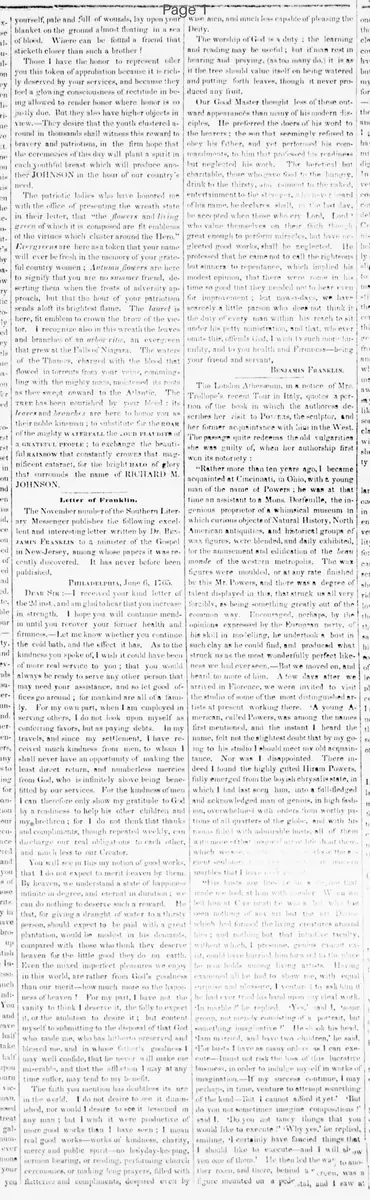
Letter of Franklin.
The November number of the Southern Literary Messenger publishes the following excellent and interesting letter written by Dr. BENJAMIN FRANKLIN to a minister of the Gospel in New-Jersey, among whose papers it was recently discovered. It has never before been published.
PHILADELPHIA June 6, 1753
Dear Sir:—I received your kind letter of the 2d inst. and am glad to hear that you increase in strength. I hope you will continue mending until you recover your former health and firmness.—Let me know whether you continue the cold bath, and the effect it has. As to the kindness you spoke of, I wish it could have been of more real service to you; that you would always be ready to serve any other person that may need your assistance, and so let good offices go around: for mankind are all of a family. For my own part, when I am employed in serving others, I do not look upon myself as conferring favors, but as paying debts. In my travels, and since my settlement, I have received much kindness from men, to whom I shall never have an opportunity of making the least direct return, and numberless mercies from God, who is infinitely above being benefited by our services. For the kindness of men I can therefore only show my gratitude to God by a readiness to help his other children and my brethren; for I do not think that thanks and compliments, though repeated weekly, can discharge our real obligations to each other, and much less to our Creator. You will see in this my notion of good works, that I do not expect to merit heaven by them. By heaven, we understand a state of happiness infinite in degree, and eternal in duration: we can do nothing to deserve such a reward. He that, for giving a draught of water to a thirsty person, should expect to be paid with a great plantation, would be modest in his demands, compared with those who think they deserve heaven for the little good they do on earth. Even the mixed imperfect pleasures we enjoy in this world, are rather from God's goodness than our merit—how much more so the happiness of heaven? For my part, I have not the vanity to think I deserve it, the folly to expect it, or the ambition to desire it; but content myself to submit to the disposal of that God who made me, who has hitherto preserved and blessed me, and in whose fatherly goodness I may well confide, that he never will make me miserable, and that the affliction I may at any time suffer, may tend to my benefit.
The faith you mention has doubtless its uses in the world. I do not desire to see it diminished, nor would I desire to see it lessened in any man; but I wish it were productive of more good works than I have seen; I mean real good works—works of kindness, charity, mercy and public spirit—not holyday-keeping, sermon-hearing, or reading, performing church ceremonies, or making long prayers, filled with flatteries and compliments, despised even by wise men, and much less capable of pleasing the Deity.
The worship of God is a duty; the hearing and reading may be useful; but if man rest in hearing and praying, (as too many do,) it is as if the tree should value itself on being watered and putting forth leaves, though it never produced any fruit. Our Good Master thought less of these outward appearances than many of his modern disciples. He preferred the doers of his word to the hearers: the son that seemingly refused to obey his father, and yet performed his commandments, to him that professed his readiness but neglected his work. The heretical but charitable, those who gave food to the hungry, drink to the thirsty, raiment to the naked, entertainment to the stranger, without regarding his name, he declares shall, in the last day, be accepted when those who cry Lord, Lord, who value themselves on their faith though great enough to perform miracles, but have neglected good works, shall be neglected. He professed that he came not to call the righteous but sinners to repentance, which implied his modest opinion, that there were some in his time so good that they needed not to hear even for improvement; but now-a-days, we have scarcely a little parson who does not think it the duty of every man within his reach to sit under his petty ministration, and that whoever omits this, offends God. I wish to such more humility, and to you health and firmness—being your friend and servant,
BENJAMIN FRANKLIN.
The November number of the Southern Literary Messenger publishes the following excellent and interesting letter written by Dr. BENJAMIN FRANKLIN to a minister of the Gospel in New-Jersey, among whose papers it was recently discovered. It has never before been published.
PHILADELPHIA June 6, 1753
Dear Sir:—I received your kind letter of the 2d inst. and am glad to hear that you increase in strength. I hope you will continue mending until you recover your former health and firmness.—Let me know whether you continue the cold bath, and the effect it has. As to the kindness you spoke of, I wish it could have been of more real service to you; that you would always be ready to serve any other person that may need your assistance, and so let good offices go around: for mankind are all of a family. For my own part, when I am employed in serving others, I do not look upon myself as conferring favors, but as paying debts. In my travels, and since my settlement, I have received much kindness from men, to whom I shall never have an opportunity of making the least direct return, and numberless mercies from God, who is infinitely above being benefited by our services. For the kindness of men I can therefore only show my gratitude to God by a readiness to help his other children and my brethren; for I do not think that thanks and compliments, though repeated weekly, can discharge our real obligations to each other, and much less to our Creator. You will see in this my notion of good works, that I do not expect to merit heaven by them. By heaven, we understand a state of happiness infinite in degree, and eternal in duration: we can do nothing to deserve such a reward. He that, for giving a draught of water to a thirsty person, should expect to be paid with a great plantation, would be modest in his demands, compared with those who think they deserve heaven for the little good they do on earth. Even the mixed imperfect pleasures we enjoy in this world, are rather from God's goodness than our merit—how much more so the happiness of heaven? For my part, I have not the vanity to think I deserve it, the folly to expect it, or the ambition to desire it; but content myself to submit to the disposal of that God who made me, who has hitherto preserved and blessed me, and in whose fatherly goodness I may well confide, that he never will make me miserable, and that the affliction I may at any time suffer, may tend to my benefit.
The faith you mention has doubtless its uses in the world. I do not desire to see it diminished, nor would I desire to see it lessened in any man; but I wish it were productive of more good works than I have seen; I mean real good works—works of kindness, charity, mercy and public spirit—not holyday-keeping, sermon-hearing, or reading, performing church ceremonies, or making long prayers, filled with flatteries and compliments, despised even by wise men, and much less capable of pleasing the Deity.
The worship of God is a duty; the hearing and reading may be useful; but if man rest in hearing and praying, (as too many do,) it is as if the tree should value itself on being watered and putting forth leaves, though it never produced any fruit. Our Good Master thought less of these outward appearances than many of his modern disciples. He preferred the doers of his word to the hearers: the son that seemingly refused to obey his father, and yet performed his commandments, to him that professed his readiness but neglected his work. The heretical but charitable, those who gave food to the hungry, drink to the thirsty, raiment to the naked, entertainment to the stranger, without regarding his name, he declares shall, in the last day, be accepted when those who cry Lord, Lord, who value themselves on their faith though great enough to perform miracles, but have neglected good works, shall be neglected. He professed that he came not to call the righteous but sinners to repentance, which implied his modest opinion, that there were some in his time so good that they needed not to hear even for improvement; but now-a-days, we have scarcely a little parson who does not think it the duty of every man within his reach to sit under his petty ministration, and that whoever omits this, offends God. I wish to such more humility, and to you health and firmness—being your friend and servant,
BENJAMIN FRANKLIN.
What sub-type of article is it?
Epistolary
Essay
What themes does it cover?
Religious
Moral Virtue
What keywords are associated?
Benjamin Franklin
Letter
Religion
Good Works
Faith
Charity
Morality
God
Service
Gratitude
What entities or persons were involved?
Benjamin Franklin
Literary Details
Author
Benjamin Franklin
Subject
To A Minister Of The Gospel In New Jersey, On Health, Good Works, And Faith
Form / Style
Personal Letter Reflecting On Religion, Morality, And Service To Others
Key Lines
For My Own Part, When I Am Employed In Serving Others, I Do Not Look Upon Myself As Conferring Favors, But As Paying Debts.
The Faith You Mention Has Doubtless Its Uses In The World. I Do Not Desire To See It Diminished, Nor Would I Desire To See It Lessened In Any Man; But I Wish It Were Productive Of More Good Works Than I Have Seen; I Mean Real Good Works—Works Of Kindness, Charity, Mercy And Public Spirit—Not Holyday Keeping, Sermon Hearing, Or Reading, Performing Church Ceremonies, Or Making Long Prayers, Filled With Flatteries And Compliments, Despised Even By Wise Men, And Much Less Capable Of Pleasing The Deity.
The Worship Of God Is A Duty; The Hearing And Reading May Be Useful; But If Man Rest In Hearing And Praying, (As Too Many Do,) It Is As If The Tree Should Value Itself On Being Watered And Putting Forth Leaves, Though It Never Produced Any Fruit.
He Preferred The Doers Of His Word To The Hearers: The Son That Seemingly Refused To Obey His Father, And Yet Performed His Commandments, To Him That Professed His Readiness But Neglected His Work.