Thank you for visiting SNEWPapers!
Sign up free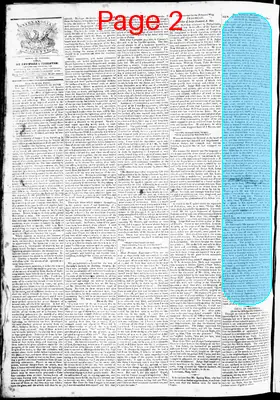
Editorial
June 30, 1828
Phenix Gazette
Alexandria, Virginia
What is this article about?
Editorial criticizes General Jackson and allies like Gov. Giles for refusing in 1796 to approve George Washington's presidential conduct, highlighting Giles' insolent speech and later retractions, urging voters to reject Jackson to honor Washington amid his 1828 candidacy.
Clipping

OCR Quality
95%
Excellent
Full Text
[From the Easton (Md) Gazette.]
GEN. WASHINGTON—GOV. GILES— GENERAL JACKSON.
The people of the United States having become highly and justly offended with General Jackson for refusing to give a vote of approbation to the beloved Father of his Country, the Great Washington, when he was about turning from the Presidential Chair—an attempt is now making, on the part of General Jackson's friends, to salve over this affront to the best and greatest of men. Accordingly, we see Gen. Eaton out again, (Jackson's great supporter, who expects every thing in case he is elected) & in a letter to Gov. Giles of Virginia, who he considers the most cunning & artful of that desperate set who with Gen. Jackson refused to vote approbation of Gen. Washington's conduct, he urges Mr. Giles to explain away the matter, and to make a hole for himself to creep out at supposing that Gen Jackson can follow on afterwards and creep out too. Mr. Livingston also has been applied to for the same purpose as a man of expediency, and all that desperate corps now surviving may be called on to club their wits and make an apology, that shall suit General Jackson, for voting against this well merited and dutiful expression of approbation of the conduct of Washington, the founder of our Republic.
The letter of Gov. Giles, in answer, is remarkable for its bold effrontery and insolence and is another evidence, in addition to many others, how Gov. Giles will turn and twist about to answer a particular end. We give some short extracts below from Mr. Giles' speech in Congress upon that occasion, when the vote of approbation of Washington's conduct was proposed, that it may be seen what a contemptuous opinion he professed to have of General Washington's political services—
now be it remembered, that this same Gov. Giles, in Congress at a subsequent period, when he found it would suit his purpose, took back all of those under-ratings and insolence to Washington, regretted he had ever uttered them, and praised him to the skies—not content with this, he afterwards denied that he had uttered such sentiments against Washington, and has endeavoured to get this part of our Congressional History expunged in the next edition of Marshall's life of Washington.— Now again, when it suits another purpose that Gov. Giles has in view, he goes back to the old stand he took in December 1796. and justifies all his rudeness, all his irritability, and all his insolence to General Washington.
Such is General Jackson, and such his leading partisans—can the people who love Washington vote for Jackson as president, who, united with Giles, Livingston, and such a set of political desperadoes, refused to express a wish "that the example of President Washington might be a guide to his successors in office."
Good people of Maryland, take Care what you are about—act coolly—remember that Washington, under God, established your independence and set into operation such a Government for you that man ever lived under— Washington's life was ever devoted to your service—remember that Washington's great fame is left in your care. Preserve it with your life and honour. He who would refuse to wish "that Washington's conduct might be a guide to his successors" can be no well wisher to his Country—and he who would refuse a vote of approbation of Washington's public conduct, deserves to be frowned on and rejected by every grateful patriot in America.
Extracts from Mr. Giles' Speech in congress. Dec 1796, on the answer to President Washington's last Address
Mr Giles said: "He was one of those citizens who did not regret the President's retiring from office. He hoped he would retire to his country seat and enjoy all the happiness he could wish—he believed he could enjoy more there than in his present situation. He believed the Government. of the United States would go on without him. The people, were competent to their own government. What calamities would attend the United States, if one man alone was essential to their Government! He believed there were a thousand men in the United States who were capable of filling the Presidential Chair as well as it had been filled heretofore— he wished the President as much happiness as any man; and hoping he would retire, he could not express any regrets at the event."
How different was the conduct of Mr. Gallatin and Mr. Madison, and others of the same party to which Mr. Giles belonged—they voted for the answer in full and expressed a full confidence in the wisdom and firmness of Washington—a general approbation of his administration—entire admiration for his character, and a wish that his example might be a guide to his successors—General Jackson and Mr. Giles refused to do this. Can it be expected, if General Jackson was to be elected president after having thus openly and boldly reprobated it. Good and true men to your country think of these things.
GEN. WASHINGTON—GOV. GILES— GENERAL JACKSON.
The people of the United States having become highly and justly offended with General Jackson for refusing to give a vote of approbation to the beloved Father of his Country, the Great Washington, when he was about turning from the Presidential Chair—an attempt is now making, on the part of General Jackson's friends, to salve over this affront to the best and greatest of men. Accordingly, we see Gen. Eaton out again, (Jackson's great supporter, who expects every thing in case he is elected) & in a letter to Gov. Giles of Virginia, who he considers the most cunning & artful of that desperate set who with Gen. Jackson refused to vote approbation of Gen. Washington's conduct, he urges Mr. Giles to explain away the matter, and to make a hole for himself to creep out at supposing that Gen Jackson can follow on afterwards and creep out too. Mr. Livingston also has been applied to for the same purpose as a man of expediency, and all that desperate corps now surviving may be called on to club their wits and make an apology, that shall suit General Jackson, for voting against this well merited and dutiful expression of approbation of the conduct of Washington, the founder of our Republic.
The letter of Gov. Giles, in answer, is remarkable for its bold effrontery and insolence and is another evidence, in addition to many others, how Gov. Giles will turn and twist about to answer a particular end. We give some short extracts below from Mr. Giles' speech in Congress upon that occasion, when the vote of approbation of Washington's conduct was proposed, that it may be seen what a contemptuous opinion he professed to have of General Washington's political services—
now be it remembered, that this same Gov. Giles, in Congress at a subsequent period, when he found it would suit his purpose, took back all of those under-ratings and insolence to Washington, regretted he had ever uttered them, and praised him to the skies—not content with this, he afterwards denied that he had uttered such sentiments against Washington, and has endeavoured to get this part of our Congressional History expunged in the next edition of Marshall's life of Washington.— Now again, when it suits another purpose that Gov. Giles has in view, he goes back to the old stand he took in December 1796. and justifies all his rudeness, all his irritability, and all his insolence to General Washington.
Such is General Jackson, and such his leading partisans—can the people who love Washington vote for Jackson as president, who, united with Giles, Livingston, and such a set of political desperadoes, refused to express a wish "that the example of President Washington might be a guide to his successors in office."
Good people of Maryland, take Care what you are about—act coolly—remember that Washington, under God, established your independence and set into operation such a Government for you that man ever lived under— Washington's life was ever devoted to your service—remember that Washington's great fame is left in your care. Preserve it with your life and honour. He who would refuse to wish "that Washington's conduct might be a guide to his successors" can be no well wisher to his Country—and he who would refuse a vote of approbation of Washington's public conduct, deserves to be frowned on and rejected by every grateful patriot in America.
Extracts from Mr. Giles' Speech in congress. Dec 1796, on the answer to President Washington's last Address
Mr Giles said: "He was one of those citizens who did not regret the President's retiring from office. He hoped he would retire to his country seat and enjoy all the happiness he could wish—he believed he could enjoy more there than in his present situation. He believed the Government. of the United States would go on without him. The people, were competent to their own government. What calamities would attend the United States, if one man alone was essential to their Government! He believed there were a thousand men in the United States who were capable of filling the Presidential Chair as well as it had been filled heretofore— he wished the President as much happiness as any man; and hoping he would retire, he could not express any regrets at the event."
How different was the conduct of Mr. Gallatin and Mr. Madison, and others of the same party to which Mr. Giles belonged—they voted for the answer in full and expressed a full confidence in the wisdom and firmness of Washington—a general approbation of his administration—entire admiration for his character, and a wish that his example might be a guide to his successors—General Jackson and Mr. Giles refused to do this. Can it be expected, if General Jackson was to be elected president after having thus openly and boldly reprobated it. Good and true men to your country think of these things.
What sub-type of article is it?
Partisan Politics
What keywords are associated?
Washington Approbation
Jackson Criticism
Giles Speech
Presidential Election
Partisan Politics
Congressional Vote
What entities or persons were involved?
General Washington
General Jackson
Gov. Giles
Gen. Eaton
Mr. Livingston
Mr. Gallatin
Mr. Madison
Editorial Details
Primary Topic
Criticism Of Jackson And Giles For Opposing Approbation Of Washington's Conduct
Stance / Tone
Strongly Pro Washington, Anti Jackson Partisan Attack
Key Figures
General Washington
General Jackson
Gov. Giles
Gen. Eaton
Mr. Livingston
Mr. Gallatin
Mr. Madison
Key Arguments
Jackson Refused Vote Of Approbation For Washington's Presidential Conduct In 1796
Giles Delivered Insolent Speech Belittling Washington's Importance
Giles Later Retracted And Praised Washington But Now Justifies His Original Stance
Jackson's Supporters Like Eaton Seek To Excuse The Refusal
Contrasts With Madison And Gallatin Who Approved Washington
Voters Should Reject Jackson To Honor Washington