Thank you for visiting SNEWPapers!
Sign up free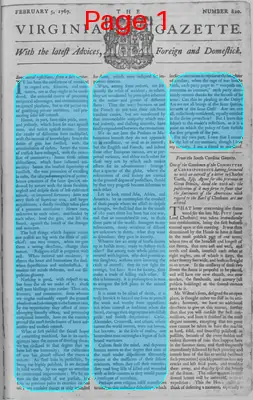
Literary
February 5, 1767
The Virginia Gazette
Richmond, Williamsburg, Richmond County, Virginia
What is this article about?
Moral reflections critiquing how arts, sciences, and commerce, meant for reciprocal benefits, have bred pride, envy, rivalry, and wars among nations like England and France, eroding humanity and turning virtues into vices.
Clipping
OCR Quality
98%
Excellent
Full Text
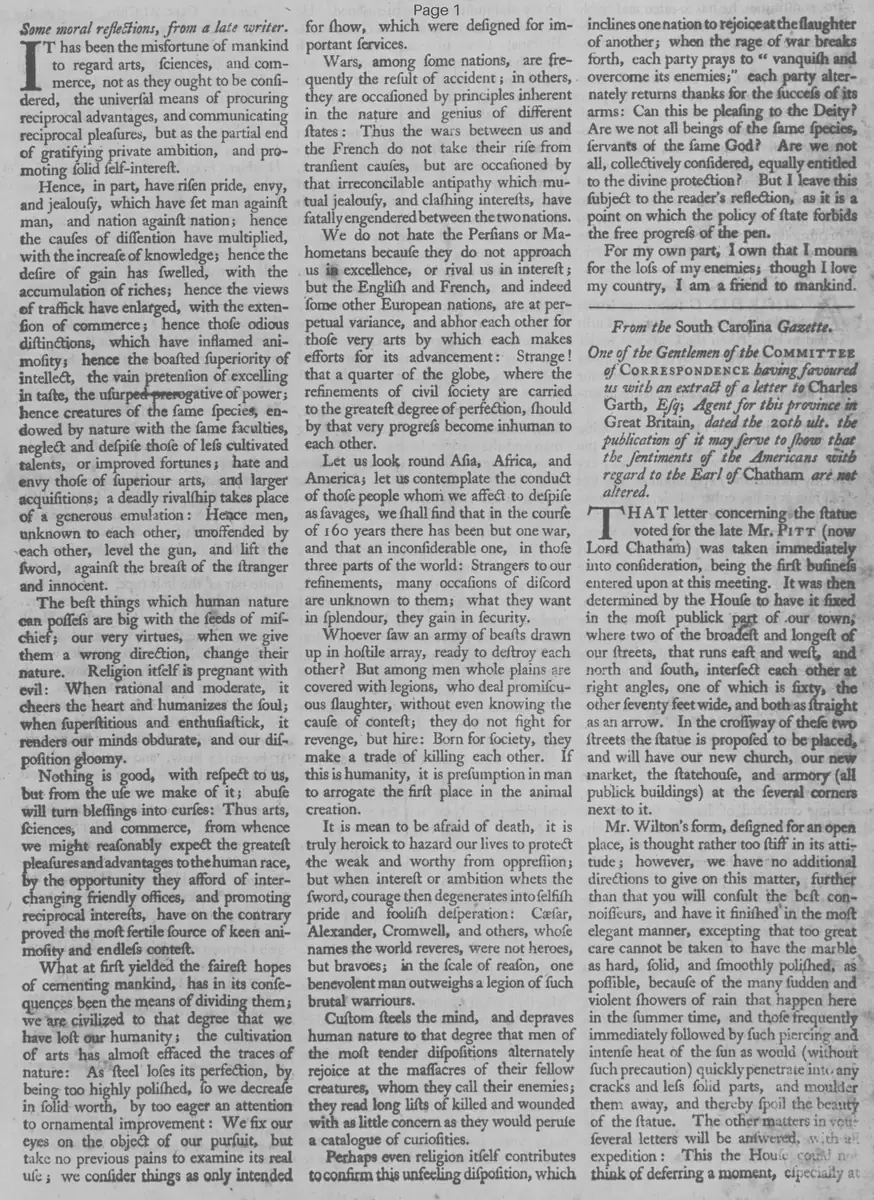
Some moral reflections, from a late writer.
It has been the misfortune of mankind to regard arts, sciences, and commerce, not as they ought to be considered, the universal means of procuring reciprocal advantages, and communicating reciprocal pleasures, but as the partial end of gratifying private ambition, and promoting solid self-interest.
Hence, in part, have risen pride, envy, and jealousy, which have set man against man, and nation against nation; hence the causes of dissension have multiplied, with the increase of knowledge; hence the desire of gain has swelled, with the accumulation of riches; hence the views of traffic have enlarged, with the extension of commerce; hence those odious distinctions, which have inflamed animosity; hence the boasted superiority of intellect, the vain pretension of excelling in taste, the usurped prerogative of power; hence creatures of the same species, endowed by nature with the same faculties, neglect and despise those of less cultivated talents, or improved fortunes; hate and envy those of superior arts, and larger acquisitions; a deadly rivalry takes place of a generous emulation. Hence men, unknown to each other, unoffended by each other, level the gun, and lift the sword, against the breast of the stranger and innocent.
The best things which human nature can possess are big with the seeds of mischief; our very virtues, when we give them a wrong direction, change their nature. Religion itself is pregnant with evil: When rational and moderate, it cheers the heart and humanizes the soul; when superstitious and enthusiastic, it renders our minds obdurate, and our disposition gloomy.
Nothing is good, with respect to us, but from the use we make of it; abuse will turn blessings into curses: Thus arts, sciences, and commerce, from whence we might reasonably expect the greatest pleasures and advantages to the human race, by the opportunity they afford of interchanging friendly offices, and promoting reciprocal interests, have on the contrary proved the most fertile source of keen animosity and endless contest.
What at first yielded the fairest hopes of cementing mankind, has in its consequences been the means of dividing them; we are civilized to that degree that we have lost our humanity; the cultivation of arts has almost effaced the traces of nature: As steel loses its perfection, by being too highly polished, so we decrease in solid worth, by too eager an attention to ornamental improvement. We fix our eyes on the object of our pursuit, but take no previous pains to examine its real use; we consider things as only intended for show, which were designed for important services.
Wars, among some nations, are frequently the result of accident; in others, they are occasioned by principles inherent in the nature and genius of different states: Thus the wars between us and the French do not take their rise from transient causes, but are occasioned by that irreconcilable antipathy which mutual jealousy, and clashing interests, have fatally engendered between the two nations.
We do not hate the Persians or Mahometans because they do not approach us in excellence, or rival us in interest; but the English and French, and indeed some other European nations, are at perpetual variance, and abhor each other for those very arts by which each makes efforts for its advancement: Strange! that a quarter of the globe, where the refinements of civil society are carried to the greatest degree of perfection, should by that very progress become inhuman to each other.
Let us look round Asia, Africa, and America; let us contemplate the conduct of those people whom we affect to despise as savages, we shall find that in the course of 160 years there has been but one war, and that an inconsiderable one, in those three parts of the world: Strangers to our refinements, many occasions of discord are unknown to them; what they want in splendour, they gain in security.
Whoever saw an army of beasts drawn up in hostile array, ready to destroy each other? But among men whose plains are covered with legions, who deal promiscuous slaughter, without even knowing the cause of contest; they do not fight for revenge, but hire: Born for society, they make a trade of killing each other. If this is humanity, it is presumption in man to arrogate the first place in the animal creation.
It is mean to be afraid of death, it is truly heroick to hazard our lives to protect the weak and worthy from oppression; but when interest or ambition whets the sword, courage then degenerates into selfish pride and foolish desperation: Cæsar, Alexander, Cromwell, and others, whose names the world reveres, were not heroes, but bravoes; in the scale of reason, one benevolent man outweighs a legion of such brutal warriors.
Custom steels the mind, and depraves human nature to that degree that men of the most tender dispositions alternately rejoice at the massacres of their fellow creatures, whom they call their enemies; they read long lists of killed and wounded with as little concern as they would peruse a catalogue of curiosities.
Perhaps even religion itself contributes to confirm this unfeeling disposition, which inclines one nation to rejoice at the slaughter of another; when the rage of war breaks forth, each party prays to 'vanquish and overcome its enemies;' each party alternately returns thanks for the success of its arms: Can this be pleasing to the Deity? Are we not all beings of the same species, servants of the same God? Are we not all, collectively considered, equally entitled to the divine protection? But I leave this subject to the reader's reflection, as it is a point on which the policy of state forbids the free progress of the pen.
For my own part, I own that I mourn for the loss of my enemies; though I love my country, I am a friend to mankind.
It has been the misfortune of mankind to regard arts, sciences, and commerce, not as they ought to be considered, the universal means of procuring reciprocal advantages, and communicating reciprocal pleasures, but as the partial end of gratifying private ambition, and promoting solid self-interest.
Hence, in part, have risen pride, envy, and jealousy, which have set man against man, and nation against nation; hence the causes of dissension have multiplied, with the increase of knowledge; hence the desire of gain has swelled, with the accumulation of riches; hence the views of traffic have enlarged, with the extension of commerce; hence those odious distinctions, which have inflamed animosity; hence the boasted superiority of intellect, the vain pretension of excelling in taste, the usurped prerogative of power; hence creatures of the same species, endowed by nature with the same faculties, neglect and despise those of less cultivated talents, or improved fortunes; hate and envy those of superior arts, and larger acquisitions; a deadly rivalry takes place of a generous emulation. Hence men, unknown to each other, unoffended by each other, level the gun, and lift the sword, against the breast of the stranger and innocent.
The best things which human nature can possess are big with the seeds of mischief; our very virtues, when we give them a wrong direction, change their nature. Religion itself is pregnant with evil: When rational and moderate, it cheers the heart and humanizes the soul; when superstitious and enthusiastic, it renders our minds obdurate, and our disposition gloomy.
Nothing is good, with respect to us, but from the use we make of it; abuse will turn blessings into curses: Thus arts, sciences, and commerce, from whence we might reasonably expect the greatest pleasures and advantages to the human race, by the opportunity they afford of interchanging friendly offices, and promoting reciprocal interests, have on the contrary proved the most fertile source of keen animosity and endless contest.
What at first yielded the fairest hopes of cementing mankind, has in its consequences been the means of dividing them; we are civilized to that degree that we have lost our humanity; the cultivation of arts has almost effaced the traces of nature: As steel loses its perfection, by being too highly polished, so we decrease in solid worth, by too eager an attention to ornamental improvement. We fix our eyes on the object of our pursuit, but take no previous pains to examine its real use; we consider things as only intended for show, which were designed for important services.
Wars, among some nations, are frequently the result of accident; in others, they are occasioned by principles inherent in the nature and genius of different states: Thus the wars between us and the French do not take their rise from transient causes, but are occasioned by that irreconcilable antipathy which mutual jealousy, and clashing interests, have fatally engendered between the two nations.
We do not hate the Persians or Mahometans because they do not approach us in excellence, or rival us in interest; but the English and French, and indeed some other European nations, are at perpetual variance, and abhor each other for those very arts by which each makes efforts for its advancement: Strange! that a quarter of the globe, where the refinements of civil society are carried to the greatest degree of perfection, should by that very progress become inhuman to each other.
Let us look round Asia, Africa, and America; let us contemplate the conduct of those people whom we affect to despise as savages, we shall find that in the course of 160 years there has been but one war, and that an inconsiderable one, in those three parts of the world: Strangers to our refinements, many occasions of discord are unknown to them; what they want in splendour, they gain in security.
Whoever saw an army of beasts drawn up in hostile array, ready to destroy each other? But among men whose plains are covered with legions, who deal promiscuous slaughter, without even knowing the cause of contest; they do not fight for revenge, but hire: Born for society, they make a trade of killing each other. If this is humanity, it is presumption in man to arrogate the first place in the animal creation.
It is mean to be afraid of death, it is truly heroick to hazard our lives to protect the weak and worthy from oppression; but when interest or ambition whets the sword, courage then degenerates into selfish pride and foolish desperation: Cæsar, Alexander, Cromwell, and others, whose names the world reveres, were not heroes, but bravoes; in the scale of reason, one benevolent man outweighs a legion of such brutal warriors.
Custom steels the mind, and depraves human nature to that degree that men of the most tender dispositions alternately rejoice at the massacres of their fellow creatures, whom they call their enemies; they read long lists of killed and wounded with as little concern as they would peruse a catalogue of curiosities.
Perhaps even religion itself contributes to confirm this unfeeling disposition, which inclines one nation to rejoice at the slaughter of another; when the rage of war breaks forth, each party prays to 'vanquish and overcome its enemies;' each party alternately returns thanks for the success of its arms: Can this be pleasing to the Deity? Are we not all beings of the same species, servants of the same God? Are we not all, collectively considered, equally entitled to the divine protection? But I leave this subject to the reader's reflection, as it is a point on which the policy of state forbids the free progress of the pen.
For my own part, I own that I mourn for the loss of my enemies; though I love my country, I am a friend to mankind.
What sub-type of article is it?
Essay
What themes does it cover?
Moral Virtue
Commerce Trade
War Peace
What keywords are associated?
Moral Reflections
Arts Sciences Commerce
Pride Envy
National Rivalry
Loss Of Humanity
War Causes
Friend To Mankind
What entities or persons were involved?
A Late Writer
Literary Details
Title
Some Moral Reflections, From A Late Writer.
Author
A Late Writer
Key Lines
Hence Men, Unknown To Each Other, Unoffended By Each Other, Level The Gun, And Lift The Sword, Against The Breast Of The Stranger And Innocent.
We Are Civilized To That Degree That We Have Lost Our Humanity; The Cultivation Of Arts Has Almost Effaced The Traces Of Nature
Thus The Wars Between Us And The French Do Not Take Their Rise From Transient Causes, But Are Occasioned By That Irreconcilable Antipathy Which Mutual Jealousy, And Clashing Interests, Have Fatally Engendered Between The Two Nations.
If This Is Humanity, It Is Presumption In Man To Arrogate The First Place In The Animal Creation.
For My Own Part, I Own That I Mourn For The Loss Of My Enemies; Though I Love My Country, I Am A Friend To Mankind.