Thank you for visiting SNEWPapers!
Sign up free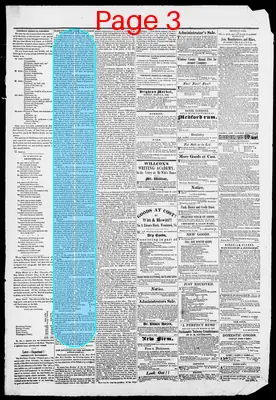
Editorial
April 29, 1842
The Spirit Of The Age
Woodstock, Windsor County, Vermont
What is this article about?
Editorial criticizes Whig leaders' hypocrisy in tariff policy, arguing their bill allows cheap foreign wool to enter duty-free, ruining American wool-growers while protecting manufacturers. Cites Whig committee report, import stats, and letter from Moses Strong. Democrats advocate full protection for wool.
Clipping

OCR Quality
95%
Excellent
Full Text
WOOL-GROWERS LOOK OUT!—YOUR DESTRUCTION IS PLANNED.
We have repeatedly charged it upon the whig leaders that they were hypocritical in regard to protecting American industry and labor; and we will now endeavor to show the people that these charges are true as holy writ. That there are many in the Whig party, who would wish to see the industry of our country protected, we are willing to admit; but we do say, that the leaders are false hearted and hypocritical on this subject. They wish to protect the woollen manufacture, a mere trifling duty on foreign competition with our native wool. The consequences will be that our country will be flooded with the wool of Spain, Smyrna, South America, and other countries, which will result in the ruin and prostration of the American wool-growers, by the competition of these foreign wools. To show that we do not misrepresent the matter, we will introduce facts for the consideration of the people, which will place this question beyond cavil or doubt.
The Free Press of last week published the report of the Whig Committee on Manufactures, on the Tariff question, and the Tariff Bill as reported by them, is now before the House of Representatives, awaiting further action.
We will quote a part of the third Section of this Whig Tariff Bill, as published in the Free Press of last week. It is as follows:
"On woollen yarn, four cents per pound, and thirty per centum; on wool unmanufactured, the value whereof, at the place of exportation, shall not exceed eight cents, four cents per pound, and twenty-six per centum ad valorem; on ready made clothing, all milled and fulled cloth, Kendal cloths, of which wool shall be the only material, merino shawls made of wool and upon all other manufactures of wool, or of which wool is a component part, subject by a former act to a duty of fifty per centum, a duty of forty per centum."
By this Bill, all wool which does not exceed eight cents in value at the place from whence imported, is left to come into the country free of duty!! Now it can be shown that over Ten Millions of Pounds of wool, valued at not exceeding eight cents per pound, at the place of exportation, was imported into the country in the year 1840, and quite as much in 1841.
This wool by a systematic and ingenious process, is brought to this country in a filthy state. It is naturally very greasy, which tends to collect much dirt and filth. Dirt and coarse wool is mixed with better qualities, and even dirt is mixed with wool, so that the compound is worth less than eight cents per pound. After it arrives here, free of duty, it is cleansed, at a trifling expense, at establishments got up expressly for the purpose in Boston and New York, and then goes into our markets and competes with our best native wools. The consequences of this wool being admitted free are destructive to the wool-growing interest of our country. In view of protecting the wool-growers of the country, and saving them from destruction this policy was fast conveying them to the Democrats at the Convention holden at Essex, on the 17th ult., introduced and adopted the following resolution:
"Resolved, That in the opinion of this Convention, no Wool, of any description should be introduced into the United States, from foreign countries, free of duty."
Notwithstanding all these facts, which have been produced, time and again, to prove the destructive tendency of the policy of letting wools into this country free of duty, the Whig Committee have reported a Tariff Bill, which continues this chance for foreign competition, to the certain downfall of our wool-growers. Why is this so? Have not these whigs professed to be the only and the exclusive friends of American Industry? They have to be sure professed to be the friends of American Industry—but what is the result? It is that they propose to protect woollens to the highest notch, and leave the wool-growers of the country to struggle with foreign competition. The truth is that the whig leaders wish to build up the manufacturers at the expense of the producing many.
To show that we do not misrepresent this subject, we will make an extract from a letter, which appeared in the Rutland Herald (a whig paper) a short time since, received from the Hon. Moses Strong (a strong whig) under date at Washington, March 19, 1842.
He says:
"There are petitions from all quarters to protect the particular articles manufactured in their respective sections; as for instance, from New York, New Jersey, Pennsylvania, to protect iron—from hatters, in many places, to protect hats—and at least 30 agents, with lots of petitions and statistics, from woollen manufacturers to protect woollen fabrics, but not one word from these agents for the protection of wool. On the contrary they say that wool wants very little protection. I have heard it asserted here by these manufacturers that Vermont will raise wool for 25 cents per pound, which assertion I would of course take the liberty to contradict. The same game is now playing here as was played when the tariff was first laid. The manufacturers contended that wool ought to be imported free."
Here is the evidence of Mr. Strong, who has been at Washington, and watched the movements of things.
The duty proposed on wool exceeding eight cts., per pound, at the place from whence it is imported, is equally objectionable and destructive of the wool-growing interest of our country. Under the old Tariff law of 1832, the duty on this kind of wool, was four cents per pound, and forty per cent ad valorem: but under this Whig Tariff bill, the ad valorem duty is reduced from forty to twenty-six per centum.
The forty per cent. ad valorem was not sufficient to protect the wool-growers of this country from foreign competition: but now this last Bill proposes to reduce it to twenty-six per centum; the consequences of which if carried into operation, will be to destroy our wool-growers. Let us see if our fears are well grounded. Suppose the Merino wool of Spain (the finest wool raised in Europe) can be bought there for twenty cents per pound, (which is a fair supposition, for wools are grown very cheap in the mild climate of Spain.) let us see what it would cost imported into our market.
Merino wool worth in Spain, say 20
Add for 26 per cent. ad valorem duty, 5 2-10
Add for 4 cents specific duty, 4
Add for expenses in importing it into our country, say 3
Cost of Merino wool in our country, 32 2-10
Here it will be seen that the manufacturer can send abroad and purchase the Merino wool—an article much finer than our own, for thirty two cents and two mills.
If there is not a greater duty imposed on wool, the manufacturer will import his stock from abroad, and leave our native wool to rot on the hands of the grower, or compel him to sell it for little or nothing.
Both wool and woollens should be protected, in order to benefit the wool-growers of the country. This is the doctrine of the Democratic party: but if the woollens are protected and the wool is left without protection, it may build up the manufacturer on the ruins of the wool-grower.
Bur. Sentinel.
We have repeatedly charged it upon the whig leaders that they were hypocritical in regard to protecting American industry and labor; and we will now endeavor to show the people that these charges are true as holy writ. That there are many in the Whig party, who would wish to see the industry of our country protected, we are willing to admit; but we do say, that the leaders are false hearted and hypocritical on this subject. They wish to protect the woollen manufacture, a mere trifling duty on foreign competition with our native wool. The consequences will be that our country will be flooded with the wool of Spain, Smyrna, South America, and other countries, which will result in the ruin and prostration of the American wool-growers, by the competition of these foreign wools. To show that we do not misrepresent the matter, we will introduce facts for the consideration of the people, which will place this question beyond cavil or doubt.
The Free Press of last week published the report of the Whig Committee on Manufactures, on the Tariff question, and the Tariff Bill as reported by them, is now before the House of Representatives, awaiting further action.
We will quote a part of the third Section of this Whig Tariff Bill, as published in the Free Press of last week. It is as follows:
"On woollen yarn, four cents per pound, and thirty per centum; on wool unmanufactured, the value whereof, at the place of exportation, shall not exceed eight cents, four cents per pound, and twenty-six per centum ad valorem; on ready made clothing, all milled and fulled cloth, Kendal cloths, of which wool shall be the only material, merino shawls made of wool and upon all other manufactures of wool, or of which wool is a component part, subject by a former act to a duty of fifty per centum, a duty of forty per centum."
By this Bill, all wool which does not exceed eight cents in value at the place from whence imported, is left to come into the country free of duty!! Now it can be shown that over Ten Millions of Pounds of wool, valued at not exceeding eight cents per pound, at the place of exportation, was imported into the country in the year 1840, and quite as much in 1841.
This wool by a systematic and ingenious process, is brought to this country in a filthy state. It is naturally very greasy, which tends to collect much dirt and filth. Dirt and coarse wool is mixed with better qualities, and even dirt is mixed with wool, so that the compound is worth less than eight cents per pound. After it arrives here, free of duty, it is cleansed, at a trifling expense, at establishments got up expressly for the purpose in Boston and New York, and then goes into our markets and competes with our best native wools. The consequences of this wool being admitted free are destructive to the wool-growing interest of our country. In view of protecting the wool-growers of the country, and saving them from destruction this policy was fast conveying them to the Democrats at the Convention holden at Essex, on the 17th ult., introduced and adopted the following resolution:
"Resolved, That in the opinion of this Convention, no Wool, of any description should be introduced into the United States, from foreign countries, free of duty."
Notwithstanding all these facts, which have been produced, time and again, to prove the destructive tendency of the policy of letting wools into this country free of duty, the Whig Committee have reported a Tariff Bill, which continues this chance for foreign competition, to the certain downfall of our wool-growers. Why is this so? Have not these whigs professed to be the only and the exclusive friends of American Industry? They have to be sure professed to be the friends of American Industry—but what is the result? It is that they propose to protect woollens to the highest notch, and leave the wool-growers of the country to struggle with foreign competition. The truth is that the whig leaders wish to build up the manufacturers at the expense of the producing many.
To show that we do not misrepresent this subject, we will make an extract from a letter, which appeared in the Rutland Herald (a whig paper) a short time since, received from the Hon. Moses Strong (a strong whig) under date at Washington, March 19, 1842.
He says:
"There are petitions from all quarters to protect the particular articles manufactured in their respective sections; as for instance, from New York, New Jersey, Pennsylvania, to protect iron—from hatters, in many places, to protect hats—and at least 30 agents, with lots of petitions and statistics, from woollen manufacturers to protect woollen fabrics, but not one word from these agents for the protection of wool. On the contrary they say that wool wants very little protection. I have heard it asserted here by these manufacturers that Vermont will raise wool for 25 cents per pound, which assertion I would of course take the liberty to contradict. The same game is now playing here as was played when the tariff was first laid. The manufacturers contended that wool ought to be imported free."
Here is the evidence of Mr. Strong, who has been at Washington, and watched the movements of things.
The duty proposed on wool exceeding eight cts., per pound, at the place from whence it is imported, is equally objectionable and destructive of the wool-growing interest of our country. Under the old Tariff law of 1832, the duty on this kind of wool, was four cents per pound, and forty per cent ad valorem: but under this Whig Tariff bill, the ad valorem duty is reduced from forty to twenty-six per centum.
The forty per cent. ad valorem was not sufficient to protect the wool-growers of this country from foreign competition: but now this last Bill proposes to reduce it to twenty-six per centum; the consequences of which if carried into operation, will be to destroy our wool-growers. Let us see if our fears are well grounded. Suppose the Merino wool of Spain (the finest wool raised in Europe) can be bought there for twenty cents per pound, (which is a fair supposition, for wools are grown very cheap in the mild climate of Spain.) let us see what it would cost imported into our market.
Merino wool worth in Spain, say 20
Add for 26 per cent. ad valorem duty, 5 2-10
Add for 4 cents specific duty, 4
Add for expenses in importing it into our country, say 3
Cost of Merino wool in our country, 32 2-10
Here it will be seen that the manufacturer can send abroad and purchase the Merino wool—an article much finer than our own, for thirty two cents and two mills.
If there is not a greater duty imposed on wool, the manufacturer will import his stock from abroad, and leave our native wool to rot on the hands of the grower, or compel him to sell it for little or nothing.
Both wool and woollens should be protected, in order to benefit the wool-growers of the country. This is the doctrine of the Democratic party: but if the woollens are protected and the wool is left without protection, it may build up the manufacturer on the ruins of the wool-grower.
Bur. Sentinel.
What sub-type of article is it?
Economic Policy
Trade Or Commerce
Partisan Politics
What keywords are associated?
Wool Protection
Tariff Bill
Whig Hypocrisy
American Wool Growers
Foreign Competition
Duty Free Imports
Economic Policy
What entities or persons were involved?
Whig Leaders
Whig Committee On Manufactures
Democrats
Hon. Moses Strong
Free Press
Rutland Herald
Bur. Sentinel
Editorial Details
Primary Topic
Criticism Of Whig Tariff Bill Allowing Cheap Foreign Wool Imports
Stance / Tone
Strongly Anti Whig, Pro Protection For American Wool Growers
Key Figures
Whig Leaders
Whig Committee On Manufactures
Democrats
Hon. Moses Strong
Free Press
Rutland Herald
Bur. Sentinel
Key Arguments
- whig leaders are hypocritical in protecting american industry
- tariff bill allows wool valued under 8 cents per pound to enter free of duty
- over 10 million pounds of cheap foreign wool imported in 1840-1841
- cheap wool is dirtied to evade duties, then cleaned and competes with native wool
- democratic convention resolved against duty-free wool imports
- manufacturers lobby for woollen protection but not for wool growers
- reduced ad valorem duty from 40% to 26% harms wool-growers
- example calculation shows imported spanish merino wool cheaper than native
- both wool and woollens need protection to benefit growers
- whigs favor manufacturers over producers