Thank you for visiting SNEWPapers!
Sign up free
Story
January 23, 1860
Daily Intelligencer
Wheeling, Ohio County, West Virginia
What is this article about?
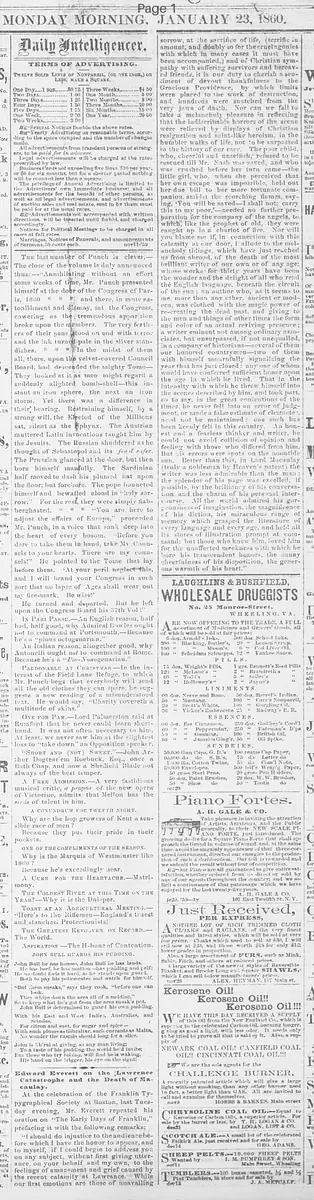
Edward Everett delivers remarks at Boston's Franklin Typographical Society event, mourning the Lawrence catastrophe with its loss of life and acts of heroism, and the recent death of historian Lord Macaulay, praising his genius and character.
Clipping
OCR Quality
88%
Good
Full Text
Edward Everett
on
the Lawrence
Catastrophe and the Death of Macaulay.
At the celebration of the Franklin Typographical Society at Boston, last Tuesday
evening, Mr. Everett repeated his
oration on "The Early Days of Franklin,"
prefacing it with the following remarks:
"I should do injustice to the audience before which I have the honor to appear, and
to myself, if I could begin to address you
without first giving utterance, on your behalf and my own, to the
feelings of amazement and grief caused by
the recent calamity at Lawrence. While
our first emotions are those of unavailing
sorrow, at the sacrifice of life, (terrific in
amount, and doubly so for the cruel agonies
with which in many cases it must have
been accompanied,) and of Christian sympathy with suffering survivors and bereaved friends, it is our duty to cherish a sentiment of devout thankfulness to the
Gracious Providence, by which limits
were placed to the work of destruction.
and hundreds were snatched from the
very jaws of death. Nor can we fail to
take a melancholy pleasure in reflecting
that the indescribable horrors of the scene
were relieved by displays of Christian
resignation and saint-like heroism, in the
humbler walks of life, not to be surpassed
in the history of our race. The poor child,
who, cheerful and unselfish, refused to be
rescued till Mr. Nash was saved, and who
was crushed before her turn came-the
little girl, who, when she perceived that
her own escape was impossible, held out
her due bill to her more fortunate companion, amidst the scorching flames, saying, 'You will be saved-I shall not; carry
this to my poor,'-needed no further preparation for the company of the angels, to
which, like the prophet of old, they were
caught up in a chariot of fire. Nor will
you blame me if, in connection with this
calamity at our door, I allude to the melancholy tidings, which have just reached
us from abroad, of the death of the most
brilliant writer of our own or of any age;
whose works: for thirty years have been
the wonder and the delight of all who read
the English language, beneath the circuit
of the sun: an author who, as it seems to
me, more than any other, ancient or modern, was clothed with the magic power of
re-creating the dead past, and giving to
the men and things of other times the form
and color of an actual reviving presence;
a writer eminent not among ordinary associates, but unsurpassed, if not unequalled,
in a company of historians-several of them
our honored countrymen-two of them
with himself mournfully signalizing the
year that has just closed: any one of whom
would have conferred sufficient honor upon
the age in which he lived. That in the
intensity with which he threw himself into
the scenes described by him, and took part,
so to say, in the great contentions of the
times, he never fell into an error of judgment, or made a false estimate of character,
need not be maintained: one such has
been keenly felt in this country. In honest and a fearless thinker and writer, he
could not avoid collision of opinion and
feeling with those who differed from him.
But his errors were spots on the noontide
sun. Better than this, in Lord Macaulay
(truly a nobleman by Heaven's patent) the
writer was less admirable than the man:
the splendor of his page was excelled, if
possible, by the brilliancy of his conversation and the charm of his personal intercourse. All the world admired his gorgeousness of imagination, the magnificence
of his diction, his miraculous range of
memory which grasped the literature of
every language and every age, and held all
its stores of illustration prompt at command: but those who knew him, loved him
for the unaffected meekness with which he
bore his transcendent honors, the sunny
cheerfulness of his disposition, the generous warmth of his heart."
on
the Lawrence
Catastrophe and the Death of Macaulay.
At the celebration of the Franklin Typographical Society at Boston, last Tuesday
evening, Mr. Everett repeated his
oration on "The Early Days of Franklin,"
prefacing it with the following remarks:
"I should do injustice to the audience before which I have the honor to appear, and
to myself, if I could begin to address you
without first giving utterance, on your behalf and my own, to the
feelings of amazement and grief caused by
the recent calamity at Lawrence. While
our first emotions are those of unavailing
sorrow, at the sacrifice of life, (terrific in
amount, and doubly so for the cruel agonies
with which in many cases it must have
been accompanied,) and of Christian sympathy with suffering survivors and bereaved friends, it is our duty to cherish a sentiment of devout thankfulness to the
Gracious Providence, by which limits
were placed to the work of destruction.
and hundreds were snatched from the
very jaws of death. Nor can we fail to
take a melancholy pleasure in reflecting
that the indescribable horrors of the scene
were relieved by displays of Christian
resignation and saint-like heroism, in the
humbler walks of life, not to be surpassed
in the history of our race. The poor child,
who, cheerful and unselfish, refused to be
rescued till Mr. Nash was saved, and who
was crushed before her turn came-the
little girl, who, when she perceived that
her own escape was impossible, held out
her due bill to her more fortunate companion, amidst the scorching flames, saying, 'You will be saved-I shall not; carry
this to my poor,'-needed no further preparation for the company of the angels, to
which, like the prophet of old, they were
caught up in a chariot of fire. Nor will
you blame me if, in connection with this
calamity at our door, I allude to the melancholy tidings, which have just reached
us from abroad, of the death of the most
brilliant writer of our own or of any age;
whose works: for thirty years have been
the wonder and the delight of all who read
the English language, beneath the circuit
of the sun: an author who, as it seems to
me, more than any other, ancient or modern, was clothed with the magic power of
re-creating the dead past, and giving to
the men and things of other times the form
and color of an actual reviving presence;
a writer eminent not among ordinary associates, but unsurpassed, if not unequalled,
in a company of historians-several of them
our honored countrymen-two of them
with himself mournfully signalizing the
year that has just closed: any one of whom
would have conferred sufficient honor upon
the age in which he lived. That in the
intensity with which he threw himself into
the scenes described by him, and took part,
so to say, in the great contentions of the
times, he never fell into an error of judgment, or made a false estimate of character,
need not be maintained: one such has
been keenly felt in this country. In honest and a fearless thinker and writer, he
could not avoid collision of opinion and
feeling with those who differed from him.
But his errors were spots on the noontide
sun. Better than this, in Lord Macaulay
(truly a nobleman by Heaven's patent) the
writer was less admirable than the man:
the splendor of his page was excelled, if
possible, by the brilliancy of his conversation and the charm of his personal intercourse. All the world admired his gorgeousness of imagination, the magnificence
of his diction, his miraculous range of
memory which grasped the literature of
every language and every age, and held all
its stores of illustration prompt at command: but those who knew him, loved him
for the unaffected meekness with which he
bore his transcendent honors, the sunny
cheerfulness of his disposition, the generous warmth of his heart."
What sub-type of article is it?
Historical Event
Disaster
Biography
What themes does it cover?
Misfortune
Tragedy
Bravery Heroism
What keywords are associated?
Lawrence Catastrophe
Macaulay Death
Edward Everett Speech
Heroic Sacrifice
Historical Genius
What entities or persons were involved?
Edward Everett
Mr. Nash
Lord Macaulay
Where did it happen?
Boston And Lawrence
Story Details
Key Persons
Edward Everett
Mr. Nash
Lord Macaulay
Location
Boston And Lawrence
Event Date
Last Tuesday Evening
Story Details
Edward Everett's speech expresses grief for the Lawrence calamity, noting heroic acts by a child saving Mr. Nash and another giving her due bill before dying, and thanks Providence for limiting destruction. He also mourns Lord Macaulay's death, praising his historical writing, genius, and personal virtues.