Thank you for visiting SNEWPapers!
Sign up free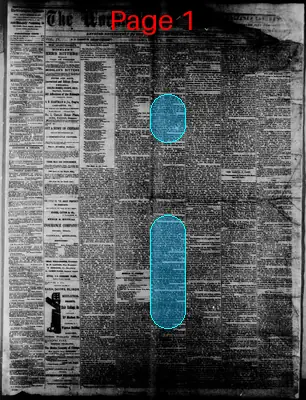
Domestic News
September 21, 1867
The Workingman's Advocate
Chicago, Cook County, Illinois
What is this article about?
Transcript of testimony before a committee, likely parliamentary, discussing labor practices in factories, including how contract proceeds and surplus profits are shared among workers and piece-masters, with input from Mr. Roebuck, Mr. Matthews, Mr. Harrison, and the Chairman.
Clipping

OCR Quality
65%
Fair
Full Text
Do same proportionate 6
in his ordinance? Yo
r. Roebuck-Will you tell me what is in.
st a man has not to receive the money?
He has no interest not to receive it; he has
not interest in receiving it? Or
you object to his not receiving it? Do
not? No, we object to men not paying
it. Some piece-masters, as we call them.
Insist on pocketing the whole of the money
and we insist on their sharing it."
Mr. Matthews: If a workman possessed
of superior intelligence or tact in organising
a contract, divides the proceeds amongst his
fellow-men, there is no encouragement for
him to proceed in that way, is there? -Such
a man as that, generally speaking, is rated
at a higher rate of wages than the others,
and, in addition to his rate of wages, on
sharing the surplus he generally receives
something like 5 or 10 per cent. for his management in the affair.
So that he is not excluded altogether from
the advantages that he might derive from
his faculty of combination, but he divides
the surplus in a certain ratio with his fel-
low workmen? -Yes.
Mr. Roebuck: Does it come to
this, that there is an equal division through-
out the whole sum received? -Not an equal
division.
A reasonable division, according to the
share each received? It is for the parties
in job; the dozen who take the most were some-
ployed on a contract job, insist on the money
being shared. It must not be supposed that
when there are a number of workers employed
in the one room the rule works on contract,
the rule applies to them solely, as to those who are employed on what
we call the job, or contract, as it may be.
Mr. Harrison: Is it not the suction of
your town boxes?
No, Paul-contract; because it is not such, for
instance, a large locomotive factory, the
contract is direct from the Gooe, that is to
say, 'direct from the employer; It is not a
sub-contract.
Of course the same rule applies?
David the decision?
s$ that "e mits
dall s sub-contractor
thbiez When
40
Chairman: Do you think that the regulation to which you refer is
pedes. or. discourages piecework? To my
mind it rather encourages it. To way
men without it properly have
then the whole run to divided? Yes,
but we do not arrange as to any par-
ticular number of men there he. ool
4a
- Mr. Roebuck: The contractor votes him-
self, I suppose? In home tntg ci each
And he receives certificate of wages?
Yes...
a snioo3g jo s2097bd ts 70
Then in the division of the produce or
the concern he receives reasonably according
to his wages a portion of that sum?
Then the second portion, which is the sur-
plus profit, is reasonably distributed
amongst all the men? See superior knowledge and
reporbind or ar dodadyrbvou
endeavored to show that if a
contractors, generally speaking, and due
30984
rateably laid y
The two or three
of the weu
in his ordinance? Yo
r. Roebuck-Will you tell me what is in.
st a man has not to receive the money?
He has no interest not to receive it; he has
not interest in receiving it? Or
you object to his not receiving it? Do
not? No, we object to men not paying
it. Some piece-masters, as we call them.
Insist on pocketing the whole of the money
and we insist on their sharing it."
Mr. Matthews: If a workman possessed
of superior intelligence or tact in organising
a contract, divides the proceeds amongst his
fellow-men, there is no encouragement for
him to proceed in that way, is there? -Such
a man as that, generally speaking, is rated
at a higher rate of wages than the others,
and, in addition to his rate of wages, on
sharing the surplus he generally receives
something like 5 or 10 per cent. for his management in the affair.
So that he is not excluded altogether from
the advantages that he might derive from
his faculty of combination, but he divides
the surplus in a certain ratio with his fel-
low workmen? -Yes.
Mr. Roebuck: Does it come to
this, that there is an equal division through-
out the whole sum received? -Not an equal
division.
A reasonable division, according to the
share each received? It is for the parties
in job; the dozen who take the most were some-
ployed on a contract job, insist on the money
being shared. It must not be supposed that
when there are a number of workers employed
in the one room the rule works on contract,
the rule applies to them solely, as to those who are employed on what
we call the job, or contract, as it may be.
Mr. Harrison: Is it not the suction of
your town boxes?
No, Paul-contract; because it is not such, for
instance, a large locomotive factory, the
contract is direct from the Gooe, that is to
say, 'direct from the employer; It is not a
sub-contract.
Of course the same rule applies?
David the decision?
s$ that "e mits
dall s sub-contractor
thbiez When
40
Chairman: Do you think that the regulation to which you refer is
pedes. or. discourages piecework? To my
mind it rather encourages it. To way
men without it properly have
then the whole run to divided? Yes,
but we do not arrange as to any par-
ticular number of men there he. ool
4a
- Mr. Roebuck: The contractor votes him-
self, I suppose? In home tntg ci each
And he receives certificate of wages?
Yes...
a snioo3g jo s2097bd ts 70
Then in the division of the produce or
the concern he receives reasonably according
to his wages a portion of that sum?
Then the second portion, which is the sur-
plus profit, is reasonably distributed
amongst all the men? See superior knowledge and
reporbind or ar dodadyrbvou
endeavored to show that if a
contractors, generally speaking, and due
30984
rateably laid y
The two or three
of the weu
What sub-type of article is it?
Economic
Legal Or Court
What keywords are associated?
Factory Labor
Piecework
Contract Sharing
Wages
Surplus Profit
Locomotive Factory
What entities or persons were involved?
Mr. Roebuck
Mr. Matthews
Mr. Harrison
Chairman
Domestic News Details
Key Persons
Mr. Roebuck
Mr. Matthews
Mr. Harrison
Chairman
Event Details
Testimony discussing sharing of contract proceeds and surplus profits among factory workers and piece-masters, with higher rates for organizers and reasonable divisions based on contributions.