Thank you for visiting SNEWPapers!
Sign up free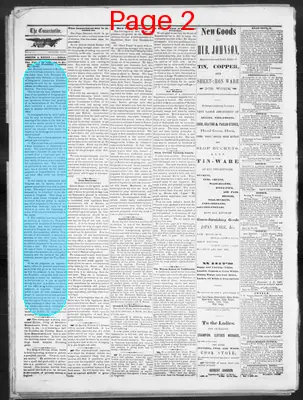
Editorial
December 5, 1867
The Conservative
Mcconnelsville, Morgan County, Ohio
What is this article about?
Editorial discussing Hon. Reverdy Johnson's argument against Congress's power to remove the President pending impeachment trial, refuting Radical theories on constitutional 'inability' clause.
Clipping

OCR Quality
96%
Excellent
Full Text
The Power of Congress to Remove the President Pending His Trial.
Hon. Reverdy Johnson, of Maryland, one of the ablest lawyers in the country, takes issue with Thaddeus Stevens and other Radicals, on the power of Congress to remove the President pending his trial for an impeachable offense, and effectually demolishes their theories. The writer says:
"The writer has been informed that some of the members of Congress profess to be of the opinion that that body can, by statute, declare that pending an impeachment of the President shall constitute a disability on his part, to perform the functions of his office.
It is supposed that by such legislation he may be brought within the meaning of the clause in the first section of the second article of the Constitution, which provides for his removal for, amongst other causes, his 'inability' to discharge the powers and duties thereof.
The answers to the proposition are several and conclusive.
1. The clause does not contemplate a mere suspension or temporary removal. The removal provided for in such case is the same as that which is to result from a conviction upon impeachment, or from death, or resignation, which, of course, is not temporary but a permanent one. The removal on conviction is, also, not only permanent, but is followed by the further judgment of disqualification to hold any other office under the Government.
It will hardly be maintained that Congress can, by statute, create a greater punishment than this, or make it less. The subject was evidently not designed to be submitted to the discretion of Congress. This being so, for the same reason Congress is not entrusted with the power to declare any other judgment in the case of removal from 'inability,' than the one which is to ensue the happening of either of the other events mentioned in the clause.
2. The 'inability' mentioned is such an inability as renders the President permanently incapable of discharging his duties. Any other interpretation would give Congress the authority to provide that temporary absence from the seat of Government, or temporary sickness, or any other event, should constitute an 'inability.' There is, also, no judicial judgment to be pronounced in such a case. The removal, as in the case of death, or resignation, is to take place the moment the contingency happens, and the duties of the office instantly devolve upon the Vice President.
3. As the judgment, on impeachment, inflicts no personal punishment, as the trial may go on as well without as with the presence in the Senate of the President, and as that body has no authority to compel his attendance, it is obvious that he is just as capable during the trial to perform the duties of his office as he is before or after a judgment of acquittal. Under the power to pass all laws necessary and proper to execute the powers granted, no such authority as the one in question belongs to Congress, no legislation being necessary to effect the object of the clause-that being accomplished the moment the event occurs of an 'inability,' within the constitutional meaning of that term."
Hon. Reverdy Johnson, of Maryland, one of the ablest lawyers in the country, takes issue with Thaddeus Stevens and other Radicals, on the power of Congress to remove the President pending his trial for an impeachable offense, and effectually demolishes their theories. The writer says:
"The writer has been informed that some of the members of Congress profess to be of the opinion that that body can, by statute, declare that pending an impeachment of the President shall constitute a disability on his part, to perform the functions of his office.
It is supposed that by such legislation he may be brought within the meaning of the clause in the first section of the second article of the Constitution, which provides for his removal for, amongst other causes, his 'inability' to discharge the powers and duties thereof.
The answers to the proposition are several and conclusive.
1. The clause does not contemplate a mere suspension or temporary removal. The removal provided for in such case is the same as that which is to result from a conviction upon impeachment, or from death, or resignation, which, of course, is not temporary but a permanent one. The removal on conviction is, also, not only permanent, but is followed by the further judgment of disqualification to hold any other office under the Government.
It will hardly be maintained that Congress can, by statute, create a greater punishment than this, or make it less. The subject was evidently not designed to be submitted to the discretion of Congress. This being so, for the same reason Congress is not entrusted with the power to declare any other judgment in the case of removal from 'inability,' than the one which is to ensue the happening of either of the other events mentioned in the clause.
2. The 'inability' mentioned is such an inability as renders the President permanently incapable of discharging his duties. Any other interpretation would give Congress the authority to provide that temporary absence from the seat of Government, or temporary sickness, or any other event, should constitute an 'inability.' There is, also, no judicial judgment to be pronounced in such a case. The removal, as in the case of death, or resignation, is to take place the moment the contingency happens, and the duties of the office instantly devolve upon the Vice President.
3. As the judgment, on impeachment, inflicts no personal punishment, as the trial may go on as well without as with the presence in the Senate of the President, and as that body has no authority to compel his attendance, it is obvious that he is just as capable during the trial to perform the duties of his office as he is before or after a judgment of acquittal. Under the power to pass all laws necessary and proper to execute the powers granted, no such authority as the one in question belongs to Congress, no legislation being necessary to effect the object of the clause-that being accomplished the moment the event occurs of an 'inability,' within the constitutional meaning of that term."
What sub-type of article is it?
Constitutional
Legal Reform
Partisan Politics
What keywords are associated?
Impeachment
Presidential Removal
Constitutional Inability
Radical Theories
Congressional Power
What entities or persons were involved?
Reverdy Johnson
Thaddeus Stevens
Radicals
Congress
President
Editorial Details
Primary Topic
Congress's Power To Remove President Pending Impeachment
Stance / Tone
Opposition To Radical Theories On Presidential Removal
Key Figures
Reverdy Johnson
Thaddeus Stevens
Radicals
Congress
President
Key Arguments
Clause On Inability Contemplates Permanent Removal, Not Temporary Suspension
Inability Must Be Permanent Incapacity, Not Temporary Events Like Sickness
President Remains Capable During Impeachment Trial, No Congressional Authority For Interim Removal