Thank you for visiting SNEWPapers!
Sign up free
The Kusko Times
Takotna, Tokotna, Mcgrath, Alaska
What is this article about?
Upon returning from Europe amid discussions on the Anglo-French naval agreement, US Representative Fred A. Britten criticizes European diplomacy as deceitful, notes more troops under arms than in 1914, expresses skepticism about the Kellogg peace pact, and proposes steps for Central European peace including troop removal from the Rhine, revising the Versailles treaty, and setting German reparations.
Clipping
OCR Quality
Full Text
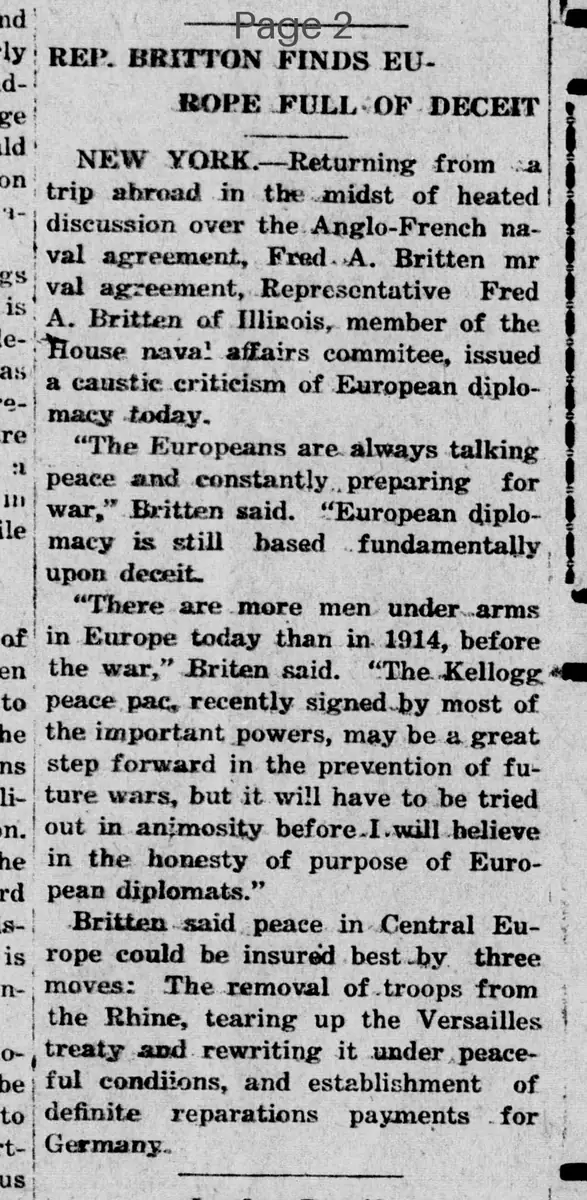
NEW YORK.--Returning from a trip abroad in the midst of heated discussion over the Anglo-French naval agreement, Representative Fred A. Britten of Illinois, member of the House naval affairs committee, issued a caustic criticism of European diplomacy today.
"The Europeans are always talking peace and constantly preparing for war," Britten said. "European diplomacy is still based fundamentally upon deceit.
"There are more men under arms in Europe today than in 1914, before the war," Britten said. "The Kellogg peace pact, recently signed by most of the important powers, may be a great step forward in the prevention of future wars, but it will have to be tried out in animosity before I will believe in the honesty of purpose of European diplomats."
Britten said peace in Central Europe could be insured best by three moves: The removal of troops from the Rhine, tearing up the Versailles treaty and rewriting it under peaceful conditions, and establishment of definite reparations payments for Germany.
What sub-type of article is it?
What keywords are associated?
What entities or persons were involved?
Where did it happen?
Foreign News Details
Primary Location
Europe
Event Date
Today
Key Persons
Outcome
suggestions for peace: removal of troops from the rhine, revising the versailles treaty under peaceful conditions, and establishing definite reparations payments for germany.
Event Details
Returning from a trip abroad, Representative Fred A. Britten of Illinois issued a criticism of European diplomacy, stating it is based on deceit with more men under arms than in 1914. He views the Kellogg peace pact as a potential step forward but doubts European diplomats' honesty. He proposes three moves to insure peace in Central Europe.