Thank you for visiting SNEWPapers!
Sign up free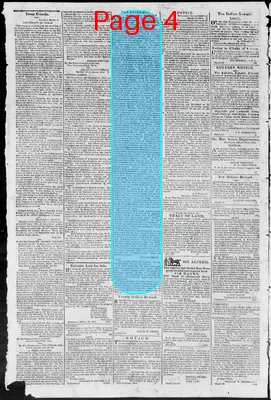
Story
April 1, 1815
Virginia Argus
Richmond, Virginia
What is this article about?
In March 1815, Richmond physician Joseph Trent publishes observations on the ongoing epidemic fever, defending early bloodletting and stimulation treatments against public prejudice and professional envy, reporting only 9 deaths among over 300 patients.
Clipping

OCR Quality
98%
Excellent
Full Text
THE EPIDEMIC.
Richmond, 25th March, 1815.
As much has been said about the present epidemic, the following observations, to correct misstatements and remove false impressions.
It is the character of epidemic diseases, to be most violent and deadly when they first appear, and to grow more mild as they progress. Hence the greater fatality at first under any treatment, and the reported more successful practice as they progress. The fever is of the Synochus or mixed kind; that is, inflammatory (sometimes extremely so) at the beginning, but degenerating speedily into one of debility, favoring effusions of lymph and congestions of blood on vital organs. To obviate these fatal tendencies of the disease, you must moderate the fever at the beginning and keep up a steady determination to the skin by perspiration, blistering and other irritating applications. It is the force of the fever at the beginning propelling the blood in undue quantity upon the brain, lungs and throat which constitutes its danger. After these vital parts have become gorged or suffocated with blood, the only chance of recovery in the worst cases, is from the most powerful and unremitted stimulation; but this is shutting the door after the thief has entered. It is the business of the physician to prevent this by a decisive blow at the threshold, or in other words by attacking the disease at its onset by such remedies as are known to be efficient in subduing fever.
Having written on the epidemic twice and enjoying a large share of the confidence of my fellow citizens, almost every case came under my care or the first two or three weeks. Whilst gentlemen known to be in good practice were doing nothing, I was unable with the most active exertions, to attend to all the business which offered. The worst cases occurred at first. For five weeks I daily visited from 25 to 30 patients, and prescribed often for as many more whom I could not attend. This almost exclusive practice in the epidemic could not be borne by little minds. How to come at a participation was an object much & most anxiously desired. It was determined that the end would justify the means. Public opinion, founded in ignorance of the disease, was against the use of the lancet in any case. This was made an instrument in the hands of Envy to accomplish the object. Bloodletting was denounced in all cases, although it had been used in many with the most immediate and permanent good effect. Envy being thus frustrated called in the aid of malice. It was first whispered about that no one bled but me, and then that no one lost patients but myself. This undignified conduct was treated with contempt and would not have been thus noticed, but for my having received several communications informing me that, it was reported generally through the country that I had lost every patient to whom I had been called. As to the first assertion I shall only say that, the most eminent physicians* in this city have bled during the winter and continue to bleed in the prevailing diseases. The second will be answered by stating the number attended by me and the deaths which have occurred. The winter form of the disease (a synochus fever complicated with colds, sore throat, pleurisy and rheumatism) has prevailed epidemically for 2 months, but sporadically for 18 months past. During these two months I must have attended upwards of 300 persons of all descriptions and conditions—Nine died, viz six whites and three negroes. Three of the nine were bled once each—the others were not bled. Four of them were pronounced mortal cases the moment I saw them, in consequence of an engorged or suffocated state of the lungs. Neither of these was bled. In many cases the attack is so sudden and overwhelming that the patient hardly knows that he is sick, before he finds himself in the agony of death, being carried off in from 12 to 24 hours.
My practice for many years has been general and extensive. I attend to all applications. Many of those who died, I knew would die, from the account given, before I saw them, but I did not refuse to visit them from fear that I should suffer in reputation. I attended promptly and cheerfully to such cases, believing it would be consolatory to the patient and his friends.
I shall conclude by expressing pity for him, who boasts that he has practised extensively in the epidemic without losing a patient, for I am sure, his warmest friend will not believe him. I feel pity for those who have declared that they would not bleed in any case whatever, for it exposes their prejudice and weakness, and makes them unworthy the profession. I feel the most heartfelt sorrow for the patient whose physician suffers his judgment and practice to be swayed by public clamor and popular prejudice.
JOSEPH TRENT.
* Viz. Doctors McClurg, Foushee, sen. Lyons, Greenhow, McCaw and Worrell. To whom more than 60 were bled—some twice and nearly all until they grew sicker or faint. Neither Typhus mitior nor gravior followed my practice. It was too prompt and decisive. The foundation of innumerable consumptions will be laid by neglecting the use of the lancet.
; Two so sparingly from their fears, as to be of no account. The other sufficiently and was the most quickly relieved person, from the most violent attack, I had ever seen. He relapsed and died from causes unnecessary to mention.
Richmond, 25th March, 1815.
As much has been said about the present epidemic, the following observations, to correct misstatements and remove false impressions.
It is the character of epidemic diseases, to be most violent and deadly when they first appear, and to grow more mild as they progress. Hence the greater fatality at first under any treatment, and the reported more successful practice as they progress. The fever is of the Synochus or mixed kind; that is, inflammatory (sometimes extremely so) at the beginning, but degenerating speedily into one of debility, favoring effusions of lymph and congestions of blood on vital organs. To obviate these fatal tendencies of the disease, you must moderate the fever at the beginning and keep up a steady determination to the skin by perspiration, blistering and other irritating applications. It is the force of the fever at the beginning propelling the blood in undue quantity upon the brain, lungs and throat which constitutes its danger. After these vital parts have become gorged or suffocated with blood, the only chance of recovery in the worst cases, is from the most powerful and unremitted stimulation; but this is shutting the door after the thief has entered. It is the business of the physician to prevent this by a decisive blow at the threshold, or in other words by attacking the disease at its onset by such remedies as are known to be efficient in subduing fever.
Having written on the epidemic twice and enjoying a large share of the confidence of my fellow citizens, almost every case came under my care or the first two or three weeks. Whilst gentlemen known to be in good practice were doing nothing, I was unable with the most active exertions, to attend to all the business which offered. The worst cases occurred at first. For five weeks I daily visited from 25 to 30 patients, and prescribed often for as many more whom I could not attend. This almost exclusive practice in the epidemic could not be borne by little minds. How to come at a participation was an object much & most anxiously desired. It was determined that the end would justify the means. Public opinion, founded in ignorance of the disease, was against the use of the lancet in any case. This was made an instrument in the hands of Envy to accomplish the object. Bloodletting was denounced in all cases, although it had been used in many with the most immediate and permanent good effect. Envy being thus frustrated called in the aid of malice. It was first whispered about that no one bled but me, and then that no one lost patients but myself. This undignified conduct was treated with contempt and would not have been thus noticed, but for my having received several communications informing me that, it was reported generally through the country that I had lost every patient to whom I had been called. As to the first assertion I shall only say that, the most eminent physicians* in this city have bled during the winter and continue to bleed in the prevailing diseases. The second will be answered by stating the number attended by me and the deaths which have occurred. The winter form of the disease (a synochus fever complicated with colds, sore throat, pleurisy and rheumatism) has prevailed epidemically for 2 months, but sporadically for 18 months past. During these two months I must have attended upwards of 300 persons of all descriptions and conditions—Nine died, viz six whites and three negroes. Three of the nine were bled once each—the others were not bled. Four of them were pronounced mortal cases the moment I saw them, in consequence of an engorged or suffocated state of the lungs. Neither of these was bled. In many cases the attack is so sudden and overwhelming that the patient hardly knows that he is sick, before he finds himself in the agony of death, being carried off in from 12 to 24 hours.
My practice for many years has been general and extensive. I attend to all applications. Many of those who died, I knew would die, from the account given, before I saw them, but I did not refuse to visit them from fear that I should suffer in reputation. I attended promptly and cheerfully to such cases, believing it would be consolatory to the patient and his friends.
I shall conclude by expressing pity for him, who boasts that he has practised extensively in the epidemic without losing a patient, for I am sure, his warmest friend will not believe him. I feel pity for those who have declared that they would not bleed in any case whatever, for it exposes their prejudice and weakness, and makes them unworthy the profession. I feel the most heartfelt sorrow for the patient whose physician suffers his judgment and practice to be swayed by public clamor and popular prejudice.
JOSEPH TRENT.
* Viz. Doctors McClurg, Foushee, sen. Lyons, Greenhow, McCaw and Worrell. To whom more than 60 were bled—some twice and nearly all until they grew sicker or faint. Neither Typhus mitior nor gravior followed my practice. It was too prompt and decisive. The foundation of innumerable consumptions will be laid by neglecting the use of the lancet.
; Two so sparingly from their fears, as to be of no account. The other sufficiently and was the most quickly relieved person, from the most violent attack, I had ever seen. He relapsed and died from causes unnecessary to mention.
What sub-type of article is it?
Medical Curiosity
Biography
Historical Event
What themes does it cover?
Misfortune
Recovery
Moral Virtue
What keywords are associated?
Epidemic
Synochus Fever
Bloodletting
Medical Treatment
Richmond Epidemic
Physician Defense
What entities or persons were involved?
Joseph Trent
Mcclurg
Foushee
Lyons
Greenhow
Mccaw
Worrell
Where did it happen?
Richmond
Story Details
Key Persons
Joseph Trent
Mcclurg
Foushee
Lyons
Greenhow
Mccaw
Worrell
Location
Richmond
Event Date
25th March, 1815
Story Details
Physician Joseph Trent describes the synochus fever epidemic in Richmond, advocates early bloodletting to prevent fatal congestions, reports treating over 300 patients with only 9 deaths, and defends his methods against envy-driven rumors and public prejudice.