Thank you for visiting SNEWPapers!
Sign up free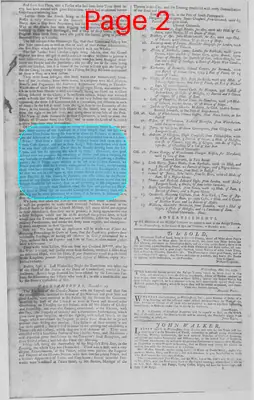
Editorial
November 17, 1752
The Virginia Gazette
Richmond, Williamsburg, Richmond County, Virginia
What is this article about?
The editorial cites Philip of Macedon's letter reprimanding his son for bribing Macedonians to gain affection, advising rulers to win loyalty through virtuous benefits rather than gifts or bribes, to avoid corruption and uphold righteousness in the state, referencing Solomon.
Clipping
OCR Quality
98%
Excellent
Full Text
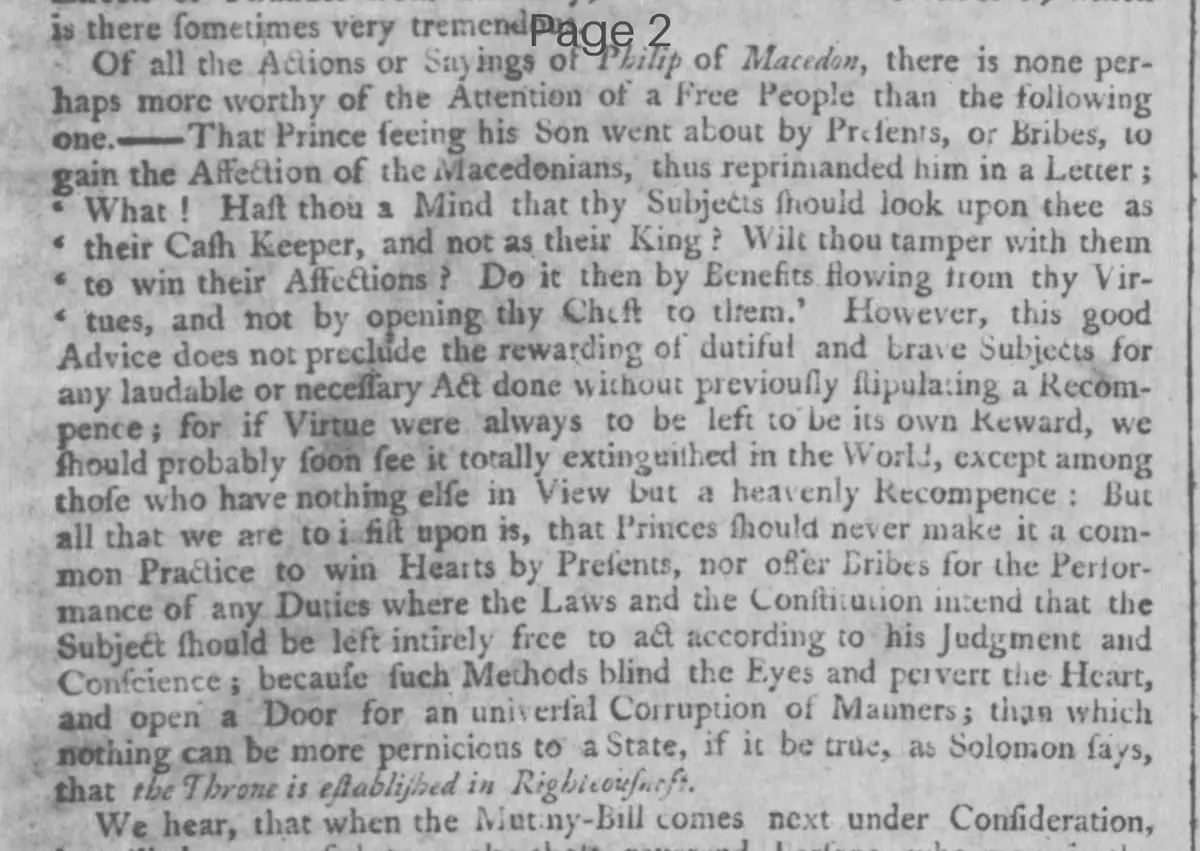
Of all the Actions or Sayings of Philip of Macedon, there is none perhaps more worthy of the Attention of a Free People than the following one.—That Prince seeing his Son went about by Presents, or Bribes, to gain the Affection of the Macedonians, thus reprimanded him in a Letter ; What ! Hast thou a Mind that thy Subjects should look upon thee as their Cash Keeper, and not as their King ? Wilt thou tamper with them to win their Affections ? Do it then by Benefits flowing from thy Virtues, and not by opening thy Chest to them.
However, this good Advice does not preclude the rewarding of dutiful and brave Subjects for any laudable or necessary Act done without previously stipulating a Recompence; for if Virtue were always to be left to be its own Reward, we should probably soon see it totally extinguished in the World, except among those who have nothing else in View but a heavenly Recompence : But all that we are to insist upon is, that Princes should never make it a common Practice to win Hearts by Presents, nor offer Bribes or the Performance of any Duties where the Laws and the Constitution intend that the Subject should be left entirely free to act according to his Judgment and Conscience; because such Methods blind the Eyes and pervert the Heart, and open a Door for an universal Corruption of Manners; than which nothing can be more pernicious to a State, if it be true, as Solomon says, that the Throne is established in Righteousness.
However, this good Advice does not preclude the rewarding of dutiful and brave Subjects for any laudable or necessary Act done without previously stipulating a Recompence; for if Virtue were always to be left to be its own Reward, we should probably soon see it totally extinguished in the World, except among those who have nothing else in View but a heavenly Recompence : But all that we are to insist upon is, that Princes should never make it a common Practice to win Hearts by Presents, nor offer Bribes or the Performance of any Duties where the Laws and the Constitution intend that the Subject should be left entirely free to act according to his Judgment and Conscience; because such Methods blind the Eyes and pervert the Heart, and open a Door for an universal Corruption of Manners; than which nothing can be more pernicious to a State, if it be true, as Solomon says, that the Throne is established in Righteousness.
What sub-type of article is it?
Moral Or Religious
Social Reform
What keywords are associated?
Bribery
Virtue
Corruption
Princes
Subjects
Righteousness
Macedonians
What entities or persons were involved?
Philip Of Macedon
His Son
Solomon
Editorial Details
Primary Topic
Advice Against Bribery And Corruption In Governance
Stance / Tone
Moral Exhortation Against Corrupting Influences On Rulers And Subjects
Key Figures
Philip Of Macedon
His Son
Solomon
Key Arguments
Rulers Should Win Subjects' Affection Through Virtuous Benefits, Not Bribes.
Bribing Subjects Reduces The Ruler To A 'Cash Keeper' Rather Than A King.
Rewarding Dutiful Acts Is Acceptable If Not Pre Stipulated.
Virtue Cannot Rely Solely On Its Own Reward Or Heavenly Recompense.
Princes Must Not Commonly Use Presents Or Bribes, Especially Where Laws Intend Freedom Of Judgment.
Such Methods Cause Corruption Of Manners, Pernicious To The State.
The Throne Is Established In Righteousness.