Thank you for visiting SNEWPapers!
Sign up free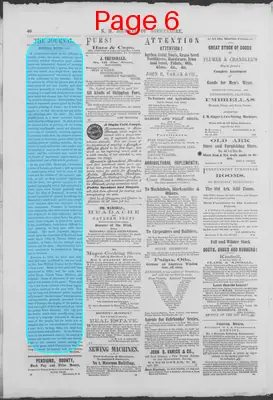
Literary
January 5, 1863
New Hampshire Journal Of Agriculture
Manchester, Hillsborough County, New Hampshire
What is this article about?
This essay traces the evolution of music printing techniques, from pewter plate punching to Breitkopf's superior types in 1755 and later improvements. It contrasts with lithography and movable types, and provides historical context from 1503 psalm settings to the Reformation's revival of congregational singing.
Clipping

OCR Quality
95%
Excellent
Full Text
THE JOURNAL.
MUSICAL NOTES---56.
A considerable stride in the diffusion of musical works was made, when the art of punching musical characters upon pewter plates was introduced. Instead of scraping out the characters with a graver, they are in this way struck at a single blow; and the uniform appearance of the notes is secured by the uniformity of the punches. This is the process by which the greater part of the sheet music of our own country and other countries generally, is now produced. The punching is a rapid and cheap process-even more rapid and cheaper than that of arranging movable characters. Attempts have been made to supersede pewter plates by the lithographic printing of music; but it does not appear to us that this mode has any essential advantage over the other. The lithographic press is a more uncertain instrument than the rolling press. In each process the manual labor of printing off the copies, involving considerable nicety and attention, is a source of constantly recurring expense. In printing music from the surface of movable types, or stereotype plates, either by the printing-press or printing-machine, the operation is rapid and certain; the market may be supplied at once to the extent of the demand; and the consumer may receive the full benefit of mechanical improvements, in a diminished cost of the article produced.
In the year 1755, Breitkopf, a celebrated printer of Leipsic, produced a new specimen of music-types, which both in form of the notes and the niceties of the accessory symbols, as well as their accurate adjustment with the lines, was greatly superior to the musical typography which had preceded it. These types soon became generally used. Since the time of Breitkopf, however, the general extension of musical knowledge has demanded a much more precise and complicated notation than was employed by the best composers. Passages in accompaniment especially, that were merely indicated, now require to be fully exhibited; and the improvements of our piano fortes has given a much wider compass to piano-forte music. It has, accordingly, been found difficult for type printing to keep pace with these changes. The most important improvements upon the characters of Breitkopf were made about 1802, by Messrs. Oliver and Godefroi, at Paris; but the attempt was a ruinous one for them. Improvements, however, continue to be attempted, in Europe and in America.
Previous to 1594, no more than forty tunes had been published in any one book. At this date William Damon set the Psalms to four parts. Music in four parts had been introduced in 1503; and the parts were called Tenor, Contra Tenor, Motetus, and Triplum. Some of the music of this early period was written in six parts. There were only a few books printed, even from engraved plates, previous to the year 1600. During the long and disastrous period emphatically termed "the dark ages," when ignorance and superstition generally prevailed in the west of Europe, the singing of the praises of God was a part of divine worship from which the people were debarred. Not only were the words, which were actually sung, composed in a language unknown to the great mass of the people, but the music was so complex that no one uneducated could bear a part in it; to sing, then, one must have studied music scientifically. At the Reformation in the sixteenth century, the singing of psalms and hymns was revived and vindicated to the common people, among the means of grace which Christendom has been long deprived by tyranny and usurpation.
MOORE.
MUSICAL NOTES---56.
A considerable stride in the diffusion of musical works was made, when the art of punching musical characters upon pewter plates was introduced. Instead of scraping out the characters with a graver, they are in this way struck at a single blow; and the uniform appearance of the notes is secured by the uniformity of the punches. This is the process by which the greater part of the sheet music of our own country and other countries generally, is now produced. The punching is a rapid and cheap process-even more rapid and cheaper than that of arranging movable characters. Attempts have been made to supersede pewter plates by the lithographic printing of music; but it does not appear to us that this mode has any essential advantage over the other. The lithographic press is a more uncertain instrument than the rolling press. In each process the manual labor of printing off the copies, involving considerable nicety and attention, is a source of constantly recurring expense. In printing music from the surface of movable types, or stereotype plates, either by the printing-press or printing-machine, the operation is rapid and certain; the market may be supplied at once to the extent of the demand; and the consumer may receive the full benefit of mechanical improvements, in a diminished cost of the article produced.
In the year 1755, Breitkopf, a celebrated printer of Leipsic, produced a new specimen of music-types, which both in form of the notes and the niceties of the accessory symbols, as well as their accurate adjustment with the lines, was greatly superior to the musical typography which had preceded it. These types soon became generally used. Since the time of Breitkopf, however, the general extension of musical knowledge has demanded a much more precise and complicated notation than was employed by the best composers. Passages in accompaniment especially, that were merely indicated, now require to be fully exhibited; and the improvements of our piano fortes has given a much wider compass to piano-forte music. It has, accordingly, been found difficult for type printing to keep pace with these changes. The most important improvements upon the characters of Breitkopf were made about 1802, by Messrs. Oliver and Godefroi, at Paris; but the attempt was a ruinous one for them. Improvements, however, continue to be attempted, in Europe and in America.
Previous to 1594, no more than forty tunes had been published in any one book. At this date William Damon set the Psalms to four parts. Music in four parts had been introduced in 1503; and the parts were called Tenor, Contra Tenor, Motetus, and Triplum. Some of the music of this early period was written in six parts. There were only a few books printed, even from engraved plates, previous to the year 1600. During the long and disastrous period emphatically termed "the dark ages," when ignorance and superstition generally prevailed in the west of Europe, the singing of the praises of God was a part of divine worship from which the people were debarred. Not only were the words, which were actually sung, composed in a language unknown to the great mass of the people, but the music was so complex that no one uneducated could bear a part in it; to sing, then, one must have studied music scientifically. At the Reformation in the sixteenth century, the singing of psalms and hymns was revived and vindicated to the common people, among the means of grace which Christendom has been long deprived by tyranny and usurpation.
MOORE.
What sub-type of article is it?
Essay
What themes does it cover?
Religious
What keywords are associated?
Music Printing
Breitkopf Types
Reformation Singing
Psalm Settings
Notation Improvements
What entities or persons were involved?
Moore.
Literary Details
Title
Musical Notes 56.
Author
Moore.
Key Lines
A Considerable Stride In The Diffusion Of Musical Works Was Made, When The Art Of Punching Musical Characters Upon Pewter Plates Was Introduced.
In The Year 1755, Breitkopf, A Celebrated Printer Of Leipsic, Produced A New Specimen Of Music Types...
At The Reformation In The Sixteenth Century, The Singing Of Psalms And Hymns Was Revived And Vindicated To The Common People...