Thank you for visiting SNEWPapers!
Sign up free
Literary
June 2, 1788
The New York Journal, And Daily Patriotic Register
New York, New York County, New York
What is this article about?
Philosophical excerpt from Helvetius arguing that understanding human self-interest allows legislators to promote virtue through punishments and rewards in laws, making goodness advantageous. Critiques religion's role, emphasizing good legislation for societal happiness and moral improvement via truth.
Clipping
OCR Quality
95%
Excellent
Full Text
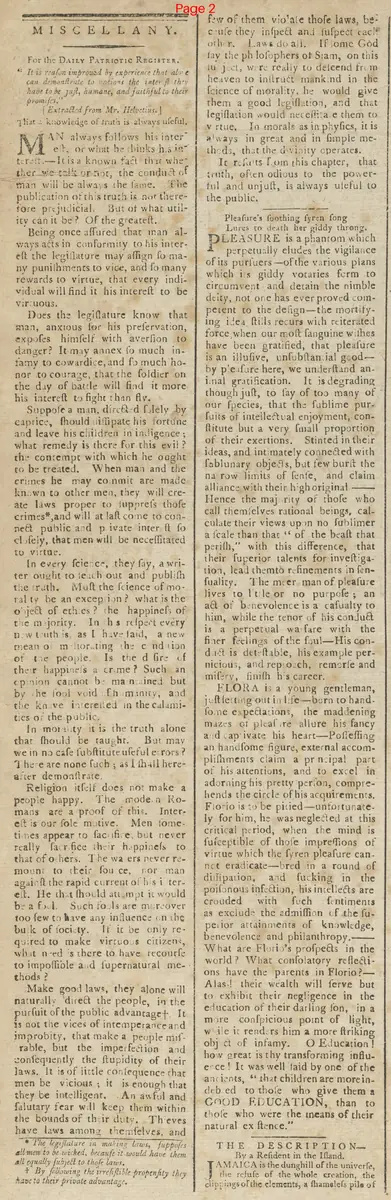
MISCELLANY
For the Daily Patriotic Register.
It is a reason imbroiled by experience that all can demonstrate to nations the interest they have to be just, humane, and faithful to their promises."
Extracted from Mr. Helvetius.
That a knowledge of truth is always useful. And always follows his interest, or what he thinks his interest.--It is a known fact that whether we talk or act, the conduct of man will be always the same. The publication of this truth is not therefore prejudicial. But of what utility can it be? Of the greatest. Being once assured that man always acts in conformity to his interest the legislature may assign so many punishments to vice, and so many rewards to virtue, that every individual will find it his interest to be virtuous.
Does the legislature know that man, anxious for his preservation, exposes himself with aversion to danger? It may annex so much infamy to cowardice, and so much honor to courage, that the soldier on the day of battle will find it more his interest to fight than fly.
Suppose a man, directed solely by caprice, should dissipate his fortune and leave his children in indigence; what remedy is there for this evil? The contempt with which he ought to be treated. When man and the crimes he may commit are made known to other men, they will create laws proper to suppress those crimes, and will at last come to connect public and private interest so closely, that men will be necessitated to virtue.
In every science, they say, a writer ought to teach out and publish the truth. Must the science of morality be an exception? What is the object of ethics? The happiness of the majority. In this respect every new truth is, as I have said, a new means of meliorating the condition of the people. Is the desire of their happiness a crime? Such an opinion cannot be maintained but by the fool void of humanity, and the knave interested in the calamities of the public.
In morality it is the truth alone that should be taught. But may we in no case substitute useful errors? There are no such; as I shall hereafter demonstrate.
Religion itself does not make a people happy. The modern Romans are a proof of this. Interest is our sole motive. Men sometimes appear to act if they sacrifice, but never really sacrifice their happiness to that of others. The waters never remont to their source, nor man against the rapid current of his interest. He that should attempt it would be a fool. Such souls are moreover too few to have any influence on the bulk of society. If it be only required to make virtuous citizens, what need is there to have recourse to impossible and supernatural methods?
Make good laws, they alone will naturally direct the people, in the pursuit of the public advantage. It is not the vices of intemperance and immorality that make a people miserable, but the imperfection and consequently the stupidity of their laws. It is of little consequence that men be vicious; it is enough that they be intelligent. An awful and salutary fear will keep them within the bounds of their duty. Thieves have laws among themselves, and few of them violate those laws, because they inspect and suspect each other. Laws do all. If some God lay the philosophers of Siam, on this subject, were really to descend from heaven to instruct mankind in the science of morality, he would give them a good legislation, and that legislation would necessitate them to virtue. In morals as in physics, it is always in great and in simple methods, that the divinity operates.
It results from this chapter, that truth, often odious to the powerful and unjust, is always useful to the public.
For the Daily Patriotic Register.
It is a reason imbroiled by experience that all can demonstrate to nations the interest they have to be just, humane, and faithful to their promises."
Extracted from Mr. Helvetius.
That a knowledge of truth is always useful. And always follows his interest, or what he thinks his interest.--It is a known fact that whether we talk or act, the conduct of man will be always the same. The publication of this truth is not therefore prejudicial. But of what utility can it be? Of the greatest. Being once assured that man always acts in conformity to his interest the legislature may assign so many punishments to vice, and so many rewards to virtue, that every individual will find it his interest to be virtuous.
Does the legislature know that man, anxious for his preservation, exposes himself with aversion to danger? It may annex so much infamy to cowardice, and so much honor to courage, that the soldier on the day of battle will find it more his interest to fight than fly.
Suppose a man, directed solely by caprice, should dissipate his fortune and leave his children in indigence; what remedy is there for this evil? The contempt with which he ought to be treated. When man and the crimes he may commit are made known to other men, they will create laws proper to suppress those crimes, and will at last come to connect public and private interest so closely, that men will be necessitated to virtue.
In every science, they say, a writer ought to teach out and publish the truth. Must the science of morality be an exception? What is the object of ethics? The happiness of the majority. In this respect every new truth is, as I have said, a new means of meliorating the condition of the people. Is the desire of their happiness a crime? Such an opinion cannot be maintained but by the fool void of humanity, and the knave interested in the calamities of the public.
In morality it is the truth alone that should be taught. But may we in no case substitute useful errors? There are no such; as I shall hereafter demonstrate.
Religion itself does not make a people happy. The modern Romans are a proof of this. Interest is our sole motive. Men sometimes appear to act if they sacrifice, but never really sacrifice their happiness to that of others. The waters never remont to their source, nor man against the rapid current of his interest. He that should attempt it would be a fool. Such souls are moreover too few to have any influence on the bulk of society. If it be only required to make virtuous citizens, what need is there to have recourse to impossible and supernatural methods?
Make good laws, they alone will naturally direct the people, in the pursuit of the public advantage. It is not the vices of intemperance and immorality that make a people miserable, but the imperfection and consequently the stupidity of their laws. It is of little consequence that men be vicious; it is enough that they be intelligent. An awful and salutary fear will keep them within the bounds of their duty. Thieves have laws among themselves, and few of them violate those laws, because they inspect and suspect each other. Laws do all. If some God lay the philosophers of Siam, on this subject, were really to descend from heaven to instruct mankind in the science of morality, he would give them a good legislation, and that legislation would necessitate them to virtue. In morals as in physics, it is always in great and in simple methods, that the divinity operates.
It results from this chapter, that truth, often odious to the powerful and unjust, is always useful to the public.
What sub-type of article is it?
Essay
What themes does it cover?
Moral Virtue
Political
What keywords are associated?
Morality
Truth
Legislation
Virtue
Self Interest
Laws
Public Happiness
What entities or persons were involved?
Extracted From Mr. Helvetius
Literary Details
Title
Miscellany
Author
Extracted From Mr. Helvetius
Form / Style
Philosophical Prose On Morality And Legislation
Key Lines
That A Knowledge Of Truth Is Always Useful. And Always Follows His Interest, Or What He Thinks His Interest.
Being Once Assured That Man Always Acts In Conformity To His Interest The Legislature May Assign So Many Punishments To Vice, And So Many Rewards To Virtue, That Every Individual Will Find It His Interest To Be Virtuous.
In Morality It Is The Truth Alone That Should Be Taught. But May We In No Case Substitute Useful Errors? There Are No Such; As I Shall Hereafter Demonstrate.
Make Good Laws, They Alone Will Naturally Direct The People, In The Pursuit Of The Public Advantage.
It Results From This Chapter, That Truth, Often Odious To The Powerful And Unjust, Is Always Useful To The Public.