Thank you for visiting SNEWPapers!
Sign up free
Literary
April 23, 1898
The Meeker Herald
Meeker, Rio Blanco County, Garfield County, Colorado
What is this article about?
Young actress Dolly Paunce, popular for her song, receives persistent admiration cards from Clarence Lowderidge. She confronts and rebuffs him after he claims religious devotion. Ten years later, successful playwright Lowderidge encounters an aged Dolly in the countryside, recognizing her and relieved by his past 'belief in Buddha.'
Merged-components note: The two images spatially overlap with the literary story 'BELIEF IN BUDDHA' and are likely illustrations for it; merging image components into the dominant literary content.
Clipping
OCR Quality
85%
Good
Full Text
BELIEF IN BUDDHA
"I'm jolly, youthful, gay and all that,
And I wear my hair in a braid.
I know no more than how to spell 'cat,'
But I'm dangerous, still I'm afraid;
For I know you—
Oh, you men!"
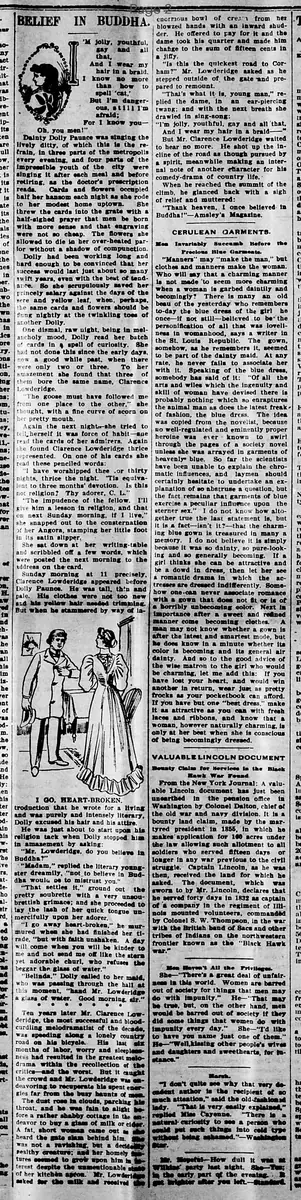
Dainty Dolly Paunce was singing the lively ditty, of which this is the refrain, in three parts of the metropolis every evening, and four parts of the impressible youth of the city were singing it after each meal and before retiring, as the doctor's prescription reads. Cards and flowers occupied half her hansom each night as she rode to her modest home uptown. She threw the cards into the grate with a half-sighed prayer that men be born with more sense and that engraving were not so cheap. The flowers she allowed to die in her over-heated parlor without a shadow of compunction. Dolly had been working long and hard enough to be convinced that her success would last just about so many swift years, even with the best of tendance. So she scrupulously saved her princely salary against the days of the sere and yellow leaf, when, perhaps, the same cards and flowers should be flung nightly at the twinkling toes of another Dolly.
One dismal, raw night, being in melancholy mood, Dolly read her batch of cards in a spell of curiosity. She had not done this since the early days, now a good while past, when there were only two or three. To her amazement she found that three of them bore the same name, Clarence Lowderidge.
"The goose must have followed me from one place to the other," she thought, with a fine curve of scorn on her pretty mouth.
Again the next night—she tried to tell herself it was force of habit—she read the cards of her admirers. Again she found Clarence Lowderidge thrice represented. On one of his cards she read these penciled words:
"I have worshipped thee for thirty nights, thrice the night. 'Tis equivalent to three months' devotion. Is this not religion? Thy adorer, C. L."
"The impudence of the fellow. I'll give him a lesson in religion, and that on next Sunday morning, if I live," she snapped out to the consternation of her Angora, stamping her little foot in its satin slipper.
She sat down at her writing-table and scribbled off a few words, which were posted the next morning to the address on the card.
Sunday morning at 11 precisely, Clarence Lowderidge appeared before Dolly Paunce. He was tall, thin and pale. His clothes were not too new and his yellow hair needed trimming. But when he stammered by way of introduction that he wrote for a living and was purely and intensely literary, Dolly excused his hair and his attire. He was just about to start upon his religion tack when Dolly stopped him in amazement by asking:
"Mr. Lowderidge, do you believe in Buddha?"
"Madam," replied the literary youngster dreamily, "not to believe in Buddha would be to mistrust you."
"That settles it," ground out the pretty soubrette with a very unsoubrettish grimace; and she proceeded to lay the lash of her quick tongue unmercifully upon her adorer.
"I go away heart-broken," he murmured when she had finished her tirade, "but with faith unshaken. A day will come when you will be kinder to me and not send me off like the stern yet adorable churl, who refuses the beggar the glass of water."
"Belinda," Dolly called to her maid, who was passing through the hall at this moment, "hand Mr. Lowderidge a glass of water. Good morning, sir."
Ten years later Mr. Clarence Lowderidge, the most successful and blood-curdling melodramatist of the decade, was speeding along a lonely country road on his bicycle. His last six months of labor, worry and sleeplessness had resulted in the greatest melodrama within the recollection of the critics and the worst. But it caught the crowd and Mr. Lowderidge was endeavoring to recuperate his spent energies far from the busy haunts of men. The dust rose in clouds, parching his throat, and he was fain to alight before a rather shabby cottage in the endeavor to buy a glass of milk or cider. A fat, short woman came out as he heard the gate slam behind him. She was not ravishing, but a decidedly healthy creature; and her homely features seemed to cross upon him with interest despite the unmentionable state of her kitchen apron. Mr. Lowderidge asked for the milk and received an enormous bowl of cream from her blowzed hands with an inward shudder. He offered to pay for it and the dame took his quarter and made him change to the sum of fifteen cents in a jiffy.
"Is this the quickest road to Corham?" Mr. Lowderidge asked as he stepped outside of the gate and prepared to remount.
"That's what it is, young man," replied the dame, in an ear-piercing twang; and with the next breath she drawled in sing-song:
"I'm jolly, youthful, gay and all that,
And I wear my hair in a braid."
But Mr. Clarence Lowderidge waited to hear no more. He shot up the incline of the road as though pursued by spirits, meanwhile making an internal note of another character for his comedy-drama of country life. When he reached the summit of the climb, he glanced back with a sigh of relief and muttered:
"Thank heaven, I once believed in Buddha!"—Ainsley's Magazine.
"I'm jolly, youthful, gay and all that,
And I wear my hair in a braid.
I know no more than how to spell 'cat,'
But I'm dangerous, still I'm afraid;
For I know you—
Oh, you men!"
Dainty Dolly Paunce was singing the lively ditty, of which this is the refrain, in three parts of the metropolis every evening, and four parts of the impressible youth of the city were singing it after each meal and before retiring, as the doctor's prescription reads. Cards and flowers occupied half her hansom each night as she rode to her modest home uptown. She threw the cards into the grate with a half-sighed prayer that men be born with more sense and that engraving were not so cheap. The flowers she allowed to die in her over-heated parlor without a shadow of compunction. Dolly had been working long and hard enough to be convinced that her success would last just about so many swift years, even with the best of tendance. So she scrupulously saved her princely salary against the days of the sere and yellow leaf, when, perhaps, the same cards and flowers should be flung nightly at the twinkling toes of another Dolly.
One dismal, raw night, being in melancholy mood, Dolly read her batch of cards in a spell of curiosity. She had not done this since the early days, now a good while past, when there were only two or three. To her amazement she found that three of them bore the same name, Clarence Lowderidge.
"The goose must have followed me from one place to the other," she thought, with a fine curve of scorn on her pretty mouth.
Again the next night—she tried to tell herself it was force of habit—she read the cards of her admirers. Again she found Clarence Lowderidge thrice represented. On one of his cards she read these penciled words:
"I have worshipped thee for thirty nights, thrice the night. 'Tis equivalent to three months' devotion. Is this not religion? Thy adorer, C. L."
"The impudence of the fellow. I'll give him a lesson in religion, and that on next Sunday morning, if I live," she snapped out to the consternation of her Angora, stamping her little foot in its satin slipper.
She sat down at her writing-table and scribbled off a few words, which were posted the next morning to the address on the card.
Sunday morning at 11 precisely, Clarence Lowderidge appeared before Dolly Paunce. He was tall, thin and pale. His clothes were not too new and his yellow hair needed trimming. But when he stammered by way of introduction that he wrote for a living and was purely and intensely literary, Dolly excused his hair and his attire. He was just about to start upon his religion tack when Dolly stopped him in amazement by asking:
"Mr. Lowderidge, do you believe in Buddha?"
"Madam," replied the literary youngster dreamily, "not to believe in Buddha would be to mistrust you."
"That settles it," ground out the pretty soubrette with a very unsoubrettish grimace; and she proceeded to lay the lash of her quick tongue unmercifully upon her adorer.
"I go away heart-broken," he murmured when she had finished her tirade, "but with faith unshaken. A day will come when you will be kinder to me and not send me off like the stern yet adorable churl, who refuses the beggar the glass of water."
"Belinda," Dolly called to her maid, who was passing through the hall at this moment, "hand Mr. Lowderidge a glass of water. Good morning, sir."
Ten years later Mr. Clarence Lowderidge, the most successful and blood-curdling melodramatist of the decade, was speeding along a lonely country road on his bicycle. His last six months of labor, worry and sleeplessness had resulted in the greatest melodrama within the recollection of the critics and the worst. But it caught the crowd and Mr. Lowderidge was endeavoring to recuperate his spent energies far from the busy haunts of men. The dust rose in clouds, parching his throat, and he was fain to alight before a rather shabby cottage in the endeavor to buy a glass of milk or cider. A fat, short woman came out as he heard the gate slam behind him. She was not ravishing, but a decidedly healthy creature; and her homely features seemed to cross upon him with interest despite the unmentionable state of her kitchen apron. Mr. Lowderidge asked for the milk and received an enormous bowl of cream from her blowzed hands with an inward shudder. He offered to pay for it and the dame took his quarter and made him change to the sum of fifteen cents in a jiffy.
"Is this the quickest road to Corham?" Mr. Lowderidge asked as he stepped outside of the gate and prepared to remount.
"That's what it is, young man," replied the dame, in an ear-piercing twang; and with the next breath she drawled in sing-song:
"I'm jolly, youthful, gay and all that,
And I wear my hair in a braid."
But Mr. Clarence Lowderidge waited to hear no more. He shot up the incline of the road as though pursued by spirits, meanwhile making an internal note of another character for his comedy-drama of country life. When he reached the summit of the climb, he glanced back with a sigh of relief and muttered:
"Thank heaven, I once believed in Buddha!"—Ainsley's Magazine.
What sub-type of article is it?
Prose Fiction
Satire
What themes does it cover?
Love Romance
Social Manners
What keywords are associated?
Unrequited Admiration
Theatrical Success
Humorous Satire
Aging Performer
Belief In Buddha
Literary Details
Title
Belief In Buddha
Key Lines
"I'm Jolly, Youthful, Gay And All That,
And I Wear My Hair In A Braid.
I Know No More Than How To Spell 'Cat,'
But I'm Dangerous, Still I'm Afraid;
For I Know You—
Oh, You Men!"
"I Have Worshipped Thee For Thirty Nights, Thrice The Night. 'Tis Equivalent To Three Months' Devotion. Is This Not Religion? Thy Adorer, C. L."
"Mr. Lowderidge, Do You Believe In Buddha?"
"Madam," Replied The Literary Youngster Dreamily, "Not To Believe In Buddha Would Be To Mistrust You."
"Thank Heaven, I Once Believed In Buddha!"