Thank you for visiting SNEWPapers!
Sign up free
Literary
May 26, 1768
The Virginia Gazette
Williamsburg, Virginia
What is this article about?
After the 1748 peace, the Duke of Montague observes a poor half-pay captain in the Park and learns of his family's hardship in Yorkshire. The Duke invites the captain to dinner, surprises him with his wife and children, and settles a genteel sufficiency on them for life as a generous frolic.
Clipping
OCR Quality
98%
Excellent
Full Text
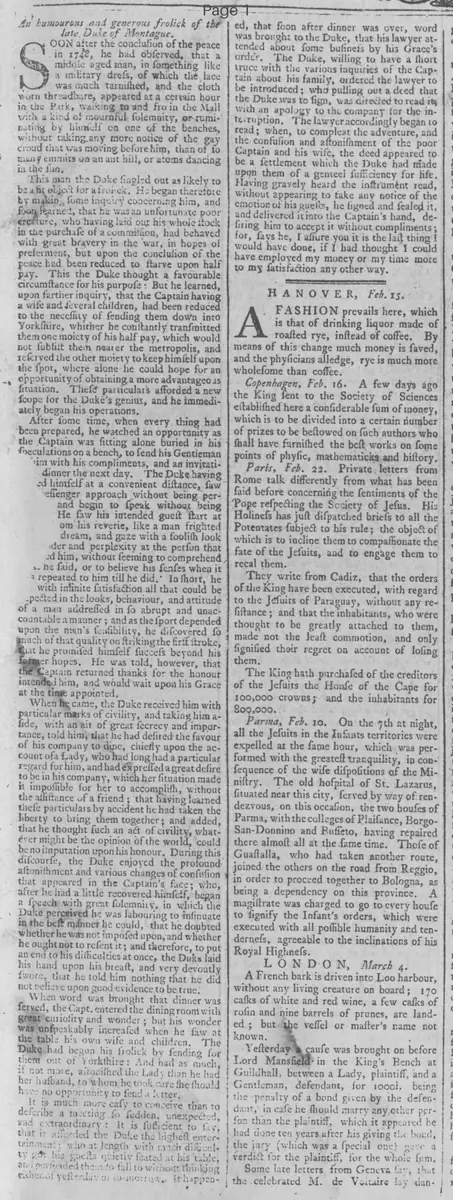
An humorous and generous frolic of the late Duke of Montague.
Soon after the conclusion of the peace in 1748, he had observed, that a middle aged man, in something like a military dress, of which the lace was much tarnished, and the cloth worn threadbare, appeared at a certain hour in the Park, walking to and fro in the Mall with a kind of mournful solemnity, or ruminating by himself on one of the benches, without taking any more notice of the gay crowd that was moving before him, than of so many emmets on an ant hill, or atoms dancing in the sun.
This man the Duke singled out as likely to be a fit object for a frolic. He began therefore by making some inquiry concerning him, and soon learned, that he was an unfortunate poor creature, who having laid out his whole stock in the purchase of a commission, had behaved with great bravery in the war, in hopes of preferment, but upon the conclusion of the peace had been reduced to starve upon half pay. This the Duke thought a favourable circumstance for his purpose: But he learned upon farther inquiry, that the Captain having a wife and several children, had been reduced to the necessity of sending them down into Yorkshire, whither he constantly transmitted them one moiety of his half pay, which would not subsist them nearer the metropolis, and reserved the other moiety to keep himself upon the spot, where alone he could hope for an opportunity of obtaining a more advantageous situation. These particulars afforded a new scope for the Duke's genius, and he immediately began his operations.
After some time, when every thing had been prepared, he watched an opportunity as the Captain was sitting alone buried in his speculations on a bench, to send his gentleman to him with his compliments, and an invitation to dinner the next day. The Duke having seated himself at a convenient distance, saw the messenger approach without being perceived, and begin to speak without being heard. He saw his intended guest start from his reverie, like a man frightened from a dream, and gaze with a foolish look of wonder and perplexity at the person that addressed him, without seeming to comprehend what he said, or to believe his senses when it was repeated to him till he did. In short, he went through with infinite satisfaction all that could be expected in the looks, behaviour, and attitude of a man addressed in so abrupt and unaccountable a manner: and as the sport depended upon the man's sensibility, he discovered so much of that quality on striking the first stroke, that he promised himself success beyond his former hopes. He was told, however, that the Captain returned thanks for the honour intended him, and would wait upon his Grace at the time appointed.
When he came, the Duke received him with particular marks of civility, and taking him aside, with an air of great secrecy and importance, told him, that he had desired the favour of his company to dine, chiefly upon the account of a Lady, who had long had a particular regard for him, and had expressed a great desire to be in his company, which her situation made it impossible for her to accomplish, without the assistance of a friend; that having learned these particulars by accident he had taken the liberty to bring them together; and added, that he thought such an act of civility, whatever might be the opinion of the world, could be no imputation upon his honour. During this discourse, the Duke enjoyed the profound astonishment and various changes of confusion that appeared in the Captain's face; who, after he had a little recovered himself, began a speech with great solemnity, in which the Duke perceived he was labouring to insinuate in the best manner he could, that he doubted whether he was not imposed upon, and whether he ought not to resent it; and therefore, to put an end to his difficulties at once, the Duke laid his hand upon his breast, and very devoutly swore, that he told him nothing that he did not believe upon good evidence to be true.
When word was brought that dinner was served, the Capt. entered the diningroom with great curiosity and wonder; but his wonder was unspeakably increased when he saw at the table his own wife and children. The Duke had begun his frolic by sending for them out of Yorkshire: And had as much, if not more, astonished the Lady than he had her husband, to whom he took care she should have no opportunity to send a letter.
It is much more easy to conceive than to describe a meeting so sudden, unexpected, and extraordinary: It is sufficient to say, that it afforded the Duke the highest entertainment: who at length with much difficulty got his guests quietly seated at his table, and persuaded them to fall to without thinking of yesterday or tomorrow. It happened, that soon after dinner was over, word was brought to the Duke, that his lawyer attended about some business by his Grace's order. The Duke, willing to have a short truce with the various inquiries of the Captain about his family, ordered the lawyer to be introduced: who pulling out a deed that the Duke was to sign, was directed to read it with an apology to the company for the interruption. The lawyer accordingly began to read; when, to complete the adventure, and the confusion and astonishment of the poor Captain and his wife, the deed appeared to be a settlement which the Duke had made upon them of a genteel sufficiency for life. Having gravely heard the instrument read, without appearing to take any notice of the emotion of his guests, he signed and sealed it, and delivered it into the Captain's hand, desiring him to accept it without compliments; for, says he, I assure you it is the last thing I would have done, if I had thought I could have employed my money or my time more to my satisfaction any other way.
Soon after the conclusion of the peace in 1748, he had observed, that a middle aged man, in something like a military dress, of which the lace was much tarnished, and the cloth worn threadbare, appeared at a certain hour in the Park, walking to and fro in the Mall with a kind of mournful solemnity, or ruminating by himself on one of the benches, without taking any more notice of the gay crowd that was moving before him, than of so many emmets on an ant hill, or atoms dancing in the sun.
This man the Duke singled out as likely to be a fit object for a frolic. He began therefore by making some inquiry concerning him, and soon learned, that he was an unfortunate poor creature, who having laid out his whole stock in the purchase of a commission, had behaved with great bravery in the war, in hopes of preferment, but upon the conclusion of the peace had been reduced to starve upon half pay. This the Duke thought a favourable circumstance for his purpose: But he learned upon farther inquiry, that the Captain having a wife and several children, had been reduced to the necessity of sending them down into Yorkshire, whither he constantly transmitted them one moiety of his half pay, which would not subsist them nearer the metropolis, and reserved the other moiety to keep himself upon the spot, where alone he could hope for an opportunity of obtaining a more advantageous situation. These particulars afforded a new scope for the Duke's genius, and he immediately began his operations.
After some time, when every thing had been prepared, he watched an opportunity as the Captain was sitting alone buried in his speculations on a bench, to send his gentleman to him with his compliments, and an invitation to dinner the next day. The Duke having seated himself at a convenient distance, saw the messenger approach without being perceived, and begin to speak without being heard. He saw his intended guest start from his reverie, like a man frightened from a dream, and gaze with a foolish look of wonder and perplexity at the person that addressed him, without seeming to comprehend what he said, or to believe his senses when it was repeated to him till he did. In short, he went through with infinite satisfaction all that could be expected in the looks, behaviour, and attitude of a man addressed in so abrupt and unaccountable a manner: and as the sport depended upon the man's sensibility, he discovered so much of that quality on striking the first stroke, that he promised himself success beyond his former hopes. He was told, however, that the Captain returned thanks for the honour intended him, and would wait upon his Grace at the time appointed.
When he came, the Duke received him with particular marks of civility, and taking him aside, with an air of great secrecy and importance, told him, that he had desired the favour of his company to dine, chiefly upon the account of a Lady, who had long had a particular regard for him, and had expressed a great desire to be in his company, which her situation made it impossible for her to accomplish, without the assistance of a friend; that having learned these particulars by accident he had taken the liberty to bring them together; and added, that he thought such an act of civility, whatever might be the opinion of the world, could be no imputation upon his honour. During this discourse, the Duke enjoyed the profound astonishment and various changes of confusion that appeared in the Captain's face; who, after he had a little recovered himself, began a speech with great solemnity, in which the Duke perceived he was labouring to insinuate in the best manner he could, that he doubted whether he was not imposed upon, and whether he ought not to resent it; and therefore, to put an end to his difficulties at once, the Duke laid his hand upon his breast, and very devoutly swore, that he told him nothing that he did not believe upon good evidence to be true.
When word was brought that dinner was served, the Capt. entered the diningroom with great curiosity and wonder; but his wonder was unspeakably increased when he saw at the table his own wife and children. The Duke had begun his frolic by sending for them out of Yorkshire: And had as much, if not more, astonished the Lady than he had her husband, to whom he took care she should have no opportunity to send a letter.
It is much more easy to conceive than to describe a meeting so sudden, unexpected, and extraordinary: It is sufficient to say, that it afforded the Duke the highest entertainment: who at length with much difficulty got his guests quietly seated at his table, and persuaded them to fall to without thinking of yesterday or tomorrow. It happened, that soon after dinner was over, word was brought to the Duke, that his lawyer attended about some business by his Grace's order. The Duke, willing to have a short truce with the various inquiries of the Captain about his family, ordered the lawyer to be introduced: who pulling out a deed that the Duke was to sign, was directed to read it with an apology to the company for the interruption. The lawyer accordingly began to read; when, to complete the adventure, and the confusion and astonishment of the poor Captain and his wife, the deed appeared to be a settlement which the Duke had made upon them of a genteel sufficiency for life. Having gravely heard the instrument read, without appearing to take any notice of the emotion of his guests, he signed and sealed it, and delivered it into the Captain's hand, desiring him to accept it without compliments; for, says he, I assure you it is the last thing I would have done, if I had thought I could have employed my money or my time more to my satisfaction any other way.
What sub-type of article is it?
Prose Fiction
Satire
What themes does it cover?
Moral Virtue
Social Manners
What keywords are associated?
Duke Of Montague
Generous Frolic
Poor Captain
Family Reunion
Financial Settlement
Half Pay
1748 Peace
Literary Details
Title
An Humorous And Generous Frolic Of The Late Duke Of Montague.
Key Lines
This Man The Duke Singled Out As Likely To Be A Fit Object For A Frolic.
The Deed Appeared To Be A Settlement Which The Duke Had Made Upon Them Of A Genteel Sufficiency For Life.
I Assure You It Is The Last Thing I Would Have Done, If I Had Thought I Could Have Employed My Money Or My Time More To My Satisfaction Any Other Way.