Thank you for visiting SNEWPapers!
Sign up free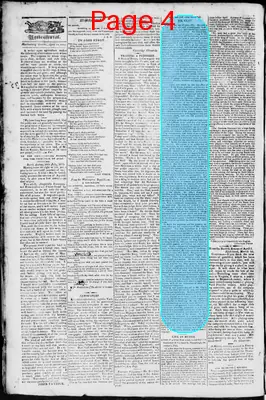
Story
April 29, 1824
Martinsburgh Gazette
Martinsburg, Berkeley County, West Virginia
What is this article about?
Detailed biographical sketch of Mr. Clay, describing his physical appearance, calm demeanor, exceptional conversational and oratorical skills, and effective leadership as Speaker of the House, emphasizing his natural eloquence and intellectual prowess.
Clipping

OCR Quality
98%
Excellent
Full Text
FROM THE NEW YORK STATESMAN
MR. CLAY
Is now at the age of about fifty. His person is tall, slender and well proportioned, with a fair complexion, and light brown hair combed smoothly upon his forehead. His face is thin, probably unusually so at present, owing to the delicacy of his health; and his features, none of which are prominent, wear a calm and settled aspect (a mildness and suavity bordering on languor, when he is not engaged in conversation, or in debate. In his gait, in all his ordinary movements he is slow, moderate and dignified, evincing an even and placid temper, manifesting perhaps an apparent want of energy of character, and an indisposition to activity. But some of these fallacious indications of his mind vanish the moment he enters into conversation, or becomes engaged in the business of the House, when you have an opportunity of witnessing the quickness of his perceptions, the rapidity of his thoughts and the decision, promptness and activity of his intellect. He is uniformly clad in a plain suit of black cloth, preserving both in his dress and manners an unostentatious simplicity.
Possessing great colloquial powers, he appears to much advantage in his conversation, delighting by the affability, mildness and suavity of his deportment.
The ability with which he fills the office of Speaker of the House, is already well known to the public. By blending unusual promptness and decision, with great courtesy towards the members, he preserves the strictest order upon whom it is enjoined and enforced. His dignity and authority when in the Chair, command the voluntary respect of the House: while his familiarity with the duties of the office affords the utmost facility to the transaction of business.--There has not been to my knowledge a single appeal from the decision of the Speaker since the commencement of the present session, and such is his acquaintance with legislation and parliamentary usages, that one will probably not occur till its close.
If persuasion be the test of genuine eloquence (and it is difficult to fix upon any other standard) Mr. Clay may probably be ranked among the most powerful orators of any age or country. My own opinion is formed perhaps upon slight grounds and without sufficient data for instituting comparisons, that there is not a public speaker now living, who could produce a deeper impression upon a deliberate body than Mr. Clay. But what are the constituents of his eloquence? In the first place let me tell you what they are not. His oratory is as unlike that of Mr. Randolph, as the wild and lofty luxuriant forests of the west are unlike the levelled and cultivated smooth-shorn fields of a Virginia plantation; or as the native and spontaneous eloquence of Patrick Henry was unlike the classical and polished periods of Edmund Burke.--
Mr. Clay makes no pretensions to scholarship, having never enjoyed the benefits of a liberal education. His life has been passed in active pursuits; in the hurry and bustle of business; in the cares of a numerous family; and he has never, like Mr. Randolph, trained and disciplined his mind, by severe study and strict attention to the best models both ancient and modern. It is not probable he ever read a speech in his life, with a design to imitate its arrangement, its form or its diction, to observe and admire the symmetry of its parts: the beauty of its exordium; the conciseness of its narration, the lucid ordo of its arguments, the pathos of its peroration, and a thousand other particulars familiar to the scholar. Mr. Clay's eloquence, therefore, so far from being classical and seldom elaborate in style. His periods are harmonious; but is as the music taught by the ear rather than that which is learned by a rhetorical gamut, and arise from a systematic arrangement of words and sentences. He does not profess to be a philologist; and in the vehemence of debate he never pauses to select the happiest words of the most expressive phrases, commonly taking such as fall in his way, and which are most obvious to a mind intent on other considerations. He has of course a great command of language: but it is a point on which he does not lay much stress.
So much for negatives; and the question returns, what are the constituents of Mr. Clay's eloquence? The first ingredient is a voice which is melody itself, and which, as a member once remarked to me, appears to charm his own ear, and communicate its harmony to the mind. It is full, sonorous and musical, perfectly at command, flexible, and trained by long habits of speaking to all the different tones and modulations which passion and feeling can impart to sound. In the compass and management of his voice, in the emphasis and force of his denunciation and delivery, Mr. Clay excels any speaker whom I have ever heard. His gestures too are numerous and in the highest degree oppressive. When he is animated every limb, every muscle is in motion. He does not stamp, as it is said the ancient orators used to do; but there is scarcely any other gesture, however forcible and expressive, which he does not in turn adopt, and all apparent from the spontaneous impulse of the mind seeking utterance through the strongest and most natural expressions. In the earnestness of his manner, his body is thrown forward, his countenance is lighted up, every muscle is strained, his eye kindles, and his periods follow each other in rapid succession, with all the vehemence of deep and impassioned eloquence.
Feeling and passion abound in Mr. Clay's oratory; but these are not the only, nor indeed the principal ingredients. He has a great, comprehensive and powerful mind, bold in its conception, original in its views, quick in its perceptions, discriminating and sound in judgment, and powerful in reasoning. He can convince the understanding: as well as move the heart--His arguments are generally forcible, always ingenious and plausible, presented in a strong point of view, expressed without any of the formalities of ratiocination, and addressed to the plain common sense of the House. To this cause may be attributed in a great measure, Mr. Clay's influence in a popular assembly. He deals in none of the refinements of logic or metaphysics, in none of the embellishments of fancy and taste; but presents the views and deductions of a clear, vigorous, and powerful mind in perspicuous, forcible and persuasive language.
MR. CLAY
Is now at the age of about fifty. His person is tall, slender and well proportioned, with a fair complexion, and light brown hair combed smoothly upon his forehead. His face is thin, probably unusually so at present, owing to the delicacy of his health; and his features, none of which are prominent, wear a calm and settled aspect (a mildness and suavity bordering on languor, when he is not engaged in conversation, or in debate. In his gait, in all his ordinary movements he is slow, moderate and dignified, evincing an even and placid temper, manifesting perhaps an apparent want of energy of character, and an indisposition to activity. But some of these fallacious indications of his mind vanish the moment he enters into conversation, or becomes engaged in the business of the House, when you have an opportunity of witnessing the quickness of his perceptions, the rapidity of his thoughts and the decision, promptness and activity of his intellect. He is uniformly clad in a plain suit of black cloth, preserving both in his dress and manners an unostentatious simplicity.
Possessing great colloquial powers, he appears to much advantage in his conversation, delighting by the affability, mildness and suavity of his deportment.
The ability with which he fills the office of Speaker of the House, is already well known to the public. By blending unusual promptness and decision, with great courtesy towards the members, he preserves the strictest order upon whom it is enjoined and enforced. His dignity and authority when in the Chair, command the voluntary respect of the House: while his familiarity with the duties of the office affords the utmost facility to the transaction of business.--There has not been to my knowledge a single appeal from the decision of the Speaker since the commencement of the present session, and such is his acquaintance with legislation and parliamentary usages, that one will probably not occur till its close.
If persuasion be the test of genuine eloquence (and it is difficult to fix upon any other standard) Mr. Clay may probably be ranked among the most powerful orators of any age or country. My own opinion is formed perhaps upon slight grounds and without sufficient data for instituting comparisons, that there is not a public speaker now living, who could produce a deeper impression upon a deliberate body than Mr. Clay. But what are the constituents of his eloquence? In the first place let me tell you what they are not. His oratory is as unlike that of Mr. Randolph, as the wild and lofty luxuriant forests of the west are unlike the levelled and cultivated smooth-shorn fields of a Virginia plantation; or as the native and spontaneous eloquence of Patrick Henry was unlike the classical and polished periods of Edmund Burke.--
Mr. Clay makes no pretensions to scholarship, having never enjoyed the benefits of a liberal education. His life has been passed in active pursuits; in the hurry and bustle of business; in the cares of a numerous family; and he has never, like Mr. Randolph, trained and disciplined his mind, by severe study and strict attention to the best models both ancient and modern. It is not probable he ever read a speech in his life, with a design to imitate its arrangement, its form or its diction, to observe and admire the symmetry of its parts: the beauty of its exordium; the conciseness of its narration, the lucid ordo of its arguments, the pathos of its peroration, and a thousand other particulars familiar to the scholar. Mr. Clay's eloquence, therefore, so far from being classical and seldom elaborate in style. His periods are harmonious; but is as the music taught by the ear rather than that which is learned by a rhetorical gamut, and arise from a systematic arrangement of words and sentences. He does not profess to be a philologist; and in the vehemence of debate he never pauses to select the happiest words of the most expressive phrases, commonly taking such as fall in his way, and which are most obvious to a mind intent on other considerations. He has of course a great command of language: but it is a point on which he does not lay much stress.
So much for negatives; and the question returns, what are the constituents of Mr. Clay's eloquence? The first ingredient is a voice which is melody itself, and which, as a member once remarked to me, appears to charm his own ear, and communicate its harmony to the mind. It is full, sonorous and musical, perfectly at command, flexible, and trained by long habits of speaking to all the different tones and modulations which passion and feeling can impart to sound. In the compass and management of his voice, in the emphasis and force of his denunciation and delivery, Mr. Clay excels any speaker whom I have ever heard. His gestures too are numerous and in the highest degree oppressive. When he is animated every limb, every muscle is in motion. He does not stamp, as it is said the ancient orators used to do; but there is scarcely any other gesture, however forcible and expressive, which he does not in turn adopt, and all apparent from the spontaneous impulse of the mind seeking utterance through the strongest and most natural expressions. In the earnestness of his manner, his body is thrown forward, his countenance is lighted up, every muscle is strained, his eye kindles, and his periods follow each other in rapid succession, with all the vehemence of deep and impassioned eloquence.
Feeling and passion abound in Mr. Clay's oratory; but these are not the only, nor indeed the principal ingredients. He has a great, comprehensive and powerful mind, bold in its conception, original in its views, quick in its perceptions, discriminating and sound in judgment, and powerful in reasoning. He can convince the understanding: as well as move the heart--His arguments are generally forcible, always ingenious and plausible, presented in a strong point of view, expressed without any of the formalities of ratiocination, and addressed to the plain common sense of the House. To this cause may be attributed in a great measure, Mr. Clay's influence in a popular assembly. He deals in none of the refinements of logic or metaphysics, in none of the embellishments of fancy and taste; but presents the views and deductions of a clear, vigorous, and powerful mind in perspicuous, forcible and persuasive language.
What sub-type of article is it?
Biography
What themes does it cover?
Moral Virtue
Triumph
What keywords are associated?
Mr Clay
Speaker House
Eloquence
Oratory
Biography
Leadership
Intellect
What entities or persons were involved?
Mr. Clay
Mr. Randolph
Patrick Henry
Edmund Burke
Story Details
Key Persons
Mr. Clay
Mr. Randolph
Patrick Henry
Edmund Burke
Story Details
Portrait of Mr. Clay at age fifty, detailing his physical traits, composed demeanor, intellectual quickness in debate, leadership as Speaker maintaining order without appeals, and natural eloquence through voice, gestures, passion, and powerful reasoning, contrasting with scholarly orators.