Thank you for visiting SNEWPapers!
Sign up free
Story
August 21, 1925
Union Labor Bulletin
Little Rock, Pulaski County, Arkansas
What is this article about?
In Oklahoma, a sheriff prohibits wives of striking miners from public prayer meetings for strike-breakers, satirically critiquing the suppression of workers' faith and the operators' control over the mines.
Clipping
OCR Quality
98%
Excellent
Full Text
WORKERS MUST NOT PRAY IN OKLAHOMA
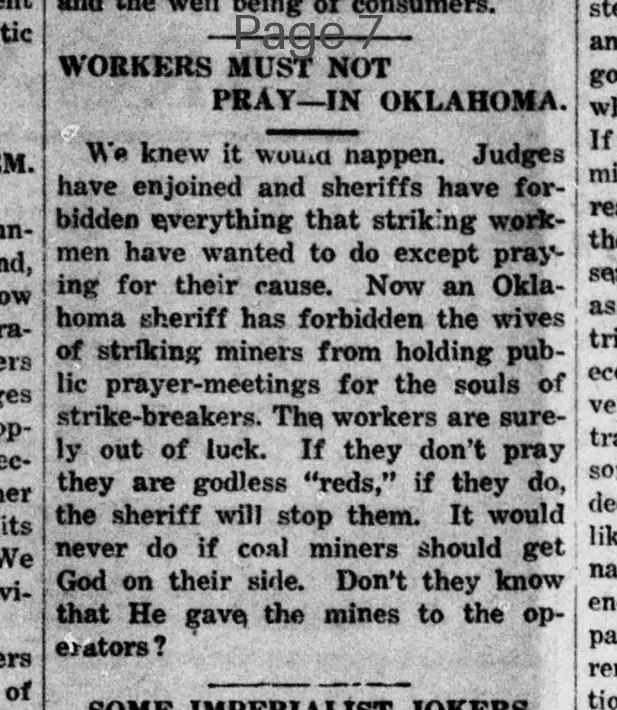
We knew it would happen. Judges have enjoined and sheriffs have forbidden everything that striking workmen have wanted to do except praying for their cause. Now an Oklahoma sheriff has forbidden the wives of striking miners from holding public prayer-meetings for the souls of strike-breakers. The workers are surely out of luck. If they don't pray they are godless "reds." If they do, the sheriff will stop them. It would never do if coal miners should get God on their side. Don't they know that He gave the mines to the operators?
We knew it would happen. Judges have enjoined and sheriffs have forbidden everything that striking workmen have wanted to do except praying for their cause. Now an Oklahoma sheriff has forbidden the wives of striking miners from holding public prayer-meetings for the souls of strike-breakers. The workers are surely out of luck. If they don't pray they are godless "reds." If they do, the sheriff will stop them. It would never do if coal miners should get God on their side. Don't they know that He gave the mines to the operators?
What sub-type of article is it?
Historical Event
Curiosity
What themes does it cover?
Misfortune
Social Manners
Providence Divine
What keywords are associated?
Labor Strike
Prayer Prohibition
Oklahoma Miners
Sheriff Ban
Workers Rights
What entities or persons were involved?
Oklahoma Sheriff
Striking Miners
Wives Of Striking Miners
Coal Operators
Where did it happen?
Oklahoma
Story Details
Key Persons
Oklahoma Sheriff
Striking Miners
Wives Of Striking Miners
Coal Operators
Location
Oklahoma
Story Details
An Oklahoma sheriff forbids the wives of striking miners from holding public prayer meetings for the souls of strike-breakers, highlighting the suppression of workers' religious expression during a labor dispute.