Thank you for visiting SNEWPapers!
Sign up free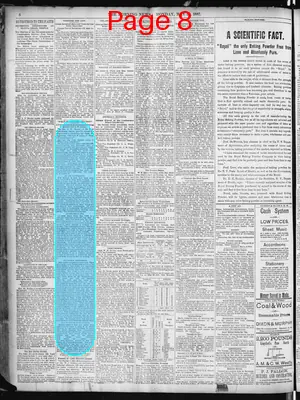
Story
May 30, 1887
The Morning News
Savannah, Chatham County, Georgia
What is this article about?
Rev. J. W. Rogan delivers a sermon to young men at the First Presbyterian church on the importance of labor and choosing an honorable occupation, refuting idleness as a curse and using biblical references and an illustration of industrious vs. lazy Canadians.
Clipping

OCR Quality
98%
Excellent
Full Text
"WHAT IS YOUR OCCUPATION?"
A Practical Sermon Delivered to Young Men by Rev. J. W. Rogan.
The Rev. J. W. Rogan, of the First Presbyterian church, gave the second of a series of talks to young men last night. His subject was, "The Law of Labor, or What is Your Occupation?"
His text was from Genesis, xlvii. 3: "What is your occupation?"
He said that a great many men are sufficiently upright and honorable, men of generous impulses and free from evil habits, but they never accomplish anything. They are those who think the world owes them a living, and that they confer a great favor on the world by being in it; or they are the Micawbers who are always waiting for something to turn up, instead of going to work and turning it up. Viewed from a positive point of view they are negative characters. A foreigner was once asked in what respect all men resembled one another, and after thinking for awhile he replied: "Me think all men love lazy." The speaker did not think the foreigner was right, but undoubtedly there were many who might be so spoken of.
AN APT ILLUSTRATION.
It is strange, he said, how hard some men will work to keep from working. He read a story once of two Canadians, one industrious and frugal, the other lazy and dishonest. The first worked hard during the summer laying in a supply of wood to last him through the winter. The other depended on stealing his neighbor's wood in the cold weather, and it was estimated that the latter spent more time and did more work in waiting for opportunities and stealing his neighbor's wood, than it would have taken him to get his wood honestly. Naturalists tell of parasites that will not work even for their own food, but who attach themselves to other things and rob them of their nourishment. No man has a right to be a parasite. He laid it down as the duty of every man to have an occupation. The Scripture teaches this.
AN ERRONEOUS IDEA.
A great many think that work is a curse put upon man at the fall, but that is not true. After God made man He placed him in the garden to keep it. In the book of Proverbs labor is commended in the highest terms, while idleness is severely condemned. The commandment says, "Six days shalt thou labor," and he thought it was just as obligatory to work six days—a part of one's time—as to rest on the seventh. The man who has to labor is apt to envy the one who strolls by him carrying a gold-headed cane or rolls by in a carriage, and he is disposed to think that if they could change places he would be perfectly happy; but it was not so. No doubt if the labor could be lightened the laborer would be happier, but his life as it is is far more pleasant than one of idleness. He had referred to parasites and he wished to say again that no man had a right to be a parasite on the body social even though it be a wealthy ancestor; though he inherited a fortune he had no right to lay it idly by and do nothing with it.
HONORABLE OCCUPATIONS.
Any useful occupation is honorable. There are a great many foolish ideas and one of the most foolish is that trades are degrading. Some persons think that all muscular exertion except playing base ball or rowing is degrading. The truth is that there is so much vanity in man that he is disposed to look down on all those around him. The cook looks down on the washerwoman. The house girl will not associate with the cook, and the nurse is a queen compared with the house-girl. There are grades all along the line. He did not know but the dry goods clerk looked down upon the grocery clerk, and he was sure the bookkeeper regarded with pity the clerk behind the counter measuring tape. He understood that young men on Bay street who had positions in cotton offices thought they had reached the acme of clerkdom, and that many of them would not think of changing their positions for stores of their own in other lines of business if the opportunity was offered them. Why was it more honorable to handle the weights and measures of a grocer, or the yardstick of a dry goods merchant, or the pen of a bookkeeper, than a sledge hammer, or the awl of a shoe maker? True, a mechanic got his face black and soiled his clothes, but the soot did not touch his soul; his character was as white as ever, and water would take the dirt from his face. He thought there was too much disposition to shirk work and manual labor.
HOW TO CHOOSE AN OCCUPATION.
Having settled it that any useful occupation would honor a man if he would honor it, he would say something to young men about choosing their occupations. They should not look for an opportunity to escape work; they should choose for the future and not for the present; they should select something that would give ample scope for their faculties, and to do this they should ask God to direct them. Few young men thought of that part of it, but in this serious matter they should ask as did Saul of Tarsus: "Lord, what wouldst Thou have me do?" Having made choice of an occupation, go prosecute it so as to glorify Him.
"Work as if thou hadst to live for aye; Worship as if thou wert to die to-day."
A Practical Sermon Delivered to Young Men by Rev. J. W. Rogan.
The Rev. J. W. Rogan, of the First Presbyterian church, gave the second of a series of talks to young men last night. His subject was, "The Law of Labor, or What is Your Occupation?"
His text was from Genesis, xlvii. 3: "What is your occupation?"
He said that a great many men are sufficiently upright and honorable, men of generous impulses and free from evil habits, but they never accomplish anything. They are those who think the world owes them a living, and that they confer a great favor on the world by being in it; or they are the Micawbers who are always waiting for something to turn up, instead of going to work and turning it up. Viewed from a positive point of view they are negative characters. A foreigner was once asked in what respect all men resembled one another, and after thinking for awhile he replied: "Me think all men love lazy." The speaker did not think the foreigner was right, but undoubtedly there were many who might be so spoken of.
AN APT ILLUSTRATION.
It is strange, he said, how hard some men will work to keep from working. He read a story once of two Canadians, one industrious and frugal, the other lazy and dishonest. The first worked hard during the summer laying in a supply of wood to last him through the winter. The other depended on stealing his neighbor's wood in the cold weather, and it was estimated that the latter spent more time and did more work in waiting for opportunities and stealing his neighbor's wood, than it would have taken him to get his wood honestly. Naturalists tell of parasites that will not work even for their own food, but who attach themselves to other things and rob them of their nourishment. No man has a right to be a parasite. He laid it down as the duty of every man to have an occupation. The Scripture teaches this.
AN ERRONEOUS IDEA.
A great many think that work is a curse put upon man at the fall, but that is not true. After God made man He placed him in the garden to keep it. In the book of Proverbs labor is commended in the highest terms, while idleness is severely condemned. The commandment says, "Six days shalt thou labor," and he thought it was just as obligatory to work six days—a part of one's time—as to rest on the seventh. The man who has to labor is apt to envy the one who strolls by him carrying a gold-headed cane or rolls by in a carriage, and he is disposed to think that if they could change places he would be perfectly happy; but it was not so. No doubt if the labor could be lightened the laborer would be happier, but his life as it is is far more pleasant than one of idleness. He had referred to parasites and he wished to say again that no man had a right to be a parasite on the body social even though it be a wealthy ancestor; though he inherited a fortune he had no right to lay it idly by and do nothing with it.
HONORABLE OCCUPATIONS.
Any useful occupation is honorable. There are a great many foolish ideas and one of the most foolish is that trades are degrading. Some persons think that all muscular exertion except playing base ball or rowing is degrading. The truth is that there is so much vanity in man that he is disposed to look down on all those around him. The cook looks down on the washerwoman. The house girl will not associate with the cook, and the nurse is a queen compared with the house-girl. There are grades all along the line. He did not know but the dry goods clerk looked down upon the grocery clerk, and he was sure the bookkeeper regarded with pity the clerk behind the counter measuring tape. He understood that young men on Bay street who had positions in cotton offices thought they had reached the acme of clerkdom, and that many of them would not think of changing their positions for stores of their own in other lines of business if the opportunity was offered them. Why was it more honorable to handle the weights and measures of a grocer, or the yardstick of a dry goods merchant, or the pen of a bookkeeper, than a sledge hammer, or the awl of a shoe maker? True, a mechanic got his face black and soiled his clothes, but the soot did not touch his soul; his character was as white as ever, and water would take the dirt from his face. He thought there was too much disposition to shirk work and manual labor.
HOW TO CHOOSE AN OCCUPATION.
Having settled it that any useful occupation would honor a man if he would honor it, he would say something to young men about choosing their occupations. They should not look for an opportunity to escape work; they should choose for the future and not for the present; they should select something that would give ample scope for their faculties, and to do this they should ask God to direct them. Few young men thought of that part of it, but in this serious matter they should ask as did Saul of Tarsus: "Lord, what wouldst Thou have me do?" Having made choice of an occupation, go prosecute it so as to glorify Him.
"Work as if thou hadst to live for aye; Worship as if thou wert to die to-day."
What sub-type of article is it?
Sermon
What themes does it cover?
Moral Virtue
What keywords are associated?
Occupation
Labor
Work Ethic
Idleness
Honorable Trades
Biblical Duty
Young Men
What entities or persons were involved?
Rev. J. W. Rogan
Where did it happen?
First Presbyterian Church
Story Details
Key Persons
Rev. J. W. Rogan
Location
First Presbyterian Church
Story Details
Sermon on the law of labor, emphasizing that every man must have an honorable occupation as a biblical duty, refuting idleness and parasitism with an illustration of two Canadians, and advising young men to choose professions with divine guidance to glorify God.