Thank you for visiting SNEWPapers!
Sign up free
Literary
May 17, 1827
Phenix Gazette
Alexandria, Virginia
What is this article about?
A narrative from the Literary Cadet recounts discovering an old ship's log from the brigantine Rolla in 1795, detailing a storm and the mysterious suicide of 17-year-old passenger Matilda Antoinette Gonsalvo during her voyage from Lisbon to Cuba, including her farewell note and sea burial.
Clipping
OCR Quality
95%
Excellent
Full Text
From the Literary Cadet.
THE LOG BOOK.
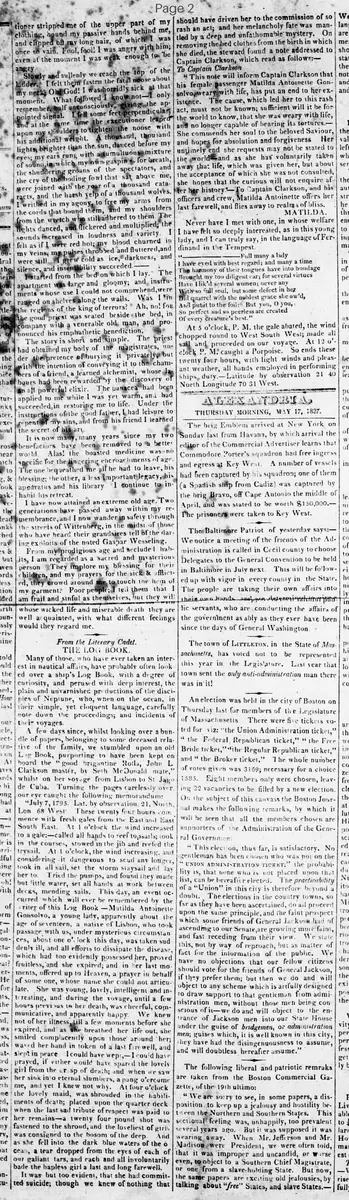
Many of those, who have ever taken an interest in nautical affairs, have probably often looked over a ship's Log Book, with a degree of curiosity, and perused with deep interest, the plain and unvarnished productions of the disciples of Neptune, who, when on the ocean, in their simple, yet eloquent language, carefully note down the proceedings; and incidents of their voyages.
A few days since, whilst looking over a bundle of papers, belonging to some deceased relative of the family, we stumbled upon an old Log Book, purporting to have been kept on board the "good brigantine Rolla; John L. Clarkson master, by Seth McDonald mate," whilst on her voyage from Lisbon to St. Jago de Cuba. Turning the pages carelessly over, our eye caught the following memorandum:
"July 7, 1795. Lat. by observation. 21. North. Lon 68 West. These twenty four hours commence with fresh gales from the East and East South East. At 1 o'clock the wind increased to a gale: called all hands to reef tops'ls; took in the courses, stowed in the jib and reefed the trysail. At 1 o'clock, the wind increasing, and considering it dangerous to scud any longer, took in all sail, set the storm staysail and lay her to. Tried the pumps, and found they made but little water, set all hands at work between decks, mending sails. This day, an event occurred which will ever be remembered by the writer of this Log Book—Matilda Antoinette Gonsalvo, a young lady, apparently about the age of seventeen, a native of Lisbon, who took passage with us, under mysterious circumstances, about one o'clock this day, was taken suddenly ill, and all efforts to dissipate the disease, which had too evidently possessed her, proved fruitless, and she expired; and in her last moments, offered up to Heaven, a prayer in behalf of some one, whose name she could not articulate. She was young, lovely, intelligent and interesting, and during the voyage, until a few hours previous to her death, was cheerful, communicative, and apparently happy. We knew not of her illness, till a few moments before she expired, and as she breathed her life out, she smiled complacently upon those around her; waved her hand in token of a last farewell, and slept in peace. I could have wept,—I could have prayed, if either would have spared the lovely girl from the grasp of death; and when we saw her sink into eternal slumbers, a pang overcame me, and yet I knew not why. At four o'clock the lovely maid, was shrouded in the habiliments of death; placed upon the quarter deck when the last sad tribute of respect was paid to her remains—a twenty four pound shot was fastened to the shroud, and the loveliest of girls was consigned to the bosom of the deep. And as she fell into the dark blue waters of the ocean, a tear dropped from the eyes of each of our gallant tars, and each and all involuntarily bade the hapless girl a last and long farewell.
It was but too evident, that she had committed suicide; though we knew of nothing that should have driven her to the commission of so rash an act; and her melancholy fate was mantled by a deep and unfathomable mystery. On removing the bed clothes from the birth in which she died, the steward found a note addressed to Captain Clarkson, which read as follows:-
To Captain Clarkson
"This note will inform Captain Clarkson that his female passenger Matilda Antoinette Gonsalvo, weary with life, has put an end to her existence. The cause, which led her to this rash act, must not be known; sufficient will it be for the world to know, that she was weary with life, and no longer capable of bearing its tortures. She commends her soul to the beloved Saviour, and hopes for absolution and forgiveness. Her untimely end she requests may not be stated to the world and as she has voluntarily taken away that life, which was given her, but about the acceptance of which she was not consulted, she hopes that the curious will not enquire after her history.—To Captain Clarkson, and his officers and crew, Matilda Antoinette offers her last farewell, and flies away to realms of bliss."
MATILDA.
Never have I met with one, in whose welfare I have felt so deeply interested, as in this young lady, and I can truly say, in the language of Ferdinand in the Tempest.
Full many a lady
I have eyed with best regard; and many a time
The harmony of their tongues have into bondage
Brought my too diligent ear; for several virtues
Have I lik'd several women; never any
With so full soul, but some defect in her
Did quarrel with the noblest grace she ow'd,
And put it to the foil: But you, O you,
So perfect and so peerless are created
Of every creature's best."
At 5 o'clock. P. M. the gale abated, the wind chopped round to West South West; made all sail and proceeded on our voyage. At 12 o'clock P. M: caught a Porpoise. So ends these twenty four hours, with light winds and pleasant weather, all hands employed in performing ships duty.—Latitude by observation 21 40 North Longitude 70 31 West.
THE LOG BOOK.
Many of those, who have ever taken an interest in nautical affairs, have probably often looked over a ship's Log Book, with a degree of curiosity, and perused with deep interest, the plain and unvarnished productions of the disciples of Neptune, who, when on the ocean, in their simple, yet eloquent language, carefully note down the proceedings; and incidents of their voyages.
A few days since, whilst looking over a bundle of papers, belonging to some deceased relative of the family, we stumbled upon an old Log Book, purporting to have been kept on board the "good brigantine Rolla; John L. Clarkson master, by Seth McDonald mate," whilst on her voyage from Lisbon to St. Jago de Cuba. Turning the pages carelessly over, our eye caught the following memorandum:
"July 7, 1795. Lat. by observation. 21. North. Lon 68 West. These twenty four hours commence with fresh gales from the East and East South East. At 1 o'clock the wind increased to a gale: called all hands to reef tops'ls; took in the courses, stowed in the jib and reefed the trysail. At 1 o'clock, the wind increasing, and considering it dangerous to scud any longer, took in all sail, set the storm staysail and lay her to. Tried the pumps, and found they made but little water, set all hands at work between decks, mending sails. This day, an event occurred which will ever be remembered by the writer of this Log Book—Matilda Antoinette Gonsalvo, a young lady, apparently about the age of seventeen, a native of Lisbon, who took passage with us, under mysterious circumstances, about one o'clock this day, was taken suddenly ill, and all efforts to dissipate the disease, which had too evidently possessed her, proved fruitless, and she expired; and in her last moments, offered up to Heaven, a prayer in behalf of some one, whose name she could not articulate. She was young, lovely, intelligent and interesting, and during the voyage, until a few hours previous to her death, was cheerful, communicative, and apparently happy. We knew not of her illness, till a few moments before she expired, and as she breathed her life out, she smiled complacently upon those around her; waved her hand in token of a last farewell, and slept in peace. I could have wept,—I could have prayed, if either would have spared the lovely girl from the grasp of death; and when we saw her sink into eternal slumbers, a pang overcame me, and yet I knew not why. At four o'clock the lovely maid, was shrouded in the habiliments of death; placed upon the quarter deck when the last sad tribute of respect was paid to her remains—a twenty four pound shot was fastened to the shroud, and the loveliest of girls was consigned to the bosom of the deep. And as she fell into the dark blue waters of the ocean, a tear dropped from the eyes of each of our gallant tars, and each and all involuntarily bade the hapless girl a last and long farewell.
It was but too evident, that she had committed suicide; though we knew of nothing that should have driven her to the commission of so rash an act; and her melancholy fate was mantled by a deep and unfathomable mystery. On removing the bed clothes from the birth in which she died, the steward found a note addressed to Captain Clarkson, which read as follows:-
To Captain Clarkson
"This note will inform Captain Clarkson that his female passenger Matilda Antoinette Gonsalvo, weary with life, has put an end to her existence. The cause, which led her to this rash act, must not be known; sufficient will it be for the world to know, that she was weary with life, and no longer capable of bearing its tortures. She commends her soul to the beloved Saviour, and hopes for absolution and forgiveness. Her untimely end she requests may not be stated to the world and as she has voluntarily taken away that life, which was given her, but about the acceptance of which she was not consulted, she hopes that the curious will not enquire after her history.—To Captain Clarkson, and his officers and crew, Matilda Antoinette offers her last farewell, and flies away to realms of bliss."
MATILDA.
Never have I met with one, in whose welfare I have felt so deeply interested, as in this young lady, and I can truly say, in the language of Ferdinand in the Tempest.
Full many a lady
I have eyed with best regard; and many a time
The harmony of their tongues have into bondage
Brought my too diligent ear; for several virtues
Have I lik'd several women; never any
With so full soul, but some defect in her
Did quarrel with the noblest grace she ow'd,
And put it to the foil: But you, O you,
So perfect and so peerless are created
Of every creature's best."
At 5 o'clock. P. M. the gale abated, the wind chopped round to West South West; made all sail and proceeded on our voyage. At 12 o'clock P. M: caught a Porpoise. So ends these twenty four hours, with light winds and pleasant weather, all hands employed in performing ships duty.—Latitude by observation 21 40 North Longitude 70 31 West.
What sub-type of article is it?
Prose Fiction
What themes does it cover?
Death Mortality
Religious
What keywords are associated?
Ship Log
Suicide
Ocean Burial
Mystery
Voyage
Death At Sea
Farewell Note
What entities or persons were involved?
Seth Mcdonald (Log Keeper)
Literary Details
Title
The Log Book.
Author
Seth Mcdonald (Log Keeper)
Subject
Voyage From Lisbon To St. Jago De Cuba, Death Of Passenger Matilda Antoinette Gonsalvo
Form / Style
Narrative Excerpt From A Ship's Log Book
Key Lines
July 7, 1795. Lat. By Observation. 21. North. Lon 68 West. These Twenty Four Hours Commence With Fresh Gales From The East And East South East.
This Day, An Event Occurred Which Will Ever Be Remembered By The Writer Of This Log Book—Matilda Antoinette Gonsalvo, A Young Lady, Apparently About The Age Of Seventeen, A Native Of Lisbon, Who Took Passage With Us, Under Mysterious Circumstances, About One O'clock This Day, Was Taken Suddenly Ill, And All Efforts To Dissipate The Disease, Which Had Too Evidently Possessed Her, Proved Fruitless, And She Expired; And In Her Last Moments, Offered Up To Heaven, A Prayer In Behalf Of Some One, Whose Name She Could Not Articulate.
To Captain Clarkson "This Note Will Inform Captain Clarkson That His Female Passenger Matilda Antoinette Gonsalvo, Weary With Life, Has Put An End To Her Existence. The Cause, Which Led Her To This Rash Act, Must Not Be Known; Sufficient Will It Be For The World To Know, That She Was Weary With Life, And No Longer Capable Of Bearing Its Tortures."
Full Many A Lady I Have Eyed With Best Regard; And Many A Time The Harmony Of Their Tongues Have Into Bondage Brought My Too Diligent Ear; For Several Virtues Have I Lik'd Several Women; Never Any With So Full Soul, But Some Defect In Her Did Quarrel With The Noblest Grace She Ow'd, And Put It To The Foil: But You, O You, So Perfect And So Peerless Are Created Of Every Creature's Best.”