Thank you for visiting SNEWPapers!
Sign up free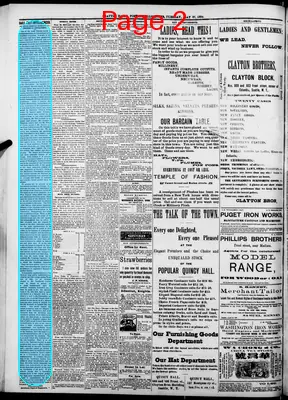
Editorial
May 27, 1884
Seattle Daily Post Intelligencer
Seattle, King County, Washington
What is this article about?
This editorial criticizes proxy voting in political conventions as a source of manipulation and misrepresentation, citing the Dayton convention's failure to support James G. Blaine due to proxies held by non-elected officials. It praises the National Republican Convention's anti-proxy rules and urges similar reforms for Washington Territory conventions to ensure better representation.
Clipping

OCR Quality
98%
Excellent
Full Text
DAILY POST-INTELLIGENCER.
PROXIES IN CONVENTIONS.
One of the most fruitful causes of misrepresentation in Conventions is the admission of proxies. It is safe to say that more jobs have been perpetrated, more cussedness succeeded and more violence has been done to the desires of the people by proxy representation than by any other single factor in the constitution of party conventions. A man who goes into a Convention with a number of proxies is from the outset formidable. He is vastly more so than would be the same number of men, for while it might be difficult to sway them as a unit in a given direction, or to unite them in favor of or against a candidate or measure, only the will of one man who holds the proxies need be consulted, or his personal interests appealed to. Many a good candidate, the choice of the people, has by means of proxies lodged in unscrupulous hands been slaughtered, and supplanted by an offensive nominee.
The late Convention at Dayton was a proxy Convention. As reported by a local journal—the only report we have at hand—there were out of 70 votes 36 proxies. Several members of the Convention were not elected delegates, but secured admission solely by procuring proxies from counties in which they had neither residence nor even extensive acquaintance. Quite a number were Federal office holders. Among them, and as an illustration of the representation, we note that Pacific county was represented by Secretary Owens, Kitsap county by Special Agent Cavanagh, neither of whom were elected by the people of those or any other counties. Our delegate, Mr. Hill, carried in his pocket eight proxies. Mr. Hopkins of Whatcom county, had five, Mr. Mason of Clarke county, 4; Mr. Barlow took two from Cowlitz county, Mr. Bradshaw two from San Juan, etc. etc. We are not in this, criticising the gentlemen who thus added to their votes by carrying proxies into the Convention. So long as the rule is that such representation shall be admitted, they had a perfect right to do so. Even this is also true of those gentlemen, Federal officers and others who, not being elected as delegates, went outside the counties wherein they resided and secured proxies. We specify this Convention and these instances because of two things. First, because it is notorious that the Convention failed to do as the people of Washington Territory desired, and as the members of the Convention well knew was the wish of the people, to wit: send outspoken, avowed, earnest supporters of James G. Blaine as the Republican Presidential nominee. and second, because the National Republican Convention four years ago set an example well worthy of imitation and took the correct ground upon the subject.
No proxies will be allowed in the Convention next week at Chicago. Four years ago the usage was established by the rulings of the Chairman, as follows: The name of one of the delegates from West Virginia being called, that delegate did not answer to his name. Thereupon the name of his alternate borne on the roll was called and the alternate did not answer to his name. The Chair ruled that no other person except that delegate or the alternate could lawfully answer to either of those names in the Convention. Subsequently this ruling was modified as follows: When a delegate fails to respond, the name of the alternate borne upon the roll opposite that delegate shall then be called. If that alternate does not respond, the names of the other alternates selected for the same representation by the same authority will be called in their order, as, for instance, if a delegate-at-large fails to respond and the alternate whose name is on the roll opposite that delegate at-large fails to respond, the Chair will direct the other three alternates-at-large to be called in their order, and there stop. If, on the other hand, the failure to respond be that of a district delegate, the Chair will direct the name of the other alternate from that district (the first one failing to respond) to be called and there stop. At the time the above ruling was announced, Mr. Conkling inquired, "The other alternate from the same district?" to which the President responded, "From the same district and from that only," thus excluding the right of even an alternate to represent a delegate in another district.
It is probably impracticable, in a Territory so large and so indifferently provided as yet with transportation facilities as this, for all delegates elected to the Territorial Convention to attend in person; but a great improvement upon the methods obtaining heretofore can at least be made, to wit, the establishment of the rule, first, that no person not elected as a delegate shall be entitled to a seat in the Convention, and second, that no elected delegate shall be entitled to vote the proxy of a delegate from any other county or district save the one in which he himself has been elected. This would require each county to send at least one delegate in person to the Convention, and would moreover keep out therefrom many ambitious persons, whose desire to represent the dear people in conventions of the party is altogether greater than that of said people to send them there. It would serve to give to our conventions a fuller attendance, engender acquaintance and cordiality among members of the party from all sections of the Territory, leave the small fry and pestiferous politicians out in the cold, and help abolish the machine. There is no good reason why it should not be the rule hereafter. There is no district in the Territory entitled to representation that cannot afford to send at least one man to our next Convention, and a man who cannot get elected in the district where he resides has neither business nor should he have a right to sit in a Convention of the people's representatives. It is within the province of the Territorial Central Committee to adopt the principles and enforce the rules herein-suggested, and which, even more strictly, as has been shown, have been adopted by the highest Convention of the party. It goes without saying that a Convention wherein there is the largest personal and least proxy representation is less subject to manipulation by shrewd schemers and far more likely to satisfy in its action the desires and demands of the party at large.
PROXIES IN CONVENTIONS.
One of the most fruitful causes of misrepresentation in Conventions is the admission of proxies. It is safe to say that more jobs have been perpetrated, more cussedness succeeded and more violence has been done to the desires of the people by proxy representation than by any other single factor in the constitution of party conventions. A man who goes into a Convention with a number of proxies is from the outset formidable. He is vastly more so than would be the same number of men, for while it might be difficult to sway them as a unit in a given direction, or to unite them in favor of or against a candidate or measure, only the will of one man who holds the proxies need be consulted, or his personal interests appealed to. Many a good candidate, the choice of the people, has by means of proxies lodged in unscrupulous hands been slaughtered, and supplanted by an offensive nominee.
The late Convention at Dayton was a proxy Convention. As reported by a local journal—the only report we have at hand—there were out of 70 votes 36 proxies. Several members of the Convention were not elected delegates, but secured admission solely by procuring proxies from counties in which they had neither residence nor even extensive acquaintance. Quite a number were Federal office holders. Among them, and as an illustration of the representation, we note that Pacific county was represented by Secretary Owens, Kitsap county by Special Agent Cavanagh, neither of whom were elected by the people of those or any other counties. Our delegate, Mr. Hill, carried in his pocket eight proxies. Mr. Hopkins of Whatcom county, had five, Mr. Mason of Clarke county, 4; Mr. Barlow took two from Cowlitz county, Mr. Bradshaw two from San Juan, etc. etc. We are not in this, criticising the gentlemen who thus added to their votes by carrying proxies into the Convention. So long as the rule is that such representation shall be admitted, they had a perfect right to do so. Even this is also true of those gentlemen, Federal officers and others who, not being elected as delegates, went outside the counties wherein they resided and secured proxies. We specify this Convention and these instances because of two things. First, because it is notorious that the Convention failed to do as the people of Washington Territory desired, and as the members of the Convention well knew was the wish of the people, to wit: send outspoken, avowed, earnest supporters of James G. Blaine as the Republican Presidential nominee. and second, because the National Republican Convention four years ago set an example well worthy of imitation and took the correct ground upon the subject.
No proxies will be allowed in the Convention next week at Chicago. Four years ago the usage was established by the rulings of the Chairman, as follows: The name of one of the delegates from West Virginia being called, that delegate did not answer to his name. Thereupon the name of his alternate borne on the roll was called and the alternate did not answer to his name. The Chair ruled that no other person except that delegate or the alternate could lawfully answer to either of those names in the Convention. Subsequently this ruling was modified as follows: When a delegate fails to respond, the name of the alternate borne upon the roll opposite that delegate shall then be called. If that alternate does not respond, the names of the other alternates selected for the same representation by the same authority will be called in their order, as, for instance, if a delegate-at-large fails to respond and the alternate whose name is on the roll opposite that delegate at-large fails to respond, the Chair will direct the other three alternates-at-large to be called in their order, and there stop. If, on the other hand, the failure to respond be that of a district delegate, the Chair will direct the name of the other alternate from that district (the first one failing to respond) to be called and there stop. At the time the above ruling was announced, Mr. Conkling inquired, "The other alternate from the same district?" to which the President responded, "From the same district and from that only," thus excluding the right of even an alternate to represent a delegate in another district.
It is probably impracticable, in a Territory so large and so indifferently provided as yet with transportation facilities as this, for all delegates elected to the Territorial Convention to attend in person; but a great improvement upon the methods obtaining heretofore can at least be made, to wit, the establishment of the rule, first, that no person not elected as a delegate shall be entitled to a seat in the Convention, and second, that no elected delegate shall be entitled to vote the proxy of a delegate from any other county or district save the one in which he himself has been elected. This would require each county to send at least one delegate in person to the Convention, and would moreover keep out therefrom many ambitious persons, whose desire to represent the dear people in conventions of the party is altogether greater than that of said people to send them there. It would serve to give to our conventions a fuller attendance, engender acquaintance and cordiality among members of the party from all sections of the Territory, leave the small fry and pestiferous politicians out in the cold, and help abolish the machine. There is no good reason why it should not be the rule hereafter. There is no district in the Territory entitled to representation that cannot afford to send at least one man to our next Convention, and a man who cannot get elected in the district where he resides has neither business nor should he have a right to sit in a Convention of the people's representatives. It is within the province of the Territorial Central Committee to adopt the principles and enforce the rules herein-suggested, and which, even more strictly, as has been shown, have been adopted by the highest Convention of the party. It goes without saying that a Convention wherein there is the largest personal and least proxy representation is less subject to manipulation by shrewd schemers and far more likely to satisfy in its action the desires and demands of the party at large.
What sub-type of article is it?
Partisan Politics
Legal Reform
What keywords are associated?
Proxies
Conventions
Party Representation
James G. Blaine
Republican
Washington Territory
Dayton Convention
Chicago Convention
What entities or persons were involved?
James G. Blaine
Secretary Owens
Special Agent Cavanagh
Mr. Hill
Mr. Hopkins
Mr. Mason
Mr. Barlow
Mr. Bradshaw
Mr. Conkling
National Republican Convention
Dayton Convention
Editorial Details
Primary Topic
Reform Of Proxy Representation In Party Conventions
Stance / Tone
Critical Of Proxies, Advocating Stricter Rules For Delegate Attendance
Key Figures
James G. Blaine
Secretary Owens
Special Agent Cavanagh
Mr. Hill
Mr. Hopkins
Mr. Mason
Mr. Barlow
Mr. Bradshaw
Mr. Conkling
National Republican Convention
Dayton Convention
Key Arguments
Proxies Enable Manipulation And Misrepresentation In Conventions.
Dayton Convention Used 36 Proxies Out Of 70 Votes, Allowing Non Elected Officials To Participate.
Convention Failed To Support Blaine As Desired By Washington Territory People.
National Republican Convention Established Rules Limiting Representation To Elected Delegates And Alternates From The Same District.
Propose Rules: No Seats For Non Elected, No Cross County Proxies.
Such Reforms Would Improve Attendance, Reduce Machine Politics, And Better Reflect Party Will.