Thank you for visiting SNEWPapers!
Sign up free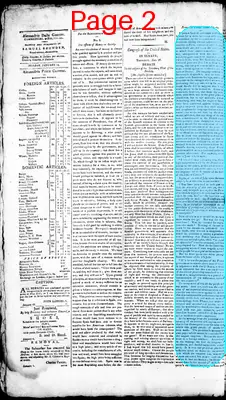
Editorial
January 14, 1811
Alexandria Daily Gazette, Commercial & Political
Alexandria, Virginia
What is this article about?
Editorial from United States Gazette satirizes US government's hypocritical diplomacy: strong private instructions to Minister Armstrong against French violations contrasted with no actual demands for reparations and premature proclamation of French compliance to favor anti-British measures.
Clipping

OCR Quality
92%
Excellent
Full Text
From the United States Gazette.
A person fond of caricature could hardly wish for a more ludicrous subject than is furnished by the instructions of our government, during the last summer, to this minister at Paris, contrasted with the measures finally adopted upon the very point to which these instructions relate.
At one, unacquainted with the manner which the game was to be played, we were led to believe, from Mr. Secretary Smith's letters of June and July last to Gen. Armstrong, that our government were about to make a stand against the robberies and insults of France. The language used in the Secretary's despatches, was so truly accordant with American feelings, and so appropriate to the outrages which we were experiencing, that any one, not in the secret, could hardly fail to suppose that it was really meant to be in earnest. It must be remarked, however, that those big words were addressed, not to the great plunderers, but to our minister, general Armstrong, who may, for aught we know, have been cautioned against letting the mighty emperor know that such unkind and unsubmissive language had been made use of; for we do not find, by the documents published, that any thing of the sort was communicated to the French court. Very probably those despatches were intended merely for the edification of congress and the amusement of the people of the United States; and not to meet the eye or to offend the ear of Napoleon the great.
But to show how admirably our executive can imitate the language of real sentiment and just indignation, we are constrained to make a few extracts from Mr. Smith's letters, respecting those French plunders which were perpetrated under the pretence of reprisal. For example, under date of June 5th, he says:
"I cannot forbear informing you, that high indignation is felt by the President, as well as by the public, at this act of violence on our property and of the outrage, both in the language used in the letter of the duke of Cadore."
Again, on the 5th of July, upon the same subject, he writes thus to our minister:
"You have presented in such just colors, the enormity of this outrage, that I have only to signify to you, that the President entirely approves the step that has been taken by you, &c." He instructs you particularly to make the French government sensible of the deep impressions made here, by so signal an aggression on the principles of justice and good faith, and to demand every reparation of which the case is susceptible."
Now all this is as it should be, so far as mere words can go. But was the thing ever done? Was the demand for reparation ever made? Nothing of the sort appears by the documents published. If it was made, why was not a compliance insisted on, previous to issuing a proclamation declaring that France has ceased to violate our neutral rights, while "so signal an aggression" remains unatoned, and even unapologised for: How do the blustering, swaggering actors of state tragedy account to the people for so signal an inconsistency?
But we must quote one other passage from the letter of the 5th July.
"If it be not the purpose of the French government to remove every obstacle of friendship adjustment with the U. States, it would seem impossible but that a reconsideration of this violent proceeding must lead to a satisfactory redress of it, as a preliminary to a general accommodation of the differences between the two countries."
To every word of this all the people will say amen. And yet, such was the eagerness of our impartial administration to revive the non-intercourse against G. Britain that this indispensable preliminary has been entirely overlooked, and without so much as an apology from France, now under repeated and accumulated insults, we are told by proclamation that France has complied with our just demands, and is therefore become entitled to all the immunities incident to such compliance.
In the message from the president at the opening of the session of Congress we find that he has dismounted from the stilts upon which this grand parade of words had been made. The president's message is a state paper which cannot be concealed from the august emperor. Not so the instructions to a foreign minister. Accordingly in the message we find the language of meekness, and dutiful submissive compliance. It is true our president plucks up sufficient spirit to deprecate the severity with which the emperor has, in some instances exercised his power over us: he wishes it had not been so: he thinks "it would have better accorded" with the emperor's conciliatory language to have acted
A person fond of caricature could hardly wish for a more ludicrous subject than is furnished by the instructions of our government, during the last summer, to this minister at Paris, contrasted with the measures finally adopted upon the very point to which these instructions relate.
At one, unacquainted with the manner which the game was to be played, we were led to believe, from Mr. Secretary Smith's letters of June and July last to Gen. Armstrong, that our government were about to make a stand against the robberies and insults of France. The language used in the Secretary's despatches, was so truly accordant with American feelings, and so appropriate to the outrages which we were experiencing, that any one, not in the secret, could hardly fail to suppose that it was really meant to be in earnest. It must be remarked, however, that those big words were addressed, not to the great plunderers, but to our minister, general Armstrong, who may, for aught we know, have been cautioned against letting the mighty emperor know that such unkind and unsubmissive language had been made use of; for we do not find, by the documents published, that any thing of the sort was communicated to the French court. Very probably those despatches were intended merely for the edification of congress and the amusement of the people of the United States; and not to meet the eye or to offend the ear of Napoleon the great.
But to show how admirably our executive can imitate the language of real sentiment and just indignation, we are constrained to make a few extracts from Mr. Smith's letters, respecting those French plunders which were perpetrated under the pretence of reprisal. For example, under date of June 5th, he says:
"I cannot forbear informing you, that high indignation is felt by the President, as well as by the public, at this act of violence on our property and of the outrage, both in the language used in the letter of the duke of Cadore."
Again, on the 5th of July, upon the same subject, he writes thus to our minister:
"You have presented in such just colors, the enormity of this outrage, that I have only to signify to you, that the President entirely approves the step that has been taken by you, &c." He instructs you particularly to make the French government sensible of the deep impressions made here, by so signal an aggression on the principles of justice and good faith, and to demand every reparation of which the case is susceptible."
Now all this is as it should be, so far as mere words can go. But was the thing ever done? Was the demand for reparation ever made? Nothing of the sort appears by the documents published. If it was made, why was not a compliance insisted on, previous to issuing a proclamation declaring that France has ceased to violate our neutral rights, while "so signal an aggression" remains unatoned, and even unapologised for: How do the blustering, swaggering actors of state tragedy account to the people for so signal an inconsistency?
But we must quote one other passage from the letter of the 5th July.
"If it be not the purpose of the French government to remove every obstacle of friendship adjustment with the U. States, it would seem impossible but that a reconsideration of this violent proceeding must lead to a satisfactory redress of it, as a preliminary to a general accommodation of the differences between the two countries."
To every word of this all the people will say amen. And yet, such was the eagerness of our impartial administration to revive the non-intercourse against G. Britain that this indispensable preliminary has been entirely overlooked, and without so much as an apology from France, now under repeated and accumulated insults, we are told by proclamation that France has complied with our just demands, and is therefore become entitled to all the immunities incident to such compliance.
In the message from the president at the opening of the session of Congress we find that he has dismounted from the stilts upon which this grand parade of words had been made. The president's message is a state paper which cannot be concealed from the august emperor. Not so the instructions to a foreign minister. Accordingly in the message we find the language of meekness, and dutiful submissive compliance. It is true our president plucks up sufficient spirit to deprecate the severity with which the emperor has, in some instances exercised his power over us: he wishes it had not been so: he thinks "it would have better accorded" with the emperor's conciliatory language to have acted
What sub-type of article is it?
Foreign Affairs
Partisan Politics
Satire
What keywords are associated?
French Aggressions
Us Diplomacy
Napoleon
Reparations
Non Intercourse
Partisan Critique
What entities or persons were involved?
Secretary Smith
Gen. Armstrong
President
Napoleon
Duke Of Cadore
French Government
Editorial Details
Primary Topic
Inconsistency In Us Policy Toward French Aggressions
Stance / Tone
Satirical Criticism Of Administration Hypocrisy
Key Figures
Secretary Smith
Gen. Armstrong
President
Napoleon
Duke Of Cadore
French Government
Key Arguments
Instructions To Minister Expressed Strong Indignation At French Outrages But Were Not Communicated To France
No Demand For Reparation Was Made Despite Explicit Instructions
Proclamation Declared France Compliant Without Apology Or Redress For Aggressions
Eagerness To Revive Non Intercourse Against Britain Overlooked Indispensable Preliminaries With France
President's Message Adopted Meek And Submissive Tone Toward Napoleon