Thank you for visiting SNEWPapers!
Sign up free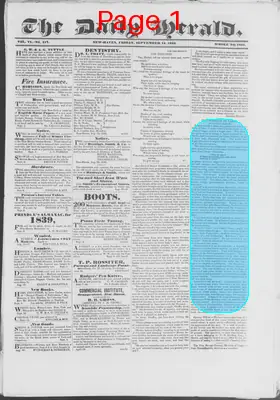
Literary
September 14, 1838
The Daily Herald
New Haven, New Haven County, Connecticut
What is this article about?
Orville Dewey's essay extols the nobility of labor as Heaven's ordinance for human improvement, arguing that exertion fosters virtue over idleness. He critiques feudal legacies that demean toil and calls for embracing labor in the new world as true manhood.
Clipping
OCR Quality
98%
Excellent
Full Text
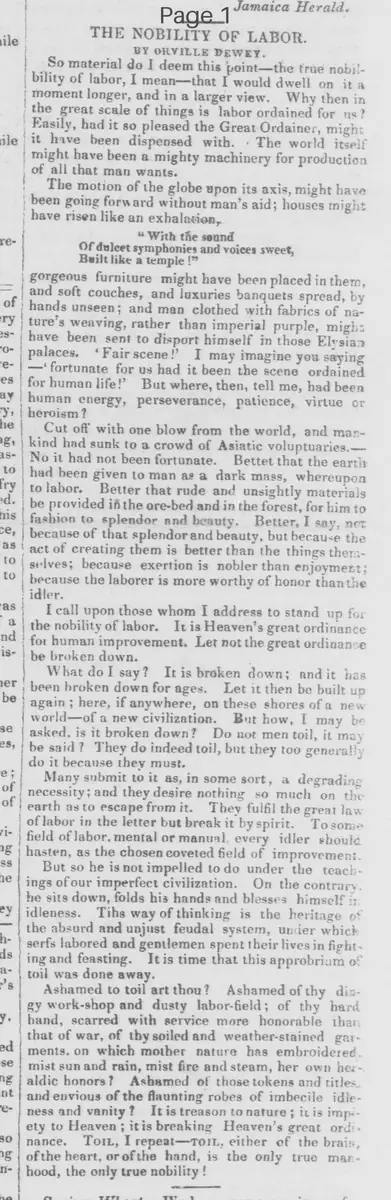
THE NOBILITY OF LABOR.
BY ORVILLE DEWEY.
So material do I deem this point—the true nobility of labor, I mean—that I would dwell on it a moment longer, and in a larger view. Why then in the great scale of things is labor ordained for us? Easily, had it so pleased the Great Ordainer, might it have been dispensed with. The world itself might have been a mighty machinery for production of all that man wants.
The motion of the globe upon its axis, might have been going forward without man's aid; houses might have risen like an exhalation,
"With the sound
Of dulcet symphonies and voices sweet,
Built like a temple!"
gorgeous furniture might have been placed in them, and soft couches, and luxuries banquets spread, by hands unseen; and man clothed with fabrics of nature's weaving, rather than imperial purple, might have been sent to disport himself in those Elysian palaces. 'Fair scene!' I may imagine you saying —'fortunate for us had it been the scene ordained for human life!' But where, then, tell me, had been human energy, perseverance, patience, virtue or heroism?
Cut off with one blow from the world, and mankind had sunk to a crowd of Asiatic voluptuaries.— No it had not been fortunate. Better that the earth had been given to man as a dark mass, whereupon to labor. Better that rude and unsightly materials be provided in the ore-bed and in the forest, for him to fashion to splendor and beauty. Better, I say, not because of that splendor and beauty, but because the act of creating them is better than the things themselves; because exertion is nobler than enjoyment; because the laborer is more worthy of honor than the idler.
I call upon those whom I address to stand up for the nobility of labor. It is Heaven's great ordinance for human improvement. Let not the great ordinance be broken down.
What do I say? It is broken down; and it has been broken down for ages. Let it then be built up again; here, if anywhere, on these shores of a new world—of a new civilization. But how, I may be asked, is it broken down? Do not men toil, it may be said? They do indeed toil, but they too generally do it because they must.
Many submit to it as, in some sort, a degrading necessity; and they desire nothing so much on the earth as to escape from it. They fulfil the great law of labor in the letter but break it in spirit. To some field of labor, mental or manual every idler should hasten, as the chosen coveted field of improvement.
But so he is not impelled to do under the teachings of our imperfect civilization. On the contrary, he sits down, folds his hands and blesses himself in idleness. This way of thinking is the heritage of the absurd and unjust feudal system, under which serfs labored and gentlemen spent their lives in fighting and feasting. It is time that this approbrium of toil was done away.
Ashamed to toil art thou? Ashamed of thy dingy work-shop and dusty labor-field; of thy hard hand, scarred with service more honorable than that of war, of thy soiled and weather-stained garments, on which mother nature has embroidered with sun and rain, with fire and steam, her own heraldic honors? Ashamed of those tokens and titles and envious of the flaunting robes of imbecile idleness and vanity? It is treason to nature; it is impiety to Heaven; it is breaking Heaven's great ordinance. TOIL, I repeat—TOIL, either of the brain or of the heart, or of the hand, is the only true manhood, the only true nobility!
BY ORVILLE DEWEY.
So material do I deem this point—the true nobility of labor, I mean—that I would dwell on it a moment longer, and in a larger view. Why then in the great scale of things is labor ordained for us? Easily, had it so pleased the Great Ordainer, might it have been dispensed with. The world itself might have been a mighty machinery for production of all that man wants.
The motion of the globe upon its axis, might have been going forward without man's aid; houses might have risen like an exhalation,
"With the sound
Of dulcet symphonies and voices sweet,
Built like a temple!"
gorgeous furniture might have been placed in them, and soft couches, and luxuries banquets spread, by hands unseen; and man clothed with fabrics of nature's weaving, rather than imperial purple, might have been sent to disport himself in those Elysian palaces. 'Fair scene!' I may imagine you saying —'fortunate for us had it been the scene ordained for human life!' But where, then, tell me, had been human energy, perseverance, patience, virtue or heroism?
Cut off with one blow from the world, and mankind had sunk to a crowd of Asiatic voluptuaries.— No it had not been fortunate. Better that the earth had been given to man as a dark mass, whereupon to labor. Better that rude and unsightly materials be provided in the ore-bed and in the forest, for him to fashion to splendor and beauty. Better, I say, not because of that splendor and beauty, but because the act of creating them is better than the things themselves; because exertion is nobler than enjoyment; because the laborer is more worthy of honor than the idler.
I call upon those whom I address to stand up for the nobility of labor. It is Heaven's great ordinance for human improvement. Let not the great ordinance be broken down.
What do I say? It is broken down; and it has been broken down for ages. Let it then be built up again; here, if anywhere, on these shores of a new world—of a new civilization. But how, I may be asked, is it broken down? Do not men toil, it may be said? They do indeed toil, but they too generally do it because they must.
Many submit to it as, in some sort, a degrading necessity; and they desire nothing so much on the earth as to escape from it. They fulfil the great law of labor in the letter but break it in spirit. To some field of labor, mental or manual every idler should hasten, as the chosen coveted field of improvement.
But so he is not impelled to do under the teachings of our imperfect civilization. On the contrary, he sits down, folds his hands and blesses himself in idleness. This way of thinking is the heritage of the absurd and unjust feudal system, under which serfs labored and gentlemen spent their lives in fighting and feasting. It is time that this approbrium of toil was done away.
Ashamed to toil art thou? Ashamed of thy dingy work-shop and dusty labor-field; of thy hard hand, scarred with service more honorable than that of war, of thy soiled and weather-stained garments, on which mother nature has embroidered with sun and rain, with fire and steam, her own heraldic honors? Ashamed of those tokens and titles and envious of the flaunting robes of imbecile idleness and vanity? It is treason to nature; it is impiety to Heaven; it is breaking Heaven's great ordinance. TOIL, I repeat—TOIL, either of the brain or of the heart, or of the hand, is the only true manhood, the only true nobility!
What sub-type of article is it?
Essay
What themes does it cover?
Moral Virtue
Social Manners
What keywords are associated?
Nobility Of Labor
Human Improvement
Idleness
Feudal System
Toil
Virtue
Exertion
What entities or persons were involved?
By Orville Dewey.
Literary Details
Title
The Nobility Of Labor.
Author
By Orville Dewey.
Subject
On The Nobility Of Labor
Key Lines
"With The Sound
Of Dulcet Symphonies And Voices Sweet,
Built Like A Temple!"
Because Exertion Is Nobler Than Enjoyment; Because The Laborer Is More Worthy Of Honor Than The Idler.
It Is Heaven's Great Ordinance For Human Improvement.
This Way Of Thinking Is The Heritage Of The Absurd And Unjust Feudal System, Under Which Serfs Labored And Gentlemen Spent Their Lives In Fighting And Feasting.
Toil, I Repeat—Toil, Either Of The Brain Or Of The Heart, Or Of The Hand, Is The Only True Manhood, The Only True Nobility!