Thank you for visiting SNEWPapers!
Sign up free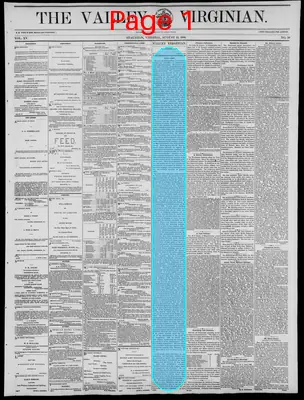
Editorial
August 12, 1880
The Valley Virginian
Clifton Forge, Staunton, Virginia
What is this article about?
This 1880 editorial from Staunton, VA, compares Democratic enthusiasm for Gen. Hampton's speech to W.L. Yancey's 1860 address, warning that both mask secessionist intents. It praises Republican economic policies and urges against electing Hancock, fearing revival of Civil War issues.
Clipping

OCR Quality
95%
Excellent
Full Text
STAUNTON, VA.
THURSDAY AUGUST 12, 1880
1860--1880
We have no predisposition to sensational writing nor inclination to unnecessarily sound notes of warning. We prefer to deal with facts and plain, straightforward arguments, such as we are capable of commanding and presenting. We, however, would be untrue to our duty did we not call the attention of our readers, many of whom will readily see the application, to the speech of W. L. Yancey, in 1860, when he was invited to address in this place the Breckinridge wing of the Democratic party of Virginia, while the remarks of Gen. Hampton, recently made before a large audience in Staunton, are fresh in the minds of those who heard him. Mr. Yancey preached Democracy, and the "Union under the Constitution," at a time when he had formulated a plan for a Southern Confederacy, and was plotting to break up the Union. No more plausible argument could have been presented than was furnished on that occasion by the wonderful Alabama orator for the perpetuity of the "Union, under the Constitution;" no more enthusiastic reception could have been given than was tendered the person and the remarks of the distinguished gentleman. His splendid declamation and masterly arrangement of sentences and sentiments carried his audience into the wildest enthusiasm, scarcely one of whom discovered that beneath all this scholarly eloquence was concealed a diabolical purpose to precipitate a dissolution of the Union, if the result of the election should not carry Mr. Breckinridge into the Presidential chair. Mr. Breckinridge was a Union man at heart and in sentiment, but he allowed himself to become a candidate of the extreme wing of the Democratic party, and for all practical purposes was the representative man of that political interest. Believing then that Mr. Yancey's mission meant mischief, we warned the people against his insidious teachings, and endeavored to demonstrate that the "Union under the Constitution" which he in such fervid language championed, was a Union under the management and control of the secession element of the Democratic party, and no other. These warnings were, however, not heeded, but we were severely censured because we presumed to criticise, in very plain language, and endeavored to expose the insidious doctrine he promulgated.
The same wild enthusiasm which greeted Mr. Yancey marked the reception of Gov. Hampton, and while we have no charge to make of a purpose to disturb the peace of the country or endanger the liberties of the people, we cannot pass with indifference the sentiment declared by Gov. Hampton. When he deliberately asserted that the same principles were at issue in this contest that were joined during the war, and to give emphasis to these principles urged harmony in the Democratic party as a means to elect Hancock, our mind involuntarily and instantly ran back to the scenes and circumstances which attended the delivery of the captivating and brilliant speech of Mr. Yancey, in 1860. To us it was a startling announcement, and while others may treat it lightly, because they are no doubt conscious of no designing purposes, yet we cannot free ourselves from the belief that the advocacy of a doctrine which has been the means of bringing so much woe and agony upon the country, especially to the Southern States, is an improper theme of discussion before any American audience. Especially so when it was coupled with a fierce and vindictive assault upon the Republican party, which is peculiarly the representative of the union sentiment of the Nation and the accomplished results of the war, as they have been incorporated into the Constitution and laws of the country.
No attack can be made, in reason, upon the administration of that party, so far as it affects the prosperity of the country and the interests of the people. Its courage in dealing with the finance problem, and all the other questions entering into the management of the affairs of the nation, cannot be doubted. Its success has been marvelous in these respects.
Nor can it be assailed because it has not faithfully endeavored to abide by the results of the war and strictly observe the conditions stipulated in the fundamental law. Complaint will not hold against it for failure as it regards these considerations. Wherefore, then, should it be assailed, if not that an adverse policy should be adopted? Is it not logical to assume, that if the Democratic party should be advanced to power, that some policy hostile to that adopted by the Republican party would be pursued?
What would it be? There has been no announcement of any governmental principle or policy either by the Democratic candidate for the Presidency or those who support him. They assail the revenue laws, by which alone the credit and honor of the government can be preserved. They attack the tariff laws by which alone the Independence of America in her industrial interests can be maintained; they oppose the national banking system, which furnishes to the people the best and safest currency they have ever had, and secures the noteholder against any possible loss; and some of their leaders have declared the last vestige of the legislation growing out of the war shall be wiped from the statute books on the accession of the Democracy to power.
This is all negative, so far as administrative policy is concerned. No positive policy has been presented or formulated. They are to be taken on trust, with their vindictive denunciation of all the Republican party has accomplished, in fulfilling every promise it has ever made. It is not reasonable to suppose that they would dare to disturb the financial and revenue systems of the nation, however much the control of the government in the hands of the Democracy, with its record upon these subjects, would shock the business of the country in all its ramifications? Then what do they contend for? We have heard but one positive declaration upon this point, and that was made by Gen. Hampton--the principles which were at issue during the war.
Let the people pause and reflect on this declaration, and determine whether they are prepared to launch into experiments with a party that is championed by South Carolina, and are ready to be led again by those who precipitated secession, "hitched Virginia on to the Cotton States and dragged her out of Union." To say the least, they are not safe advisers, and the more pronounced our departure from their councils the better it will be for us. They should no more vote for Hancock now, than they should have voted for Breckinridge in 1860. The same principle is involved, according to Gen. Hampton, and the evils which followed then, may in one shape or another, follow now, if the people are not true to the laws and Constitution as they exist.
THURSDAY AUGUST 12, 1880
1860--1880
We have no predisposition to sensational writing nor inclination to unnecessarily sound notes of warning. We prefer to deal with facts and plain, straightforward arguments, such as we are capable of commanding and presenting. We, however, would be untrue to our duty did we not call the attention of our readers, many of whom will readily see the application, to the speech of W. L. Yancey, in 1860, when he was invited to address in this place the Breckinridge wing of the Democratic party of Virginia, while the remarks of Gen. Hampton, recently made before a large audience in Staunton, are fresh in the minds of those who heard him. Mr. Yancey preached Democracy, and the "Union under the Constitution," at a time when he had formulated a plan for a Southern Confederacy, and was plotting to break up the Union. No more plausible argument could have been presented than was furnished on that occasion by the wonderful Alabama orator for the perpetuity of the "Union, under the Constitution;" no more enthusiastic reception could have been given than was tendered the person and the remarks of the distinguished gentleman. His splendid declamation and masterly arrangement of sentences and sentiments carried his audience into the wildest enthusiasm, scarcely one of whom discovered that beneath all this scholarly eloquence was concealed a diabolical purpose to precipitate a dissolution of the Union, if the result of the election should not carry Mr. Breckinridge into the Presidential chair. Mr. Breckinridge was a Union man at heart and in sentiment, but he allowed himself to become a candidate of the extreme wing of the Democratic party, and for all practical purposes was the representative man of that political interest. Believing then that Mr. Yancey's mission meant mischief, we warned the people against his insidious teachings, and endeavored to demonstrate that the "Union under the Constitution" which he in such fervid language championed, was a Union under the management and control of the secession element of the Democratic party, and no other. These warnings were, however, not heeded, but we were severely censured because we presumed to criticise, in very plain language, and endeavored to expose the insidious doctrine he promulgated.
The same wild enthusiasm which greeted Mr. Yancey marked the reception of Gov. Hampton, and while we have no charge to make of a purpose to disturb the peace of the country or endanger the liberties of the people, we cannot pass with indifference the sentiment declared by Gov. Hampton. When he deliberately asserted that the same principles were at issue in this contest that were joined during the war, and to give emphasis to these principles urged harmony in the Democratic party as a means to elect Hancock, our mind involuntarily and instantly ran back to the scenes and circumstances which attended the delivery of the captivating and brilliant speech of Mr. Yancey, in 1860. To us it was a startling announcement, and while others may treat it lightly, because they are no doubt conscious of no designing purposes, yet we cannot free ourselves from the belief that the advocacy of a doctrine which has been the means of bringing so much woe and agony upon the country, especially to the Southern States, is an improper theme of discussion before any American audience. Especially so when it was coupled with a fierce and vindictive assault upon the Republican party, which is peculiarly the representative of the union sentiment of the Nation and the accomplished results of the war, as they have been incorporated into the Constitution and laws of the country.
No attack can be made, in reason, upon the administration of that party, so far as it affects the prosperity of the country and the interests of the people. Its courage in dealing with the finance problem, and all the other questions entering into the management of the affairs of the nation, cannot be doubted. Its success has been marvelous in these respects.
Nor can it be assailed because it has not faithfully endeavored to abide by the results of the war and strictly observe the conditions stipulated in the fundamental law. Complaint will not hold against it for failure as it regards these considerations. Wherefore, then, should it be assailed, if not that an adverse policy should be adopted? Is it not logical to assume, that if the Democratic party should be advanced to power, that some policy hostile to that adopted by the Republican party would be pursued?
What would it be? There has been no announcement of any governmental principle or policy either by the Democratic candidate for the Presidency or those who support him. They assail the revenue laws, by which alone the credit and honor of the government can be preserved. They attack the tariff laws by which alone the Independence of America in her industrial interests can be maintained; they oppose the national banking system, which furnishes to the people the best and safest currency they have ever had, and secures the noteholder against any possible loss; and some of their leaders have declared the last vestige of the legislation growing out of the war shall be wiped from the statute books on the accession of the Democracy to power.
This is all negative, so far as administrative policy is concerned. No positive policy has been presented or formulated. They are to be taken on trust, with their vindictive denunciation of all the Republican party has accomplished, in fulfilling every promise it has ever made. It is not reasonable to suppose that they would dare to disturb the financial and revenue systems of the nation, however much the control of the government in the hands of the Democracy, with its record upon these subjects, would shock the business of the country in all its ramifications? Then what do they contend for? We have heard but one positive declaration upon this point, and that was made by Gen. Hampton--the principles which were at issue during the war.
Let the people pause and reflect on this declaration, and determine whether they are prepared to launch into experiments with a party that is championed by South Carolina, and are ready to be led again by those who precipitated secession, "hitched Virginia on to the Cotton States and dragged her out of Union." To say the least, they are not safe advisers, and the more pronounced our departure from their councils the better it will be for us. They should no more vote for Hancock now, than they should have voted for Breckinridge in 1860. The same principle is involved, according to Gen. Hampton, and the evils which followed then, may in one shape or another, follow now, if the people are not true to the laws and Constitution as they exist.
What sub-type of article is it?
Partisan Politics
Economic Policy
War Or Peace
What keywords are associated?
1860 Election
1880 Election
Democratic Party
Secession
Civil War Principles
Tariff Laws
National Banking
Hancock
Breckinridge
What entities or persons were involved?
W. L. Yancey
Gen. Hampton
Mr. Breckinridge
Hancock
Democratic Party
Republican Party
South Carolina
Editorial Details
Primary Topic
Warning Against Democratic Revival Of Civil War Issues In 1880 Election
Stance / Tone
Cautionary Anti Democratic Pro Republican
Key Figures
W. L. Yancey
Gen. Hampton
Mr. Breckinridge
Hancock
Democratic Party
Republican Party
South Carolina
Key Arguments
Yancey's 1860 Speech Promoted Union Under Constitution While Plotting Southern Confederacy
Enthusiasm For Yancey In 1860 Ignored Warnings Of Secessionist Intent
Hampton's 1880 Speech Revives Civil War Principles To Support Hancock And Democratic Harmony
Democratic Party Lacks Positive Policy, Only Attacks Republican Achievements In Finance, Tariff, And Banking
Voting For Hancock Akin To Voting For Breckinridge In 1860, Risking Similar Evils
Republicans Have Successfully Managed National Affairs And War Results