Thank you for visiting SNEWPapers!
Sign up free
Literary
May 10, 1947
The Wilmington Morning Star
Wilmington, New Hanover County, North Carolina
What is this article about?
In this chapter of a social drama, newlywed Diane Arden deals with her husband Bill's immersion in a high-stakes trial for client Staples, suspected of dishonesty. She socializes with friends, recruits reporter Rufus Kent for an amateur movie, and debates journalistic ethics with him. Diane reflects on family ties and marital adjustments amid societal scrutiny of her background.
Clipping
OCR Quality
95%
Excellent
Full Text
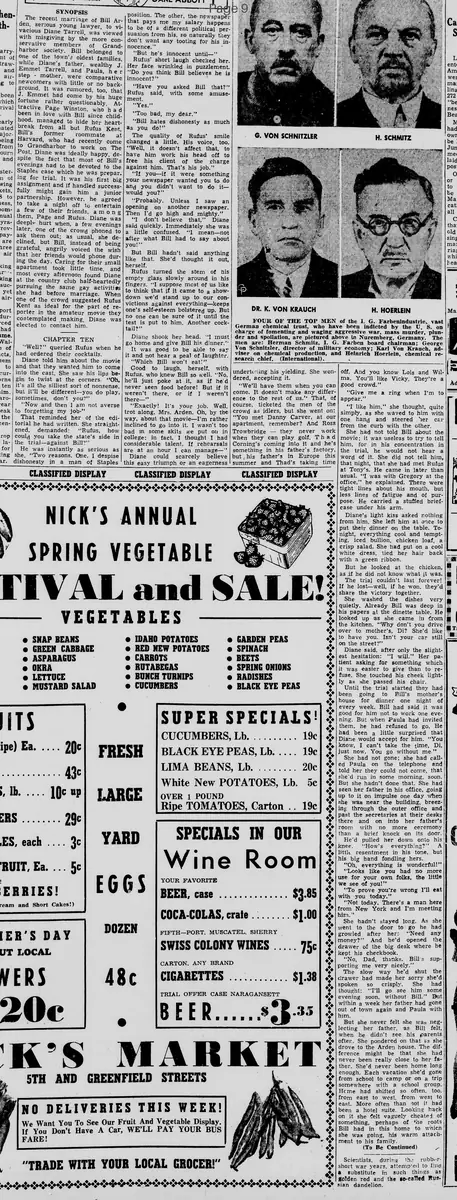
The recent marriage of Bill Arden, serious young lawyer, to vivacious Diane Tarrell, was viewed with misgiving by the more conservative members of Grandharbor society. Bill belonged to one of the town's oldest families. while Diane's father, wealthy J. Emmet Tarrell, and Paula, her step-mother, were comparative newcomers with little or no background. It was rumored, too, that J. Emmet had come by his huge fortune rather questionably. Attractive Page Winston, who had been in love with Bill since childhood, managed to hide her heartbreak from all but Rufus Kent, Bill's former roommate at Harvard, who had recently come to Grandharbor to work on The Post, Diane was ideally happy, despite the fact that most of Bill's evenings had to be devoted to the Staples case which he was preparing for trial. It was his first big assignment and if handled successfully might gain him a junior partnership. However, he agreed to take a night off to entertain a few of their friends, among them, Page and Rufus. Diane was deeply hurt when, a few evenings later, one of the crowd phoned to ask them out; as usual, she declined, but Bill, instead of being grateful, angrily voiced the wish that her friends would phone during the day. Caring for their small apartment took little time, and most every afternoon found Diane at the country club half-heartedly pursuing the same gay activities she had before marriage. When one of the crowd suggested Rufus Kent as ideal for the part of reporter in the amateur movie they contemplated making. Diane was elected to contact him.
CHAPTER TEN
"Well?" queried Rufus when he had ordered their cocktails.
Diane told him about the movie and that they wanted him to come into the cast. She saw his lips begin to twist at the corners.
"Oh, it's all the silliest sort of nonsense, but it'll be different--you do play, sometimes, don't you?"
'Now and then I am not averse to forgetting my job-"
That reminded her of the editorial he had written. She straightened, demanded: "Rufus, how could you take the state's side in the trial-against Bill?"
He was instantly as serious as she. "Two reasons. One, I despise dishonesty in a man of Staples' position. The other, the newspaper that pays me my salary happens to be of a different political persuasion from his, so naturally they don't want any tooting for his innocence.
"But he's innocent until-"
Rufus' short laugh checked her. Her face wrinkled in puzzlement.
"Do you think Bill believes he is innocent? Have you asked Bill that?"
Rufus said, with some amusement.
"Yes."
"Too bad, my dear.
"Bill hates dishonesty as much as you do!"
The quality of Rufus' smile changed a little. His voice, too.
"Well, it doesn't affect that, to have him work his head off to free his client of the charge against him. That's his job."
"If you-if it were something your newspaper wanted you to do and you didn't want to do it- would you?"
"Probably. Unless I saw an opening on another newspaper.
Then I'd go high and mighty."
"I don't believe that," Diane said quickly. Immediately she was a little confused. "I mean-not after what Bill had to say about you!"
But Bill hadn't said anything like that. She'd thought it out, herself.
Rufus turned the stem of his empty glass slowly around in his fingers. I suppose most of us like to think that if it came to a showdown we'd stand up to our convictions against everything-keeps one's self-esteem bolstered up. But no one can be sure of it until the test is put to him. Another cocktail?"
Diane shook her head. "I must go home and give Bill his dinner."
It was good to be able to say it and not hear a peal of laughter.
"Which Bill won't eat!"
Good to laugh, herself, with Rufus, who knew Bill so well. "No, he'll just poke at it, as if he'd never seen food before! But if it weren't there, or if I weren't there
"Exactly! It's your job. Well, trot along, Mrs. Arden. Oh, by the way, about that movie-I'm rather inclined to go into it. I wasn't too bad in some skits we put on in college; in fact, I thought I had considerable talent. If rehearsals are at an hour I can manage-"
Diane could scarcely believe this easy triumph or an eagerness undertoning his yielding. She wondered, accepting it.
"We'll have them when you can come. It doesn't make any difference to the rest of us.' That, of course, ticketed the men of the crowd as idlers, but she went on:
"You met Danny Carver, at our apartment, remember? And Ross Trowbridge - they never work when they can play golf. Thad Corning's coming into it and he's something in his father's factory, but, his father's in Europe this summer and Thad's taking time off. And you know Lois and Wilma. You'll like Vicky. They're a good crowd."
"Give me a ring when I'm to appear."
"I like him," she thought, quite simply, as she waved to him with one hand and steered her car from the curb with the other.
She had not told Bill about the movie: it was useless to try to tell him, for in his concentration in the trial, he would not hear a word of it. She did not tell him, that night, that she had met Rufus at Tony's. He came in later than usual. "I was with Gregory at the office," he explained. There were tight lines about his mouth, but less lines of fatigue and of purpose. He carried a stuffed briefcase under his arm.
Diane's light kiss asked nothing from him. She left him at once to put their dinner on the table. Tonight, everything cool and tempting, iced bouillon, chicken loaf, a crisp salad. She had put on a cool white dress, tied her hair back with a green ribbon.
But he looked at the chicken, as if he did not know what it was.
The trial couldn't last forever!
If he lost-well, if he won, they'd share the victory together.
She washed the dishes very quietly. Already Bill was deep in his papers at the dinette table. He looked up as she came in from the kitchen. "Why don't you drive over to mother's, Di? She'd like to have you. Isn't your car still on the street?"
Diane said, after only the slightest hesitation: "I will." Her patient asking for something which it was easier to give than to refuse. She touched his cheek lightly as she passed his chair.
Until the trial started they had been going to Bill's mother's house for dinner one night of every week. Bill had said it was good for him not to work one evening. But when Paula had invited them. he had refused to go. He had been a little surprised that Diane would accept for him. "You know, I can't take the time, Di, just now. You go without me."
She had not gone; she had called Paula on the telephone and told her they could not come, that she'd run in some morning. soon.
But she hadn't done that. She had seen her father in his office, going up to it on impulse one day when she was near the building, breezing through the outer office and past the secretaries at their desks there and on into her father's room with no more ceremony than a brief knock on its door.
He'd pulled her down onto his knee. How's everything?"
A little resentment in his tone, but his big hand fondling hers.
"Oh. everything is wonderful!"
'Looks like you had no more use for your own folks, the little we see of you!"
"To prove you're wrong I'll eat with you today."
'Not today. There's a man here from New York and I'm meeting him."
She hadn't stayed long. As she went to the door to go he had growled after her:. Need any money?" And he'd opened the drawer of the big desk where he kept his checkbook.
"No, Dad, thanks. Bill's supporting me very nicely."
The slow way he'd shut the drawer had made her sorry she'd spoken so crisply. She had thought: I'll go see him some evening soon, without Bill." But within a week her father had gone out of town again and Paula with him.
But she never felt she was neglecting her father, as Bill felt, when he didn't see his parents often. She pondered on that as she drove to the Arden house. The difference might be that she had never been really close to her father. She'd never been home long enough. Each vacation she'd gone from school to camp or on a trip somewhere with a school group.
Home had shifted so often, too. from east to west. from west to east. More often than not it had been a hotel suite. Looking back on it she felt vaguely cheated of something. perhaps of the roots Bill had in this home to which she was going. his warm attachment to his family.
(To Be Continued)
Scientists, during the rubber-short war years, attempted to find substitute in such things as golden rod and the so-called Russian dandelion.
CHAPTER TEN
"Well?" queried Rufus when he had ordered their cocktails.
Diane told him about the movie and that they wanted him to come into the cast. She saw his lips begin to twist at the corners.
"Oh, it's all the silliest sort of nonsense, but it'll be different--you do play, sometimes, don't you?"
'Now and then I am not averse to forgetting my job-"
That reminded her of the editorial he had written. She straightened, demanded: "Rufus, how could you take the state's side in the trial-against Bill?"
He was instantly as serious as she. "Two reasons. One, I despise dishonesty in a man of Staples' position. The other, the newspaper that pays me my salary happens to be of a different political persuasion from his, so naturally they don't want any tooting for his innocence.
"But he's innocent until-"
Rufus' short laugh checked her. Her face wrinkled in puzzlement.
"Do you think Bill believes he is innocent? Have you asked Bill that?"
Rufus said, with some amusement.
"Yes."
"Too bad, my dear.
"Bill hates dishonesty as much as you do!"
The quality of Rufus' smile changed a little. His voice, too.
"Well, it doesn't affect that, to have him work his head off to free his client of the charge against him. That's his job."
"If you-if it were something your newspaper wanted you to do and you didn't want to do it- would you?"
"Probably. Unless I saw an opening on another newspaper.
Then I'd go high and mighty."
"I don't believe that," Diane said quickly. Immediately she was a little confused. "I mean-not after what Bill had to say about you!"
But Bill hadn't said anything like that. She'd thought it out, herself.
Rufus turned the stem of his empty glass slowly around in his fingers. I suppose most of us like to think that if it came to a showdown we'd stand up to our convictions against everything-keeps one's self-esteem bolstered up. But no one can be sure of it until the test is put to him. Another cocktail?"
Diane shook her head. "I must go home and give Bill his dinner."
It was good to be able to say it and not hear a peal of laughter.
"Which Bill won't eat!"
Good to laugh, herself, with Rufus, who knew Bill so well. "No, he'll just poke at it, as if he'd never seen food before! But if it weren't there, or if I weren't there
"Exactly! It's your job. Well, trot along, Mrs. Arden. Oh, by the way, about that movie-I'm rather inclined to go into it. I wasn't too bad in some skits we put on in college; in fact, I thought I had considerable talent. If rehearsals are at an hour I can manage-"
Diane could scarcely believe this easy triumph or an eagerness undertoning his yielding. She wondered, accepting it.
"We'll have them when you can come. It doesn't make any difference to the rest of us.' That, of course, ticketed the men of the crowd as idlers, but she went on:
"You met Danny Carver, at our apartment, remember? And Ross Trowbridge - they never work when they can play golf. Thad Corning's coming into it and he's something in his father's factory, but, his father's in Europe this summer and Thad's taking time off. And you know Lois and Wilma. You'll like Vicky. They're a good crowd."
"Give me a ring when I'm to appear."
"I like him," she thought, quite simply, as she waved to him with one hand and steered her car from the curb with the other.
She had not told Bill about the movie: it was useless to try to tell him, for in his concentration in the trial, he would not hear a word of it. She did not tell him, that night, that she had met Rufus at Tony's. He came in later than usual. "I was with Gregory at the office," he explained. There were tight lines about his mouth, but less lines of fatigue and of purpose. He carried a stuffed briefcase under his arm.
Diane's light kiss asked nothing from him. She left him at once to put their dinner on the table. Tonight, everything cool and tempting, iced bouillon, chicken loaf, a crisp salad. She had put on a cool white dress, tied her hair back with a green ribbon.
But he looked at the chicken, as if he did not know what it was.
The trial couldn't last forever!
If he lost-well, if he won, they'd share the victory together.
She washed the dishes very quietly. Already Bill was deep in his papers at the dinette table. He looked up as she came in from the kitchen. "Why don't you drive over to mother's, Di? She'd like to have you. Isn't your car still on the street?"
Diane said, after only the slightest hesitation: "I will." Her patient asking for something which it was easier to give than to refuse. She touched his cheek lightly as she passed his chair.
Until the trial started they had been going to Bill's mother's house for dinner one night of every week. Bill had said it was good for him not to work one evening. But when Paula had invited them. he had refused to go. He had been a little surprised that Diane would accept for him. "You know, I can't take the time, Di, just now. You go without me."
She had not gone; she had called Paula on the telephone and told her they could not come, that she'd run in some morning. soon.
But she hadn't done that. She had seen her father in his office, going up to it on impulse one day when she was near the building, breezing through the outer office and past the secretaries at their desks there and on into her father's room with no more ceremony than a brief knock on its door.
He'd pulled her down onto his knee. How's everything?"
A little resentment in his tone, but his big hand fondling hers.
"Oh. everything is wonderful!"
'Looks like you had no more use for your own folks, the little we see of you!"
"To prove you're wrong I'll eat with you today."
'Not today. There's a man here from New York and I'm meeting him."
She hadn't stayed long. As she went to the door to go he had growled after her:. Need any money?" And he'd opened the drawer of the big desk where he kept his checkbook.
"No, Dad, thanks. Bill's supporting me very nicely."
The slow way he'd shut the drawer had made her sorry she'd spoken so crisply. She had thought: I'll go see him some evening soon, without Bill." But within a week her father had gone out of town again and Paula with him.
But she never felt she was neglecting her father, as Bill felt, when he didn't see his parents often. She pondered on that as she drove to the Arden house. The difference might be that she had never been really close to her father. She'd never been home long enough. Each vacation she'd gone from school to camp or on a trip somewhere with a school group.
Home had shifted so often, too. from east to west. from west to east. More often than not it had been a hotel suite. Looking back on it she felt vaguely cheated of something. perhaps of the roots Bill had in this home to which she was going. his warm attachment to his family.
(To Be Continued)
Scientists, during the rubber-short war years, attempted to find substitute in such things as golden rod and the so-called Russian dandelion.
What sub-type of article is it?
Prose Fiction
Dialogue
What themes does it cover?
Social Manners
Love Romance
Political
What keywords are associated?
Marriage
Society
Trial
Journalism
Friendship
Family
Dishonesty
Amateur Movie
Literary Details
Title
Chapter Ten
Form / Style
Narrative Prose With Dialogue
Key Lines
"Rufus, How Could You Take The State's Side In The Trial Against Bill?"
"Do You Think Bill Believes He Is Innocent? Have You Asked Bill That?"
"Bill Hates Dishonesty As Much As You Do!"
"I Suppose Most Of Us Like To Think That If It Came To A Showdown We'd Stand Up To Our Convictions Against Everything Keeps One's Self Esteem Bolstered Up."
The Trial Couldn't Last Forever!
If He Lost Well, If He Won, They'd Share The Victory Together.