Thank you for visiting SNEWPapers!
Sign up free
Literary
November 5, 1839
Alexandria Gazette
Alexandria, Alexandria County, District Of Columbia
What is this article about?
An essay discussing a German fable of a nobleman learning basket-making to win a bride, historical English apprenticeships in the 16th century as depicted in Hogarth's paintings of industrious vs. idle youths, and the American ideal of self-improvement through useful trades to become respected citizens.
Clipping
OCR Quality
98%
Excellent
Full Text
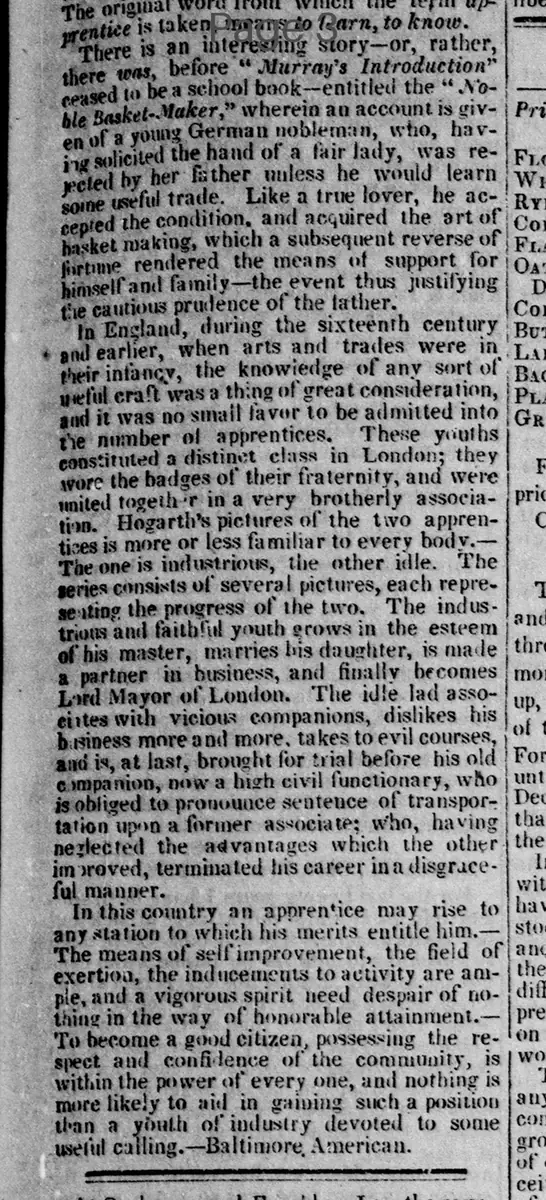
There is an interesting story—or, rather, fable—entitled the 'Noble Basket-Maker,' wherein an account is given of a young German nobleman, who, having solicited the hand of a fair lady, was rejected by her father unless he would learn some useful trade. He accepted the condition, and acquired the art of basket making, which a subsequent reverse of fortune rendered the means of support for himself and family—the event thus justifying the cautious prudence of the father.
In England, during the sixteenth century and earlier, when arts and trades were in their infancy, the knowledge of any sort of useful craft was a thing of great consideration, and it was no small favor to be admitted into the number of apprentices. These youths constituted a distinct class in London; they wore the badges of their fraternity, and were united together in a very brotherly association. Hogarth's pictures of the two apprentices is more or less familiar to everybody. The one is industrious, the other idle. The series consists of several pictures, each representing the progress of the two. The industrious and faithful youth grows in the esteem of his master, marries his daughter, is made a partner in business, and finally becomes Lord Mayor of London. The idle lad associates with vicious companions, dislikes his business more and more, takes to evil courses, and is, at last, brought for trial before his old companion, now a high civil functionary, who is obliged to pronounce sentence of transportation upon a former associate; who, having neglected the advantages which the other improved, terminated his career in a disgraceful manner.
In this country an apprentice may rise to any station to which his merits entitle him. The means of self-improvement, the field of exertion, the inducements to activity are ample, and a vigorous spirit need despair of nothing in the way of honorable attainment. To become a good citizen, possessing the respect and confidence of the community, is within the power of every one, and nothing is more likely to aid in gaining such a position than a youth of industry devoted to some useful calling.
Baltimore American.
In England, during the sixteenth century and earlier, when arts and trades were in their infancy, the knowledge of any sort of useful craft was a thing of great consideration, and it was no small favor to be admitted into the number of apprentices. These youths constituted a distinct class in London; they wore the badges of their fraternity, and were united together in a very brotherly association. Hogarth's pictures of the two apprentices is more or less familiar to everybody. The one is industrious, the other idle. The series consists of several pictures, each representing the progress of the two. The industrious and faithful youth grows in the esteem of his master, marries his daughter, is made a partner in business, and finally becomes Lord Mayor of London. The idle lad associates with vicious companions, dislikes his business more and more, takes to evil courses, and is, at last, brought for trial before his old companion, now a high civil functionary, who is obliged to pronounce sentence of transportation upon a former associate; who, having neglected the advantages which the other improved, terminated his career in a disgraceful manner.
In this country an apprentice may rise to any station to which his merits entitle him. The means of self-improvement, the field of exertion, the inducements to activity are ample, and a vigorous spirit need despair of nothing in the way of honorable attainment. To become a good citizen, possessing the respect and confidence of the community, is within the power of every one, and nothing is more likely to aid in gaining such a position than a youth of industry devoted to some useful calling.
Baltimore American.
What sub-type of article is it?
Essay
What themes does it cover?
Moral Virtue
What keywords are associated?
Fable
Apprenticeship
Industry
Moral
Self Improvement
Hogarth
Basket Maker
What entities or persons were involved?
Baltimore American
Literary Details
Author
Baltimore American
Subject
The Value Of Learning A Useful Trade
Key Lines
He Accepted The Condition, And Acquired The Art Of Basket Making, Which A Subsequent Reverse Of Fortune Rendered The Means Of Support For Himself And Family—The Event Thus Justifying The Cautious Prudence Of The Father.
The Industrious And Faithful Youth Grows In The Esteem Of His Master, Marries His Daughter, Is Made A Partner In Business, And Finally Becomes Lord Mayor Of London.
To Become A Good Citizen, Possessing The Respect And Confidence Of The Community, Is Within The Power Of Every One, And Nothing Is More Likely To Aid In Gaining Such A Position Than A Youth Of Industry Devoted To Some Useful Calling.