Thank you for visiting SNEWPapers!
Sign up free
Literary
July 21, 1800
Jenks's Portland Gazette
Portland, Cumberland County, Maine
What is this article about?
M. Clarion, a French actress, critiques the widespread use of white paint on stage in her memoirs. She argues it discolors the complexion, hinders facial expressions crucial for portraying emotions, and suggests alternatives like masks or minimal natural enhancements to aid delivery and authenticity.
Clipping
OCR Quality
95%
Excellent
Full Text
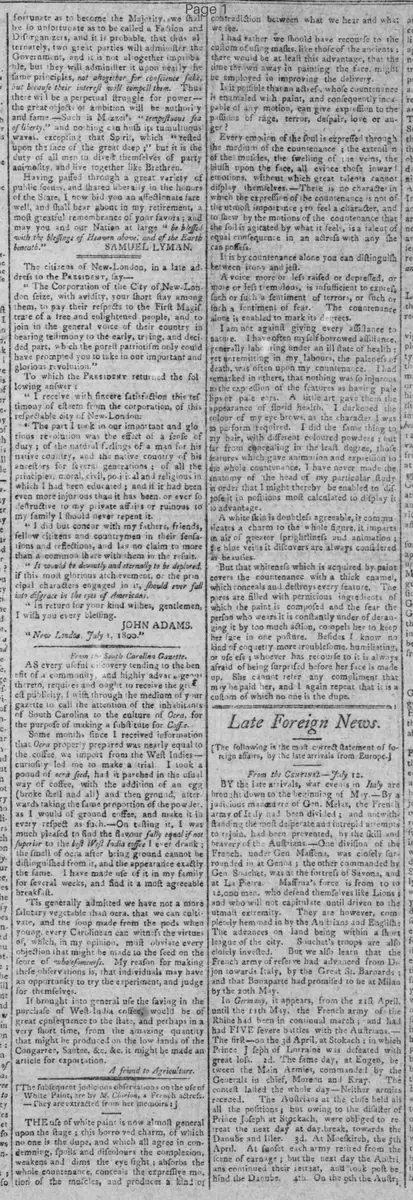
The subsequent judicious observations on the use of White Paint, are by M. Clarion, a French actress. They are extracted from her memoirs:
THE use of white paint is now almost general upon the stage; this borrowed charm, of which no one is the dupe, and which all agree in condemning, spoils and discolours the complexion, weakens and dims the eyesight; absorbs the whole countenance, conceals the expressive motion of the muscles, and produces a kind of contradiction between what we hear and what we see.
I had rather we should have recourse to the custom of using masks, like those of the ancients: there would be at least this advantage, that the time thrown away in painting the face, might be employed in improving the delivery.
Is it possible that an actress, whose countenance is enamelled with paint, and consequently incapable of any motion, can give expression to the passions of rage, terror, despair, love or anger?
Every emotion of the soul is expressed through the medium of the countenance; the extension of the muscles, the swelling of the veins, the blush upon the face, all evince those inward emotions, without which great talents cannot display themselves.--There is no character in which the expression of the countenance is not of the utmost importance; to feel a character, and to shew by the motions of the countenance that the soul is agitated by what it feels, is a talent of equal consequence in an actress with any she can possess.
It is by countenance alone you can distinguish between irony and jest.
A voice more or less raised or depressed, or more or less tremulous, is insufficient to express such or such a sentiment of terror, or such or such a sentiment of fear. The countenance alone is enabled to mark its degrees.
I am not against giving every assistance to nature. I have often myself borrowed assistance, generally labouring under an ill state of health: yet unremitting in my labours, the paleness of death, was often upon my countenance. I had remarked in others, that nothing was so injurious to the expression of the features as having pale lips or pale ears. A little art gave them the appearance of florid health. I darkened the colour of my eye-brows, as the character I was to perform required. I did the same thing to my hair, with different coloured powders; but far from concealing in the least degree, those features which gave animation and expression to the whole countenance, I have never made the anatomy of the head of my particular study in order that I might thereby be enabled to dispose it in positions most calculated to display it to advantage.
A white skin is doubtless agreeable, it communicates a charm to the whole figure, it imparts an air of greater sprightliness and animation; the blue veins it discovers are always considered as beauties.
But that whiteness which is acquired by paint covers the countenance with a thick enamel, which conceals and destroys every feature. The pores are filled with pernicious ingredients of which the paint is composed and the fear the person who wears it is constantly under of deranging it by too much action, compels her to keep her face in one posture. Besides I know no kind of coquetry more troublesome, humiliating, or odious; whoever has recourse to it is always afraid of being surprised before her face is made up. She cannot return any compliment that may be paid her, and I again repeat that it is a custom of which no one is the dupe.
THE use of white paint is now almost general upon the stage; this borrowed charm, of which no one is the dupe, and which all agree in condemning, spoils and discolours the complexion, weakens and dims the eyesight; absorbs the whole countenance, conceals the expressive motion of the muscles, and produces a kind of contradiction between what we hear and what we see.
I had rather we should have recourse to the custom of using masks, like those of the ancients: there would be at least this advantage, that the time thrown away in painting the face, might be employed in improving the delivery.
Is it possible that an actress, whose countenance is enamelled with paint, and consequently incapable of any motion, can give expression to the passions of rage, terror, despair, love or anger?
Every emotion of the soul is expressed through the medium of the countenance; the extension of the muscles, the swelling of the veins, the blush upon the face, all evince those inward emotions, without which great talents cannot display themselves.--There is no character in which the expression of the countenance is not of the utmost importance; to feel a character, and to shew by the motions of the countenance that the soul is agitated by what it feels, is a talent of equal consequence in an actress with any she can possess.
It is by countenance alone you can distinguish between irony and jest.
A voice more or less raised or depressed, or more or less tremulous, is insufficient to express such or such a sentiment of terror, or such or such a sentiment of fear. The countenance alone is enabled to mark its degrees.
I am not against giving every assistance to nature. I have often myself borrowed assistance, generally labouring under an ill state of health: yet unremitting in my labours, the paleness of death, was often upon my countenance. I had remarked in others, that nothing was so injurious to the expression of the features as having pale lips or pale ears. A little art gave them the appearance of florid health. I darkened the colour of my eye-brows, as the character I was to perform required. I did the same thing to my hair, with different coloured powders; but far from concealing in the least degree, those features which gave animation and expression to the whole countenance, I have never made the anatomy of the head of my particular study in order that I might thereby be enabled to dispose it in positions most calculated to display it to advantage.
A white skin is doubtless agreeable, it communicates a charm to the whole figure, it imparts an air of greater sprightliness and animation; the blue veins it discovers are always considered as beauties.
But that whiteness which is acquired by paint covers the countenance with a thick enamel, which conceals and destroys every feature. The pores are filled with pernicious ingredients of which the paint is composed and the fear the person who wears it is constantly under of deranging it by too much action, compels her to keep her face in one posture. Besides I know no kind of coquetry more troublesome, humiliating, or odious; whoever has recourse to it is always afraid of being surprised before her face is made up. She cannot return any compliment that may be paid her, and I again repeat that it is a custom of which no one is the dupe.
What sub-type of article is it?
Essay
What themes does it cover?
Social Manners
Moral Virtue
What keywords are associated?
White Paint
Stage Acting
Facial Expression
Countenance
Actress Memoirs
Theater Customs
Emotional Portrayal
What entities or persons were involved?
M. Clarion, A French Actress
Literary Details
Title
Observations On The Use Of White Paint
Author
M. Clarion, A French Actress
Subject
Critique Of White Paint In Stage Acting
Form / Style
Prose Reflection From Memoirs
Key Lines
The Use Of White Paint Is Now Almost General Upon The Stage; This Borrowed Charm, Of Which No One Is The Dupe, And Which All Agree In Condemning, Spoils And Discolours The Complexion, Weakens And Dims The Eyesight; Absorbs The Whole Countenance, Conceals The Expressive Motion Of The Muscles, And Produces A Kind Of Contradiction Between What We Hear And What We See.
I Had Rather We Should Have Recourse To The Custom Of Using Masks, Like Those Of The Ancients: There Would Be At Least This Advantage, That The Time Thrown Away In Painting The Face, Might Be Employed In Improving The Delivery.
Every Emotion Of The Soul Is Expressed Through The Medium Of The Countenance; The Extension Of The Muscles, The Swelling Of The Veins, The Blush Upon The Face, All Evince Those Inward Emotions, Without Which Great Talents Cannot Display Themselves.
But That Whiteness Which Is Acquired By Paint Covers The Countenance With A Thick Enamel, Which Conceals And Destroys Every Feature.
I Again Repeat That It Is A Custom Of Which No One Is The Dupe.