Thank you for visiting SNEWPapers!
Sign up free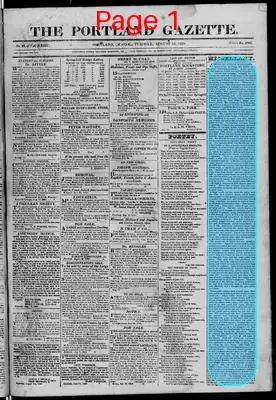
Story
August 22, 1820
The Portland Gazette
Portland, Cumberland County, Maine
What is this article about?
A detailed eyewitness account of a traditional Greek wedding ceremony in Patras, including invitations via spices, elaborate attire, priest-led rituals with rings and crowns, and a procession to the groom's house.
Clipping

OCR Quality
98%
Excellent
Full Text
MISCELLANY.
A MODERN GREEK MARRIAGE.
We went to the wedding of a Greek lady, daughter of the first physician. As the ceremony was curious, I shall attempt to describe it to you.
Cloves and nutmegs, wrapped up in a small parcel, were left at the house of the consul where we lived, and this is the mode of invitation to a wedding at Patras. The poorer class leave only cloves, nutmegs being dear. When we arrived at the door of the court-yard, we found the physician's janissary in waiting in a rich robe of scarlet ; his pistol of embossed silver, stuck in his silk girdle, were opposed to a vest of blue velvet trimmed with gold lace ; his turban, short petticoat, and trowsers, were of the purest white and his gaiters were of scarlet velvet embroidered with gold; his dress indeed, might have suited a prince. Every farthing which these servants receive in wages is laid out on clothes, and they contrive to preserve them well.
The court before the house was miserable and dirty, and the house itself had a very mean appearance. We ascended by a board ladder, and found the mother of the bride, with some other ladies standing in the entry, but they did not seem to take any part in the ceremony of receiving the visitors. On entering the room where the marriage ceremony was performed, we found the father of the lady, a fine looking old man, dressed in rich robes, with a cylinder cap of fur, like a large muff, seated on his divan or sofa, which was about nine feet broad, and went all round the room, provided with cushions at the back. To this we were conducted. and found ourselves raised about eighteen inches from the floor. We squatted down like the Greeks, with our legs under us, when a handsome and elegant attendant, in robes of blue and purple; stepped forward, and presented each of us with a long pipe, which we smoked, talking and singing to each other as well as we could, in testimony of our pleasure. The room was wretchedly furnished ; a few coarse wooden chairs, all different in fashion and size-a wooden clock--a press-three or four barbarous pictures of the Virgin and child, and the Apostles. the faces and crown of glory done in raised tin, and the drapery of paint. Shortly after our arrival, seven or eight priests with long beards entered, dressed in black ; a small rickety table being then brought to the middle of the room, the robes of the priests wrapped up in bundles were laid on it and opened by the priests. The dresses were different, but all highly ornamented with flowers and embroidery. When their ordinary dress was concealed by their canonicals, the ecclesiastics looked pretty well.
A large book was put upon the table, with some wine in a tumbler. and a roll of bread. Then entered the bridegroom, a man about fifty, in a pelisse of pale blue, and white loose Dutch looking breeches ; his turban as white as snow, and whiskers of tremendous size ! Next appeared the lady ; about thirty years of age, short, and rather pretty. Her hair, which was hardly to be discovered through the profusion of golden and gilded ornaments, hung down behind, mixed with threads of gold, as low as her haunches. Across her forehead was a band, on which were fixed various gold coins. She wore a dark purple pelisse edged with fur, under which was a short vest of white silk, richly embroidered : a zone of silk, with richly embossed clasps, like small saucers. encircled the lower part of her waist, and hung down upon her loins. She looked very shy and modest. Every eye was fixed upon her. Behind her stood her mother holding her up: the good old lady's hair was dyed red, the favourite color of hair in Greece.
The ceremony, as nearly as I can recollect. was as follows One of the priests took up some frankincense, which was lighted in a censer ; he then wafted the smoke among his brethren. Two wax candles. lighted were given to the bride and bridegroom by another priest, which they kissed; they also kissed his hand; the candles were then put down, and the same priest read prayers. The rings were then produced, and placed upon the book. with which the priest advanced, and asked the respective parties if they desired to be married. Upon receiving their answer in the affirmative, he touched their heads three times with their rings, which were delivered to the person who gave away the bride. This person (the Austrian consul) put them on the finger of each, changing them three times alternately from the bride and bridegroom. Then the description of the marriage of Cana in Galilee was read in a chaunting tone -Both seemed much affected, and I thought the poor bride would faint.
Matrimonial crowns were placed upon their heads, and a more whimsical and ridiculous sight I never saw. These crowns were of a conical form, composed of the merest tinsel, gold leaf and spun glass. They were changed from one head to the other three times ; the rings were taken off by the priest, and again replaced. While six of the priests were singing the service, the seventh took up the roll of bread. and cut out two small pieces, which he put into the wine. The sacrament was then administered. and prayers and chaunting recommenced.
While this was going on the bride and bridegroom were led three times round the table in the slowest possible manner ; looking like condemned criminals, and full as melancholy as if they had been going to be hanged. At that time smoke from the frankincense was wafted in great profusion among the spectators. When the ceremony was finished, the father kissed his son and daughter, as likewise did most of their friends. Still the chaunting continued, while the priests were disrobing and packing up their canonicals in bundles, like so many pedlars folding up their wares. The bride and bridegroom marched off with their precious crowns upon their heads. They had lived together at the lady's father's for eight days, at the expiration of which the lady went to her husband's house in full procession. While walking amidst a multitude of women and children she was supported by two females : and seemed to lean her whole weight upon them, as if about to sink to the ground. On her head was a prodigious cushion or pad, stuck full of trumpery flowers made of paper ; her cheeks, eye-brows, and lips, were daubed over with gold leaf; and her hair, interwoven with skeins of brown silk, hung down behind and before. She walked very slowly, and a boy carried a mirror before her, in which she was obliged to look occasionally, as a symbol of the regard thenceforth due even to her external carriage and conduct.
A MODERN GREEK MARRIAGE.
We went to the wedding of a Greek lady, daughter of the first physician. As the ceremony was curious, I shall attempt to describe it to you.
Cloves and nutmegs, wrapped up in a small parcel, were left at the house of the consul where we lived, and this is the mode of invitation to a wedding at Patras. The poorer class leave only cloves, nutmegs being dear. When we arrived at the door of the court-yard, we found the physician's janissary in waiting in a rich robe of scarlet ; his pistol of embossed silver, stuck in his silk girdle, were opposed to a vest of blue velvet trimmed with gold lace ; his turban, short petticoat, and trowsers, were of the purest white and his gaiters were of scarlet velvet embroidered with gold; his dress indeed, might have suited a prince. Every farthing which these servants receive in wages is laid out on clothes, and they contrive to preserve them well.
The court before the house was miserable and dirty, and the house itself had a very mean appearance. We ascended by a board ladder, and found the mother of the bride, with some other ladies standing in the entry, but they did not seem to take any part in the ceremony of receiving the visitors. On entering the room where the marriage ceremony was performed, we found the father of the lady, a fine looking old man, dressed in rich robes, with a cylinder cap of fur, like a large muff, seated on his divan or sofa, which was about nine feet broad, and went all round the room, provided with cushions at the back. To this we were conducted. and found ourselves raised about eighteen inches from the floor. We squatted down like the Greeks, with our legs under us, when a handsome and elegant attendant, in robes of blue and purple; stepped forward, and presented each of us with a long pipe, which we smoked, talking and singing to each other as well as we could, in testimony of our pleasure. The room was wretchedly furnished ; a few coarse wooden chairs, all different in fashion and size-a wooden clock--a press-three or four barbarous pictures of the Virgin and child, and the Apostles. the faces and crown of glory done in raised tin, and the drapery of paint. Shortly after our arrival, seven or eight priests with long beards entered, dressed in black ; a small rickety table being then brought to the middle of the room, the robes of the priests wrapped up in bundles were laid on it and opened by the priests. The dresses were different, but all highly ornamented with flowers and embroidery. When their ordinary dress was concealed by their canonicals, the ecclesiastics looked pretty well.
A large book was put upon the table, with some wine in a tumbler. and a roll of bread. Then entered the bridegroom, a man about fifty, in a pelisse of pale blue, and white loose Dutch looking breeches ; his turban as white as snow, and whiskers of tremendous size ! Next appeared the lady ; about thirty years of age, short, and rather pretty. Her hair, which was hardly to be discovered through the profusion of golden and gilded ornaments, hung down behind, mixed with threads of gold, as low as her haunches. Across her forehead was a band, on which were fixed various gold coins. She wore a dark purple pelisse edged with fur, under which was a short vest of white silk, richly embroidered : a zone of silk, with richly embossed clasps, like small saucers. encircled the lower part of her waist, and hung down upon her loins. She looked very shy and modest. Every eye was fixed upon her. Behind her stood her mother holding her up: the good old lady's hair was dyed red, the favourite color of hair in Greece.
The ceremony, as nearly as I can recollect. was as follows One of the priests took up some frankincense, which was lighted in a censer ; he then wafted the smoke among his brethren. Two wax candles. lighted were given to the bride and bridegroom by another priest, which they kissed; they also kissed his hand; the candles were then put down, and the same priest read prayers. The rings were then produced, and placed upon the book. with which the priest advanced, and asked the respective parties if they desired to be married. Upon receiving their answer in the affirmative, he touched their heads three times with their rings, which were delivered to the person who gave away the bride. This person (the Austrian consul) put them on the finger of each, changing them three times alternately from the bride and bridegroom. Then the description of the marriage of Cana in Galilee was read in a chaunting tone -Both seemed much affected, and I thought the poor bride would faint.
Matrimonial crowns were placed upon their heads, and a more whimsical and ridiculous sight I never saw. These crowns were of a conical form, composed of the merest tinsel, gold leaf and spun glass. They were changed from one head to the other three times ; the rings were taken off by the priest, and again replaced. While six of the priests were singing the service, the seventh took up the roll of bread. and cut out two small pieces, which he put into the wine. The sacrament was then administered. and prayers and chaunting recommenced.
While this was going on the bride and bridegroom were led three times round the table in the slowest possible manner ; looking like condemned criminals, and full as melancholy as if they had been going to be hanged. At that time smoke from the frankincense was wafted in great profusion among the spectators. When the ceremony was finished, the father kissed his son and daughter, as likewise did most of their friends. Still the chaunting continued, while the priests were disrobing and packing up their canonicals in bundles, like so many pedlars folding up their wares. The bride and bridegroom marched off with their precious crowns upon their heads. They had lived together at the lady's father's for eight days, at the expiration of which the lady went to her husband's house in full procession. While walking amidst a multitude of women and children she was supported by two females : and seemed to lean her whole weight upon them, as if about to sink to the ground. On her head was a prodigious cushion or pad, stuck full of trumpery flowers made of paper ; her cheeks, eye-brows, and lips, were daubed over with gold leaf; and her hair, interwoven with skeins of brown silk, hung down behind and before. She walked very slowly, and a boy carried a mirror before her, in which she was obliged to look occasionally, as a symbol of the regard thenceforth due even to her external carriage and conduct.
What sub-type of article is it?
Curiosity
Historical Event
What themes does it cover?
Social Manners
Family
What keywords are associated?
Greek Marriage
Patras Wedding
Ceremony Rituals
Priests
Crowns
Procession
Attire
What entities or persons were involved?
Bride
Bridegroom
Father Of The Bride
Mother Of The Bride
Austrian Consul
Where did it happen?
Patras
Story Details
Key Persons
Bride
Bridegroom
Father Of The Bride
Mother Of The Bride
Austrian Consul
Location
Patras
Story Details
Eyewitness describes invitation with cloves and nutmegs, arrival at the physician's house, seating on divan, entry of priests, bride and groom's attire, ceremony involving frankincense, candles, rings exchanged three times, reading from scripture, matrimonial crowns swapped three times, sacrament, procession around table, and later procession to groom's house with bride adorned and supported.