Thank you for visiting SNEWPapers!
Sign up free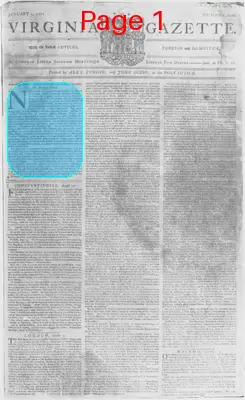
Literary
January 3, 1771
The Virginia Gazette
Richmond, Williamsburg, Richmond County, Virginia
What is this article about?
Extract from Blackstone's Commentaries on the offense of gaming, portraying it as a vice leading to idleness, theft, debauchery, and ruin. Discusses statutes restricting gaming among lower classes and servants, and critiques high-society gaming, referencing Tacitus on ancient Germans' extreme gambling habits.
Clipping
OCR Quality
95%
Excellent
Full Text
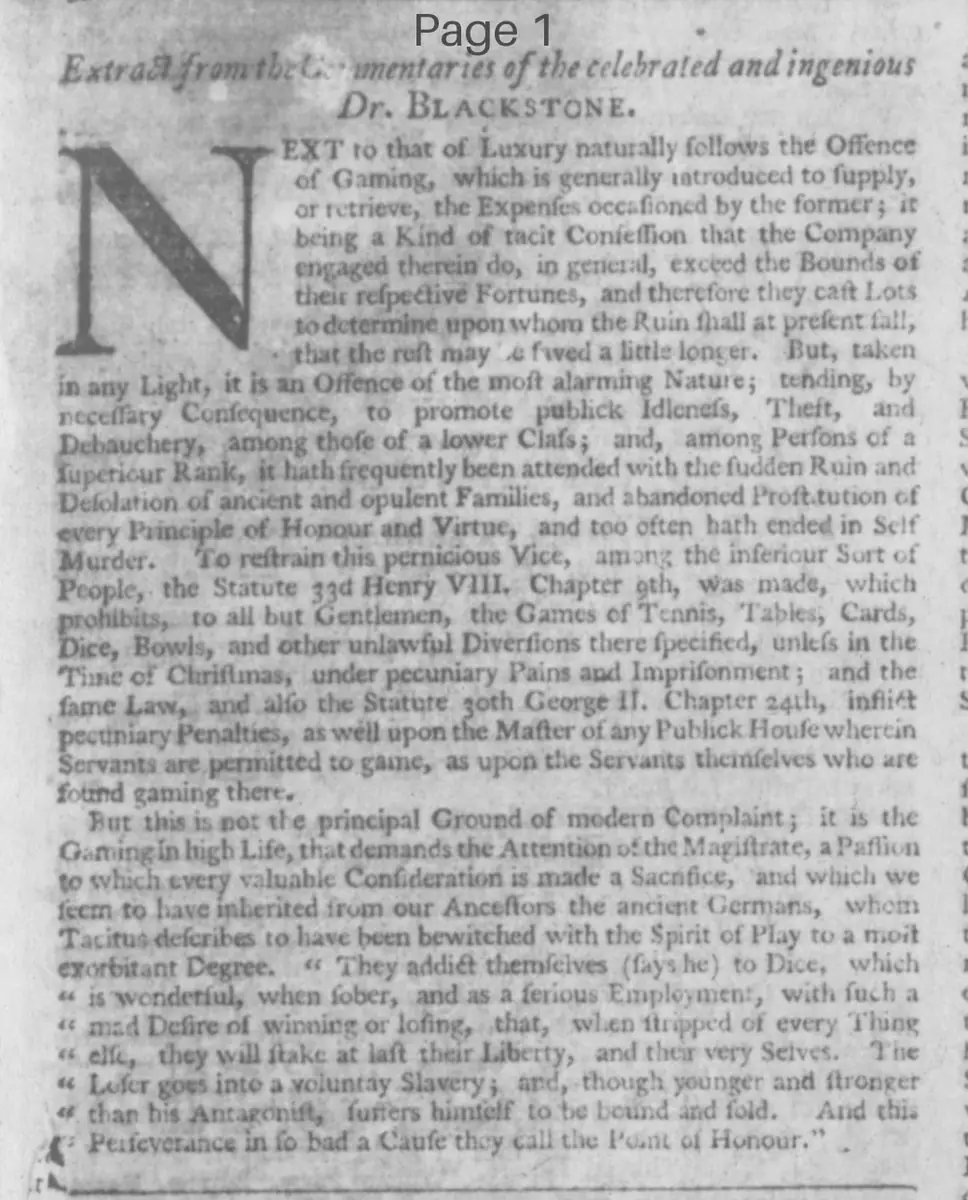
Extract from the Commentaries of the celebrated and ingenious Dr. Blackstone.
Next to that of Luxury naturally follows the Offence of Gaming, which is generally introduced to supply, or retrieve, the Expenses occasioned by the former; it being a Kind of tacit Confession that the Company engaged therein do, in general, exceed the Bounds of their respective Fortunes, and therefore they cast Lots to determine upon whom the Ruin shall at present fall, that the rest may be saved a little longer. But, taken in any Light, it is an Offence of the most alarming Nature; tending, by necessary Consequence, to promote publick Idleness, Theft, and Debauchery, among those of a lower Class; and, among Persons of a Superior Rank, it hath frequently been attended with the sudden Ruin and Desolation of ancient and opulent Families, and abandoned Prostitution of every Principle of Honour and Virtue, and too often hath ended in Self-Murder. To restrain this pernicious Vice, among the inferiour Sort of People, the Statute 33d Henry VIII. Chapter 9th, was made, which prohibits, to all but Gentlemen, the Games of Tennis, Tables, Cards, Dice, Bowls, and other unlawful Diversions there specified, unless in the Time of Christmas, under pecuniary Pains and Imprisonment; and the same Law, and also the Statute 30th George II. Chapter 24th, inflict pecuniary Penalties, as well upon the Master of any Publick House wherein Servants are permitted to game, as upon the Servants themselves who are found gaming there.
But this is not the principal Ground of modern Complaint; it is the Gaming in high Life, that demands the Attention of the Magistrate, a Passion to which every valuable Consideration is made a Sacrifice, and which we seem to have inherited from our Ancestors the ancient Germans, whom Tacitus describes to have been bewitched with the Spirit of Play to a most exorbitant Degree. "They addict themselves (says he) to Dice, which is wonderful, when sober, and as a serious Employment, with such a mad Desire of winning or losing, that, when it dropped of every Thing else, they will stake at last their Liberty, and their very Selves. The Loser goes into a voluntary Slavery; and, though younger and stronger than his Antagonist, suffers himself to be bound and sold. And this Perseverance in so bad a Cause they call the Point of Honour."
Next to that of Luxury naturally follows the Offence of Gaming, which is generally introduced to supply, or retrieve, the Expenses occasioned by the former; it being a Kind of tacit Confession that the Company engaged therein do, in general, exceed the Bounds of their respective Fortunes, and therefore they cast Lots to determine upon whom the Ruin shall at present fall, that the rest may be saved a little longer. But, taken in any Light, it is an Offence of the most alarming Nature; tending, by necessary Consequence, to promote publick Idleness, Theft, and Debauchery, among those of a lower Class; and, among Persons of a Superior Rank, it hath frequently been attended with the sudden Ruin and Desolation of ancient and opulent Families, and abandoned Prostitution of every Principle of Honour and Virtue, and too often hath ended in Self-Murder. To restrain this pernicious Vice, among the inferiour Sort of People, the Statute 33d Henry VIII. Chapter 9th, was made, which prohibits, to all but Gentlemen, the Games of Tennis, Tables, Cards, Dice, Bowls, and other unlawful Diversions there specified, unless in the Time of Christmas, under pecuniary Pains and Imprisonment; and the same Law, and also the Statute 30th George II. Chapter 24th, inflict pecuniary Penalties, as well upon the Master of any Publick House wherein Servants are permitted to game, as upon the Servants themselves who are found gaming there.
But this is not the principal Ground of modern Complaint; it is the Gaming in high Life, that demands the Attention of the Magistrate, a Passion to which every valuable Consideration is made a Sacrifice, and which we seem to have inherited from our Ancestors the ancient Germans, whom Tacitus describes to have been bewitched with the Spirit of Play to a most exorbitant Degree. "They addict themselves (says he) to Dice, which is wonderful, when sober, and as a serious Employment, with such a mad Desire of winning or losing, that, when it dropped of every Thing else, they will stake at last their Liberty, and their very Selves. The Loser goes into a voluntary Slavery; and, though younger and stronger than his Antagonist, suffers himself to be bound and sold. And this Perseverance in so bad a Cause they call the Point of Honour."
What sub-type of article is it?
Essay
What themes does it cover?
Moral Virtue
Political
Temperance
What keywords are associated?
Gaming
Vice
Law
Statutes
Blackstone
Tacitus
Germans
Honour
What entities or persons were involved?
Dr. Blackstone
Literary Details
Author
Dr. Blackstone
Subject
The Offence Of Gaming
Form / Style
Legal Commentary In Prose
Key Lines
They Addict Themselves (Says He) To Dice, Which Is Wonderful, When Sober, And As A Serious Employment, With Such A Mad Desire Of Winning Or Losing, That, When It Dropped Of Every Thing Else, They Will Stake At Last Their Liberty, And Their Very Selves.
The Loser Goes Into A Voluntary Slavery; And, Though Younger And Stronger Than His Antagonist, Suffers Himself To Be Bound And Sold. And This Perseverance In So Bad A Cause They Call The Point Of Honour.