Thank you for visiting SNEWPapers!
Sign up free
Literary
April 26, 1890
Chicago Eagle
Chicago, Cook County County, Illinois
What is this article about?
A short story recounting the destruction of Mrs. Sapphira Dodge's boarding house in the Great Chicago Fire of October 9, 1871. Boarder Colonel Frost heroically saves widow Mrs. Matthews and her daughters, suffering severe burns treated with skin grafts from daughter May, leading to their marriage two years later.
Clipping
OCR Quality
95%
Excellent
Full Text
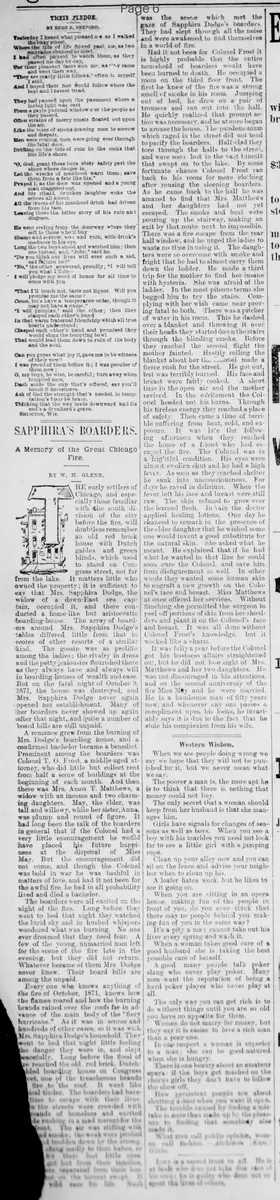
SAPPHIRA'S BOARDERS
A Memory of the Great Chicago Fire.
BY W. M. GLENN.
The early settlers of Chicago, and especially those familiar with the south division of the city before the fire, will doubtless remember an old red brick house with Dutch gables and green blinds, which used to stand on Congress street, not far from the lake. It matters little who owned the property; it is sufficient to say that Mrs. Sapphira Dodge, the widow of a down-East sea captain, occupied it, and there conducted a home-like but aristocratic boarding-house. The array of boarders around Mrs. Sapphira Dodge's tables differed little from that in scores of other resorts of a similar kind. The gossip was as prolific among the ladies; the rivalry in dress and the petty jealousies flourished there as they always have and always will in boarding-houses of wealth and ease. But on the fatal night of October 9, 1871, the house was destroyed, and Mrs. Sapphira Dodge never again opened her establishment. Many of her boarders never showed up again after that night, and quite a number of board bills are still unpaid.
A romance grew from the burning of Mrs. Dodge's boarding house, and a confirmed bachelor became a benedict. Prominent among the boarders was Colonel T. G. Frost, a middle-aged attorney, who did little but collect rent from half a score of buildings at the beginning of each month. And then there was Mrs. Amos T. Matthews, a widow with an income and two charming daughters. May, the elder, was tall and willowy, while her sister, Anna, was plump and round of figure. It had long been the talk of the boarders in general that if the Colonel had a very little encouragement he would have placed his future happiness at the disposal of Miss May. But the encouragement did not come, and though the Colonel was bold in war he was bashful in matters of love, and had it not been for the awful fire he had in all probability lived and died a bachelor.
The boarders were all excited on the night of the fire. Long before they went to bed that night they watched the lurid sky and in hushed whispers wondered what was burning. No one ever dreamed that they need fear. A few of the young, unmarried men left for the scene of the fire late in the evening, but they did not return. Whatever became of them Mrs. Dodge never knew. Their board bills are among the unpaid.
Every one who knows anything of the fire of October, 1871, knows how the flames roared and how the burning brands rained over the roofs far in advance of the main body of the "fiery hurricane." As it was in scores and hundreds of other cases, so it was with Mrs. Sapphira Dodge's household. They went to bed that night little feeling the danger they were in, and slept peacefully. Long before the flood of fire reached the old red brick, Dutch-gabled boarding house on Congress street, one of the treacherous brands set fire to the roof. It went like tinder. The boarders had barely time to escape with their lives.
The streets were crowded with thousands of homeless and excited people rushing in a mad torrent for the front. The air was stifling with sand and smoke, the weak were trampled and trodden down by the strong, mothers clung madly to their babes, or cast their little ones from them to separate from these has. As the torrent swept it had taken fire life thus.
was the scene which met the gaze of Sapphira Dodge's boarders. They had slept through all the noise and were awakened to find themselves in a world of fire.
Had it not been for Colonel Frost it is highly probable that the entire household of boarders would have been burned to death. He occupied a room on the third floor front. The first he knew of the fire was a strong smell of smoke in his room. Jumping out of bed, he drew on a pair of trousers and ran out into the hall. He quickly realized that prompt action was necessary, and he at once began to arouse the house. The pandemonium which raged in the street did not tend to pacify the boarders. Half-clad they tore through the halls to the street, and were soon lost in the vast tumult that swept on to the lake. By some fortunate chance Colonel Frost ran back to his room for more clothing after rousing the sleeping boarders. As he came back to the hall he was amazed to find that Mrs. Matthews and her daughters had not yet escaped. The smoke and heat were pouring up the stairway, making an exit by that route next to impossible. There was a fire escape from the rear hall window, and he urged the ladies to waste no time in using it. The daughters were so overcome with smoke and fright that he had to almost carry them down the ladder. He made a third trip for the mother to find her insane with hysteria. She was afraid of the ladder. In the most piteous terms she begged him to try the stairs. Complying with her wish came near proving fatal to both. There was a pitcher of water in his room. This he dashed over a blanket and throwing it over their heads they started down the stairs through the blinding smoke. Before they reached the second flight the mother fainted. Hastily rolling the blanket about her the Colonel made a fierce rush for the street. He got out, but was terribly burned. His face and breast were fairly cooked. A short time in the open air and the mother revived. In the excitement the Colonel heeded not his burns. Through his tireless energy they reached a place of safety. Then came a time of terrible suffering from heat, cold, and exposure. It was late the following afternoon when they reached the home of a friend who had escaped the fire. The Colonel was in a frightful condition. His eyes were almost swollen shut and he had a high fever. As soon as they reached shelter he sank into unconsciousness. For days he raved in delirium. When the fever left his face and breast were still raw. The skin refused to grow over the burned flesh. In vain the doctor applied healing lotions. One day he chanced to remark in the presence of the elder daughter that he wished some one would invent a good substitute for the natural skin. She asked what he meant. He explained that if he had what he wanted in that line he could soon cure the Colonel, and save him from disfigurement as well. In other words they wanted some human skin to engraft a new growth on the Colonel's face and breast. Miss Matthews at once offered her services. Without flinching she permitted the surgeon to peel off portions of skin from her shoulders and plant it on the Colonel's face and breast. It was all done without Colonel Frost's knowledge, but it worked like a charm.
It was fully a year before the Colonel got his business affairs straightened out, but he did not lose sight of Mrs. Matthews and her two daughters. He was not discouraged in his attentions, and on the second anniversary of the fire Miss May and he were married. He is a handsome man of fifty years now, and whenever any one passes a compliment upon his looks, he invariably says it is due to the fact that he stole his complexion from his wife.
A Memory of the Great Chicago Fire.
BY W. M. GLENN.
The early settlers of Chicago, and especially those familiar with the south division of the city before the fire, will doubtless remember an old red brick house with Dutch gables and green blinds, which used to stand on Congress street, not far from the lake. It matters little who owned the property; it is sufficient to say that Mrs. Sapphira Dodge, the widow of a down-East sea captain, occupied it, and there conducted a home-like but aristocratic boarding-house. The array of boarders around Mrs. Sapphira Dodge's tables differed little from that in scores of other resorts of a similar kind. The gossip was as prolific among the ladies; the rivalry in dress and the petty jealousies flourished there as they always have and always will in boarding-houses of wealth and ease. But on the fatal night of October 9, 1871, the house was destroyed, and Mrs. Sapphira Dodge never again opened her establishment. Many of her boarders never showed up again after that night, and quite a number of board bills are still unpaid.
A romance grew from the burning of Mrs. Dodge's boarding house, and a confirmed bachelor became a benedict. Prominent among the boarders was Colonel T. G. Frost, a middle-aged attorney, who did little but collect rent from half a score of buildings at the beginning of each month. And then there was Mrs. Amos T. Matthews, a widow with an income and two charming daughters. May, the elder, was tall and willowy, while her sister, Anna, was plump and round of figure. It had long been the talk of the boarders in general that if the Colonel had a very little encouragement he would have placed his future happiness at the disposal of Miss May. But the encouragement did not come, and though the Colonel was bold in war he was bashful in matters of love, and had it not been for the awful fire he had in all probability lived and died a bachelor.
The boarders were all excited on the night of the fire. Long before they went to bed that night they watched the lurid sky and in hushed whispers wondered what was burning. No one ever dreamed that they need fear. A few of the young, unmarried men left for the scene of the fire late in the evening, but they did not return. Whatever became of them Mrs. Dodge never knew. Their board bills are among the unpaid.
Every one who knows anything of the fire of October, 1871, knows how the flames roared and how the burning brands rained over the roofs far in advance of the main body of the "fiery hurricane." As it was in scores and hundreds of other cases, so it was with Mrs. Sapphira Dodge's household. They went to bed that night little feeling the danger they were in, and slept peacefully. Long before the flood of fire reached the old red brick, Dutch-gabled boarding house on Congress street, one of the treacherous brands set fire to the roof. It went like tinder. The boarders had barely time to escape with their lives.
The streets were crowded with thousands of homeless and excited people rushing in a mad torrent for the front. The air was stifling with sand and smoke, the weak were trampled and trodden down by the strong, mothers clung madly to their babes, or cast their little ones from them to separate from these has. As the torrent swept it had taken fire life thus.
was the scene which met the gaze of Sapphira Dodge's boarders. They had slept through all the noise and were awakened to find themselves in a world of fire.
Had it not been for Colonel Frost it is highly probable that the entire household of boarders would have been burned to death. He occupied a room on the third floor front. The first he knew of the fire was a strong smell of smoke in his room. Jumping out of bed, he drew on a pair of trousers and ran out into the hall. He quickly realized that prompt action was necessary, and he at once began to arouse the house. The pandemonium which raged in the street did not tend to pacify the boarders. Half-clad they tore through the halls to the street, and were soon lost in the vast tumult that swept on to the lake. By some fortunate chance Colonel Frost ran back to his room for more clothing after rousing the sleeping boarders. As he came back to the hall he was amazed to find that Mrs. Matthews and her daughters had not yet escaped. The smoke and heat were pouring up the stairway, making an exit by that route next to impossible. There was a fire escape from the rear hall window, and he urged the ladies to waste no time in using it. The daughters were so overcome with smoke and fright that he had to almost carry them down the ladder. He made a third trip for the mother to find her insane with hysteria. She was afraid of the ladder. In the most piteous terms she begged him to try the stairs. Complying with her wish came near proving fatal to both. There was a pitcher of water in his room. This he dashed over a blanket and throwing it over their heads they started down the stairs through the blinding smoke. Before they reached the second flight the mother fainted. Hastily rolling the blanket about her the Colonel made a fierce rush for the street. He got out, but was terribly burned. His face and breast were fairly cooked. A short time in the open air and the mother revived. In the excitement the Colonel heeded not his burns. Through his tireless energy they reached a place of safety. Then came a time of terrible suffering from heat, cold, and exposure. It was late the following afternoon when they reached the home of a friend who had escaped the fire. The Colonel was in a frightful condition. His eyes were almost swollen shut and he had a high fever. As soon as they reached shelter he sank into unconsciousness. For days he raved in delirium. When the fever left his face and breast were still raw. The skin refused to grow over the burned flesh. In vain the doctor applied healing lotions. One day he chanced to remark in the presence of the elder daughter that he wished some one would invent a good substitute for the natural skin. She asked what he meant. He explained that if he had what he wanted in that line he could soon cure the Colonel, and save him from disfigurement as well. In other words they wanted some human skin to engraft a new growth on the Colonel's face and breast. Miss Matthews at once offered her services. Without flinching she permitted the surgeon to peel off portions of skin from her shoulders and plant it on the Colonel's face and breast. It was all done without Colonel Frost's knowledge, but it worked like a charm.
It was fully a year before the Colonel got his business affairs straightened out, but he did not lose sight of Mrs. Matthews and her two daughters. He was not discouraged in his attentions, and on the second anniversary of the fire Miss May and he were married. He is a handsome man of fifty years now, and whenever any one passes a compliment upon his looks, he invariably says it is due to the fact that he stole his complexion from his wife.
What sub-type of article is it?
Prose Fiction
What themes does it cover?
Love Romance
Death Mortality
What keywords are associated?
Chicago Fire
Boarding House
Romance
Burns
Skin Graft
Great Fire 1871
What entities or persons were involved?
By W. M. Glenn.
Literary Details
Title
Sapphira's Boarders A Memory Of The Great Chicago Fire.
Author
By W. M. Glenn.
Subject
A Memory Of The Great Chicago Fire.
Key Lines
It Was Fully A Year Before The Colonel Got His Business Affairs Straightened Out, But He Did Not Lose Sight Of Mrs. Matthews And Her Two Daughters. He Was Not Discouraged In His Attentions, And On The Second Anniversary Of The Fire Miss May And He Were Married.
He Is A Handsome Man Of Fifty Years Now, And Whenever Any One Passes A Compliment Upon His Looks, He Invariably Says It Is Due To The Fact That He Stole His Complexion From His Wife.