Thank you for visiting SNEWPapers!
Sign up free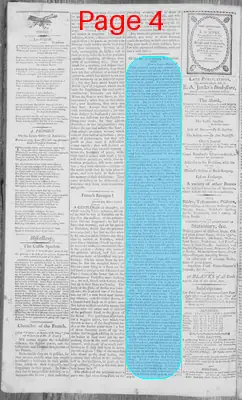
Literary
April 1, 1799
The Gazette
Portland, Cumberland County, Maine
What is this article about?
An essay from the European Magazine satirically advising young men on acquiring reputation through self-admiration, flattery of others, redefining virtues, and strategic partisanship, distinguishing it from true fame.
Clipping

OCR Quality
95%
Excellent
Full Text
Of the Art of acquiring Reputation.
[From the European Magazine]
THE errors of young men committed in pursuit of honour and esteem, are so various, that I have been easily prevailed upon, by some youths of my acquaintance, to set down what observations my reading and experience furnish me with on this subject. For it is certain, that, on the one hand, men have sometimes failed of attaining their end from ignorance and want of proper advice; and, on the other, that life is too short for the slow progress which unassisted merit makes towards distinction. I have therefore undertaken to point out the nearest way to this object. But in order that I may be perfectly understood, it is necessary in the first place to distinguish between Fame and Reputation. Fame is in a manner the birthright of a few men, elevated by their natural abilities above the rest of their species. It is truly said by the Poet, that Fame is no plant that grows on mortal soil: for, being intended to crown those who produce something difficult, original, and useful, it is seldom conferred on the living inventors, because men are always tardy in searching for merit, and after death higher applause is desired than that of mortals. But Reputation is not only produced on earth, but with proper cultivation may be reared in barren soils, and brought to produce abundant fruit. It is the management of this earthly plant that I design to speak at present, the former having been largely considered by many preceding authors.
Integrity, talents, and humanity, are the qualities requisite for gaining reputation, and whoever possesses them has a just title to the goodwill and respect of mankind. But as they are generally accompanied by diffidence, they are frequently overlooked, and it becomes necessary to take some method of displaying them to the public. This necessity is now so well understood, that every man is expected to make the most shining possible exhibition of his talents upon every occasion. It was some time ago a maxim in politeness, never to introduce yourself your profession or affairs, in conversation, without some urgent necessity: so inconvenient a rule could never hold its authority long, and it is accordingly abrogated. But this, with the other methods of displaying merit, will come under consideration hereafter. There are many persons who possess only two of the qualities necessary to form the basis of reputation, many who have only one, and many in whom they are entirely wanting. Now, as the honor and esteem of our fellow-creatures is desirable to every man, and the three classes above mentioned must covet them more ardently in proportion to the obstacles which nature or education has thrown in their way, I shall deliver a few rules by which not only a person of real merit may show himself to advantage, but one of no merit at all may bring himself into high reputation. I give them with perfect confidence, because I could affix a prolixation to each direction; and as old men love a gossiping style, I shall beg leave to address my reader in the second person.
1st. Like Pythagoras, I begin with desiring you, not indeed to respect, but to admire yourself. This must be done cautiously, for fear of exciting contempt; therefore your admiration must be steadfast, moderate in appearance, and accompanied with a proper degree of external pomp and dignity. As you are supposed to know yourself better than any other person can, men will take you at your own price, if you do not alarm their self love by excessive pretension: and to prevent this danger you must,
2dly. Profess philanthropy, and a general admiration of your acquaintance.
To assist you in this course, it will be very useful to employ some words in a new sense. Thus, by a man of great parts, you will denote one who gives you good dinners; by wit, you will mean a hearty laugh at your friend's expense or your own; by universal benevolence, bestowed on yourself; and by good nature, the most perfect dullness and insipidity. Depend upon it, that this part of your conduct is indispensable; and if your feelings cannot submit to it, you must resign all hopes of reputation. I may strengthen my assertion with Addison's authority: "If you allow another man wit," says he, "he will allow you judgment." Reverse the proposition, and it will equally hold.
Lastly If your situation leads you to attach yourself to a party, you will have no trouble in supporting your principles. It is enough if you adopt the name of the party, you need not even enquire into its opinions; especially if you are a man of tender conscience, and afraid of finding any thing in them that may shock your feelings. But if it is your interest to be impartial, always admit the reasoning of the company you may happen to be in: if you cannot preserve this golden mean, take the accommodating part, and above all endeavour to convince them that you think of them with great respect.
[From the European Magazine]
THE errors of young men committed in pursuit of honour and esteem, are so various, that I have been easily prevailed upon, by some youths of my acquaintance, to set down what observations my reading and experience furnish me with on this subject. For it is certain, that, on the one hand, men have sometimes failed of attaining their end from ignorance and want of proper advice; and, on the other, that life is too short for the slow progress which unassisted merit makes towards distinction. I have therefore undertaken to point out the nearest way to this object. But in order that I may be perfectly understood, it is necessary in the first place to distinguish between Fame and Reputation. Fame is in a manner the birthright of a few men, elevated by their natural abilities above the rest of their species. It is truly said by the Poet, that Fame is no plant that grows on mortal soil: for, being intended to crown those who produce something difficult, original, and useful, it is seldom conferred on the living inventors, because men are always tardy in searching for merit, and after death higher applause is desired than that of mortals. But Reputation is not only produced on earth, but with proper cultivation may be reared in barren soils, and brought to produce abundant fruit. It is the management of this earthly plant that I design to speak at present, the former having been largely considered by many preceding authors.
Integrity, talents, and humanity, are the qualities requisite for gaining reputation, and whoever possesses them has a just title to the goodwill and respect of mankind. But as they are generally accompanied by diffidence, they are frequently overlooked, and it becomes necessary to take some method of displaying them to the public. This necessity is now so well understood, that every man is expected to make the most shining possible exhibition of his talents upon every occasion. It was some time ago a maxim in politeness, never to introduce yourself your profession or affairs, in conversation, without some urgent necessity: so inconvenient a rule could never hold its authority long, and it is accordingly abrogated. But this, with the other methods of displaying merit, will come under consideration hereafter. There are many persons who possess only two of the qualities necessary to form the basis of reputation, many who have only one, and many in whom they are entirely wanting. Now, as the honor and esteem of our fellow-creatures is desirable to every man, and the three classes above mentioned must covet them more ardently in proportion to the obstacles which nature or education has thrown in their way, I shall deliver a few rules by which not only a person of real merit may show himself to advantage, but one of no merit at all may bring himself into high reputation. I give them with perfect confidence, because I could affix a prolixation to each direction; and as old men love a gossiping style, I shall beg leave to address my reader in the second person.
1st. Like Pythagoras, I begin with desiring you, not indeed to respect, but to admire yourself. This must be done cautiously, for fear of exciting contempt; therefore your admiration must be steadfast, moderate in appearance, and accompanied with a proper degree of external pomp and dignity. As you are supposed to know yourself better than any other person can, men will take you at your own price, if you do not alarm their self love by excessive pretension: and to prevent this danger you must,
2dly. Profess philanthropy, and a general admiration of your acquaintance.
To assist you in this course, it will be very useful to employ some words in a new sense. Thus, by a man of great parts, you will denote one who gives you good dinners; by wit, you will mean a hearty laugh at your friend's expense or your own; by universal benevolence, bestowed on yourself; and by good nature, the most perfect dullness and insipidity. Depend upon it, that this part of your conduct is indispensable; and if your feelings cannot submit to it, you must resign all hopes of reputation. I may strengthen my assertion with Addison's authority: "If you allow another man wit," says he, "he will allow you judgment." Reverse the proposition, and it will equally hold.
Lastly If your situation leads you to attach yourself to a party, you will have no trouble in supporting your principles. It is enough if you adopt the name of the party, you need not even enquire into its opinions; especially if you are a man of tender conscience, and afraid of finding any thing in them that may shock your feelings. But if it is your interest to be impartial, always admit the reasoning of the company you may happen to be in: if you cannot preserve this golden mean, take the accommodating part, and above all endeavour to convince them that you think of them with great respect.
What sub-type of article is it?
Essay
Satire
What themes does it cover?
Social Manners
Moral Virtue
What keywords are associated?
Reputation
Honor
Self Admiration
Flattery
Social Conduct
Partisanship
What entities or persons were involved?
[From The European Magazine]
Literary Details
Title
Of The Art Of Acquiring Reputation.
Author
[From The European Magazine]
Key Lines
Like Pythagoras, I Begin With Desiring You, Not Indeed To Respect, But To Admire Yourself.
Profess Philanthropy, And A General Admiration Of Your Acquaintance.
If You Allow Another Man Wit, Says He, He Will Allow You Judgment.