Thank you for visiting SNEWPapers!
Sign up free
Literary
September 6, 1802
The National Intelligencer And Washington Advertiser
Washington, District Of Columbia
What is this article about?
Extract from an essay emphasizing the importance of personal and clothing cleanliness using pure water to preserve health, especially in impure urban air. It warns against stagnant cistern water causing diseases and stresses good air for vitality, contrasting laborers' robustness with delicate habits' vulnerability.
Clipping
OCR Quality
95%
Excellent
Full Text
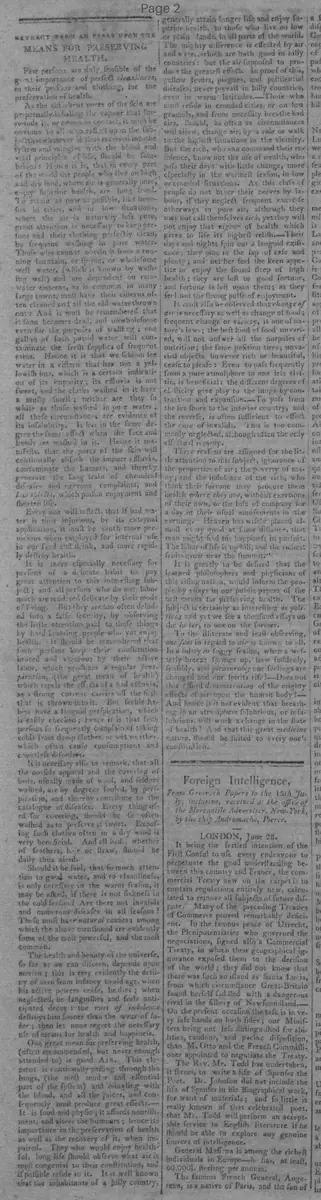
EXTRACT FROM AN ESSAY UPON THE MEANS FOR PRESERVING HEALTH.
Few persons are daily sensible of the great importance of perfect cleanliness, in their persons and clothing, for the preservation of health. As the absorbent pores of the skin are perpetually inhaling the vapour that surrounds it, or comes in contact, it must be obvious to all who reflect upon the subject whatever is thus received into the system and mingles with the blood and vital principles of life, would be salutary: Hence it is, that in every part of the world the people who live on high and dry land, where air is generally pure, enjoy superior health, are long lived. To attain as near as possible, like benefits in cities, and in low situations, where the air is naturally less pure, great attention is necessary to keep persons and their clothing perfectly clean, by frequent washing in pure water. Those who cannot obtain it from a running fountain, spring, or wholesome well water, (which is known by washing well!) and are dependent on rain-water cisterns, as is common in many large towns, must have their cisterns often cleaned and all the old water thrown away: And it must be remembered that it soon becomes dead, and unwholesome even for the purposes of washing; one gallon of such putrid water will contaminate the rest supplies of frequent rains. Hence it is that we seldom see water in a cistern that has not a yellowish hue, which is a certain indication of its impurity; its effluvia is not sweet, and the clothes washed in it have a musty smell; neither are they so white as those washed in pure water; all these circumstances are evidence of its insalubrity. It has in the same degree the same effect when the face and hands are washed in it. Hence it manifests, that the pores of the skin will continually absorb the impure effluvia, contaminate the humours, and thereby generate the long train of chronical diseases and nervous complaints, and low spirits, which poison enjoyment and shorten life. Every one will reflect, that if bad water is thus injurious, by its external application, it must be much more pernicious when employed for internal use in our food and drink, and more rapidly destroy health. It is more especially necessary for persons of a delicate habit to pay great attention to this interesting subject; and all persons who do not labor much are rendered delicate by their mode of living. But they are too often deluded into a false security, by observing the little attention paid to those things by hard working people who yet enjoy health. It should be remembered that such persons keep their constitution braced and vigorous by their active labor, which produces a regular perspiration, (the great means of health) which repels the access of a bad effluvium, as a strong current carries off the filth that is thrown into it. But feeble habits have a languid perspiration, which is easily checked; hence it is that such persons so frequently complain of taking colds from damp clothes, or wet weather, which often cause consumptions and countless disorders. It is necessary also to remark, that all the outside apparel and the covering of beds, usually made of wool, and seldom washed, are by degrees fouled, by perspiration, and thereby contribute to the catalogue of diseases. Every thing used or covering, should be so often washed as to preserve it sweet. Exposing such clothes often in a dry wind is very beneficial. And all beds, whether of feathers, hair or straw, ought to be daily thus aired. Should it be said, that so much attention to good water, and to cleanliness, is only necessary in the warm season, it may be asked, if there is not sickness in the cold season? Are there not invalids and numerous diseases in all seasons? These must have natural causes; among which the above mentioned are evidently some of the most powerful, and the most common. The health and beauty of the universe, so far as we can discern, depends upon motion: this is very evidently the destiny of man from infancy to old age, when his active powers cease, he dies; when neglected, he languishes and feels anticipated decay: the rust of indolence destroys him sooner than the wear of labor; then let none regret the necessary use of means for health and happiness. One great means for preserving health, (often recommended, but never enough attended to) is good air. This element is continually passing through the lungs, (the most tender and essential part of the system) and mingling with the blood, and all the juices, and consequently must produce great effects. It is food and physic; it affords nourishment, and alters the humours; hence its importance in the preservation of health as well as the recovery of it, when impaired. They who would enjoy healthful, long life should observe what air is most congenial to their constitution, and if possible reside in it. It is well known that the inhabitants of a hilly country,
Few persons are daily sensible of the great importance of perfect cleanliness, in their persons and clothing, for the preservation of health. As the absorbent pores of the skin are perpetually inhaling the vapour that surrounds it, or comes in contact, it must be obvious to all who reflect upon the subject whatever is thus received into the system and mingles with the blood and vital principles of life, would be salutary: Hence it is, that in every part of the world the people who live on high and dry land, where air is generally pure, enjoy superior health, are long lived. To attain as near as possible, like benefits in cities, and in low situations, where the air is naturally less pure, great attention is necessary to keep persons and their clothing perfectly clean, by frequent washing in pure water. Those who cannot obtain it from a running fountain, spring, or wholesome well water, (which is known by washing well!) and are dependent on rain-water cisterns, as is common in many large towns, must have their cisterns often cleaned and all the old water thrown away: And it must be remembered that it soon becomes dead, and unwholesome even for the purposes of washing; one gallon of such putrid water will contaminate the rest supplies of frequent rains. Hence it is that we seldom see water in a cistern that has not a yellowish hue, which is a certain indication of its impurity; its effluvia is not sweet, and the clothes washed in it have a musty smell; neither are they so white as those washed in pure water; all these circumstances are evidence of its insalubrity. It has in the same degree the same effect when the face and hands are washed in it. Hence it manifests, that the pores of the skin will continually absorb the impure effluvia, contaminate the humours, and thereby generate the long train of chronical diseases and nervous complaints, and low spirits, which poison enjoyment and shorten life. Every one will reflect, that if bad water is thus injurious, by its external application, it must be much more pernicious when employed for internal use in our food and drink, and more rapidly destroy health. It is more especially necessary for persons of a delicate habit to pay great attention to this interesting subject; and all persons who do not labor much are rendered delicate by their mode of living. But they are too often deluded into a false security, by observing the little attention paid to those things by hard working people who yet enjoy health. It should be remembered that such persons keep their constitution braced and vigorous by their active labor, which produces a regular perspiration, (the great means of health) which repels the access of a bad effluvium, as a strong current carries off the filth that is thrown into it. But feeble habits have a languid perspiration, which is easily checked; hence it is that such persons so frequently complain of taking colds from damp clothes, or wet weather, which often cause consumptions and countless disorders. It is necessary also to remark, that all the outside apparel and the covering of beds, usually made of wool, and seldom washed, are by degrees fouled, by perspiration, and thereby contribute to the catalogue of diseases. Every thing used or covering, should be so often washed as to preserve it sweet. Exposing such clothes often in a dry wind is very beneficial. And all beds, whether of feathers, hair or straw, ought to be daily thus aired. Should it be said, that so much attention to good water, and to cleanliness, is only necessary in the warm season, it may be asked, if there is not sickness in the cold season? Are there not invalids and numerous diseases in all seasons? These must have natural causes; among which the above mentioned are evidently some of the most powerful, and the most common. The health and beauty of the universe, so far as we can discern, depends upon motion: this is very evidently the destiny of man from infancy to old age, when his active powers cease, he dies; when neglected, he languishes and feels anticipated decay: the rust of indolence destroys him sooner than the wear of labor; then let none regret the necessary use of means for health and happiness. One great means for preserving health, (often recommended, but never enough attended to) is good air. This element is continually passing through the lungs, (the most tender and essential part of the system) and mingling with the blood, and all the juices, and consequently must produce great effects. It is food and physic; it affords nourishment, and alters the humours; hence its importance in the preservation of health as well as the recovery of it, when impaired. They who would enjoy healthful, long life should observe what air is most congenial to their constitution, and if possible reside in it. It is well known that the inhabitants of a hilly country,
What sub-type of article is it?
Essay
What themes does it cover?
Moral Virtue
Nature
What keywords are associated?
Health Preservation
Cleanliness
Pure Water
Good Air
Perspiration
Chronic Diseases
Urban Health
Literary Details
Title
Extract From An Essay Upon The Means For Preserving Health.
Subject
On Preserving Health Through Cleanliness And Good Air
Key Lines
Few Persons Are Daily Sensible Of The Great Importance Of Perfect Cleanliness, In Their Persons And Clothing, For The Preservation Of Health.
Hence It Is, That In Every Part Of The World The People Who Live On High And Dry Land, Where Air Is Generally Pure, Enjoy Superior Health, Are Long Lived.
One Great Means For Preserving Health, (Often Recommended, But Never Enough Attended To) Is Good Air.
It Is Food And Physic; It Affords Nourishment, And Alters The Humours; Hence Its Importance In The Preservation Of Health As Well As The Recovery Of It, When Impaired.