Thank you for visiting SNEWPapers!
Sign up free
Literary
September 26, 1835
The Daily Cincinnati Republican, And Commercial Register
Cincinnati, Hamilton County, Ohio
What is this article about?
An essay on humanity's eagerness for titles and honors, from academic degrees to nobility, contrasted with the deeper emotional resonance of being addressed by one's Christian name by family and old friends. Includes a quote from Cranmer reflecting on losing surnames upon becoming bishops.
Clipping
OCR Quality
95%
Excellent
Full Text
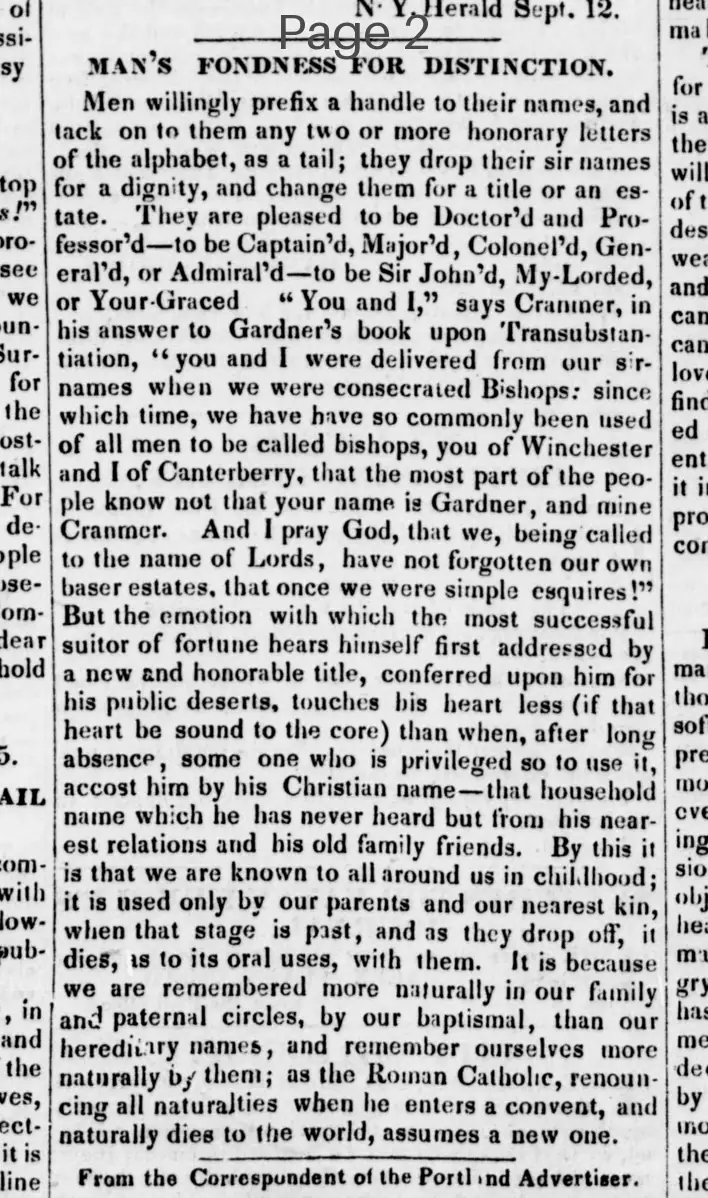
MAN'S FONDNESS FOR DISTINCTION
Men willingly prefix a handle to their names, and tack on to them any two or more honorary letters of the alphabet, as a tail; they drop their surnames for a dignity, and change them for a title or an estate. They are pleased to be Doctor'd and Professor'd—to be Captain'd, Major'd, Colonel'd, General'd, or Admiral'd—to be Sir John'd, My-Lorded, or Your-Graced. "You and I," says Cranmer, in his answer to Gardner's book upon Transubstantiation, "you and I were delivered from our surnames when we were consecrated Bishops: since which time, we have so commonly been used of all men to be called bishops, you of Winchester and I of Canterbury, that the most part of the people know not that your name is Gardner, and mine Cranmer. And I pray God, that we, being called to the name of Lords, have not forgotten our own baser estates, that once we were simple esquires!"
But the emotion with which the most successful suitor of fortune hears himself first addressed by a new and honorable title, conferred upon him for his public deserts, touches his heart less (if that heart be sound to the core) than when, after long absence, some one who is privileged so to use it, accost him by his Christian name—that household name which he has never heard but from his nearest relations and his old family friends. By this it is that we are known to all around us in childhood; it is used only by our parents and our nearest kin, when that stage is past, and as they drop off, it dies, is to its oral uses, with them. It is because we are remembered more naturally in our family and paternal circles, by our baptismal, than our hereditary names, and remember ourselves more naturally by them; as the Roman Catholic, renouncing all natural ties when he enters a convent, and naturally dies to the world, assumes a new one.
Men willingly prefix a handle to their names, and tack on to them any two or more honorary letters of the alphabet, as a tail; they drop their surnames for a dignity, and change them for a title or an estate. They are pleased to be Doctor'd and Professor'd—to be Captain'd, Major'd, Colonel'd, General'd, or Admiral'd—to be Sir John'd, My-Lorded, or Your-Graced. "You and I," says Cranmer, in his answer to Gardner's book upon Transubstantiation, "you and I were delivered from our surnames when we were consecrated Bishops: since which time, we have so commonly been used of all men to be called bishops, you of Winchester and I of Canterbury, that the most part of the people know not that your name is Gardner, and mine Cranmer. And I pray God, that we, being called to the name of Lords, have not forgotten our own baser estates, that once we were simple esquires!"
But the emotion with which the most successful suitor of fortune hears himself first addressed by a new and honorable title, conferred upon him for his public deserts, touches his heart less (if that heart be sound to the core) than when, after long absence, some one who is privileged so to use it, accost him by his Christian name—that household name which he has never heard but from his nearest relations and his old family friends. By this it is that we are known to all around us in childhood; it is used only by our parents and our nearest kin, when that stage is past, and as they drop off, it dies, is to its oral uses, with them. It is because we are remembered more naturally in our family and paternal circles, by our baptismal, than our hereditary names, and remember ourselves more naturally by them; as the Roman Catholic, renouncing all natural ties when he enters a convent, and naturally dies to the world, assumes a new one.
What sub-type of article is it?
Essay
What themes does it cover?
Social Manners
Moral Virtue
What keywords are associated?
Titles
Distinction
Names
Honors
Family
Christian Name
Social Status
Literary Details
Title
Man's Fondness For Distinction
Key Lines
"You And I," Says Cranmer, In His Answer To Gardner's Book Upon Transubstantiation, "You And I Were Delivered From Our Surnames When We Were Consecrated Bishops: Since Which Time, We Have So Commonly Been Used Of All Men To Be Called Bishops, You Of Winchester And I Of Canterbury, That The Most Part Of The People Know Not That Your Name Is Gardner, And Mine Cranmer."
But The Emotion With Which The Most Successful Suitor Of Fortune Hears Himself First Addressed By A New And Honorable Title, Conferred Upon Him For His Public Deserts, Touches His Heart Less (If That Heart Be Sound To The Core) Than When, After Long Absence, Some One Who Is Privileged So To Use It, Accost Him By His Christian Name—That Household Name Which He Has Never Heard But From His Nearest Relations And His Old Family Friends.