Thank you for visiting SNEWPapers!
Sign up free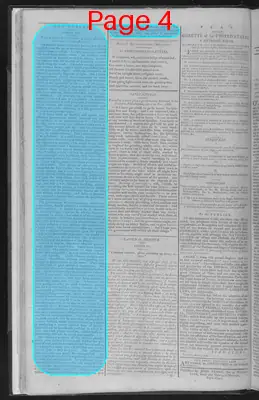
Editorial
May 9, 1789
Gazette Of The United States
New York, New York County, New York
What is this article about?
This editorial argues that government should actively shape and reform public opinion rather than passively follow it, using the formation of the U.S. Constitution as an example. It emphasizes the role of wise governance in fostering virtuous, industrious citizens and improving society through education and regulations.
Clipping
OCR Quality
98%
Excellent
Full Text
THE TABLET.
NUMBER VIII.
"Truth will ever be unpalatable to those, who determine not to relinquish error."
To deceive fools, and flatter knaves, is a line of conduct, that the art or the indolence of men may induce them to adopt. A crafty man may conceal the truth from sinister views; an indolent man may impose on himself as well as others, because he does not wish the trouble of knowing or communicating the truth. There are various pretexts and various forms, under which a professed politician pursues his object; while his real motive of action is generally kept out of sight. But I know of no pretence, that is more commonly or more plausibly urged by designing men, than that they desire to act agreeably to the voice of the people.
It has been acknowledged, that to oppose the public opinion, when right, is imprudent; but it has also been asserted, that to cherish it, when wrong, is dishonest. To ascertain the public opinion, should be the first aim of a legislator; to coincide with it, as far as it is well grounded, is good policy; but to reform old abuses and to introduce new subjects for public reflection, is a still greater duty and a conspicuous honor.
It is often asked by sensible and honest men, whether government should control the public opinion, or be controlled by it? The truth is, they have a reciprocal influence upon each other. Many people will say, that the formation of the new Constitution was directed, in some degree, by public opinion: This position can hardly be admitted. It is well known, that while the general Convention were in session, scarce any person ventured to predict, what would be the result of their deliberations. I mention this circumstance, to prove that there was no definite public opinion, relative to that object.—When the proceedings of the Convention were published, they were rather unexpected by the public mind, than contrary to it. There was no general sentiment pre-conceived in the matter. The weight of characters, who composed the Convention; the peculiar situation of the country, and several other causes, have rendered the new Constitution generally acceptable.
But upon the supposition, that each article of it had been previously recommended by town meetings, and that it was, literally speaking, framed by the voice of the people, it would be no sufficient reason that its administration should not act with wisdom and honesty; and strive to promote the prosperity, rather than confirm the prejudices of the community.
The government of every country; when once in operation, should produce a re-action upon the public opinion. It should search for it, estimate it, trace its origin, examine its effects, endeavor to remove its errors; but what is of more importance, it should collect the scattered sentiments of the public and form them into proper shapes; and in some instances create opinions and attachments wholly anew. I do not barely confine my remarks of the re-action of government upon the public mind, to its speculative principles, but would extend my idea to a control over the prejudices, the habits and the manners of the people.
Men are or may be, very much what the government pleases to make them. There is no fatality in the case, why people cannot be made honest, industrious and pacific; as well as turbulent, slothful and knavish. These different qualities may discover themselves, without presupposing any change or improvement in the heart. They may be the result of good political regulations. We often observe a man in some instances just and honorable; while in other respects, his conduct deserves a reverse character. The same causes, which made him partially virtuous, had they been extended, would have made him wholly so. Whenever we see a profligate man, we must conclude, either that he was educated in a wrong manner by his parents and guardians, or that there was something wrong in the government, under which he lived.
A man is not doomed, by natural necessity, to be a knave, any more than he is to be a conjurer. He may be taught both, or he may be restrained from becoming either. We must therefore conclude that a government falls short of perfection, in proportion as its citizens are deficient in the display of amiable and useful qualities. The task of a legislator, how much so ever he may have accomplished, is never finished, while his institutions have failed of producing a pretty perfect state of society.
This will not be practicable perhaps in a full degree, but with proper attempts, considerable improvements will not be found unattainable.
The visionary projects of the ancient philosophers, who supposed they could subdue the passions of men, and render them subservient to reason, have beguiled many into a belief, that men always must be, just as they have been. The passions of men, it is true, can never be extinguished; but they may be diverted from objects that are hurtful to those that are beneficial. No passion of the human mind is unessential to the well being of society; and that any one is dangerous, is only because it is not properly managed. Nature furnishes passions, but it is education and government that turn them to this or that particular object. The common remark that legislators must take mankind as they find them, does not make it excusable that they should leave men, as they find them.
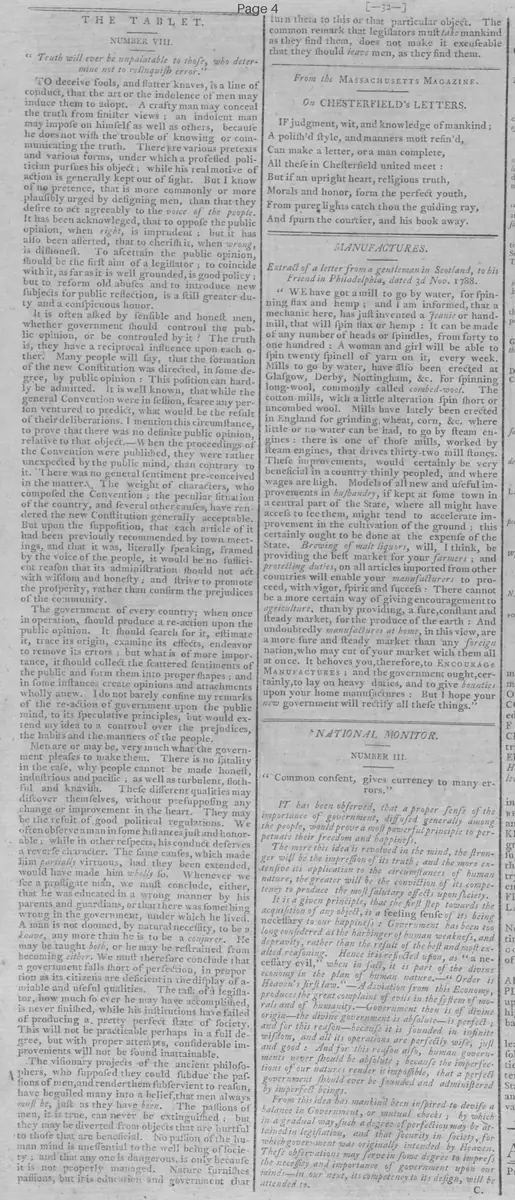
NUMBER VIII.
"Truth will ever be unpalatable to those, who determine not to relinquish error."
To deceive fools, and flatter knaves, is a line of conduct, that the art or the indolence of men may induce them to adopt. A crafty man may conceal the truth from sinister views; an indolent man may impose on himself as well as others, because he does not wish the trouble of knowing or communicating the truth. There are various pretexts and various forms, under which a professed politician pursues his object; while his real motive of action is generally kept out of sight. But I know of no pretence, that is more commonly or more plausibly urged by designing men, than that they desire to act agreeably to the voice of the people.
It has been acknowledged, that to oppose the public opinion, when right, is imprudent; but it has also been asserted, that to cherish it, when wrong, is dishonest. To ascertain the public opinion, should be the first aim of a legislator; to coincide with it, as far as it is well grounded, is good policy; but to reform old abuses and to introduce new subjects for public reflection, is a still greater duty and a conspicuous honor.
It is often asked by sensible and honest men, whether government should control the public opinion, or be controlled by it? The truth is, they have a reciprocal influence upon each other. Many people will say, that the formation of the new Constitution was directed, in some degree, by public opinion: This position can hardly be admitted. It is well known, that while the general Convention were in session, scarce any person ventured to predict, what would be the result of their deliberations. I mention this circumstance, to prove that there was no definite public opinion, relative to that object.—When the proceedings of the Convention were published, they were rather unexpected by the public mind, than contrary to it. There was no general sentiment pre-conceived in the matter. The weight of characters, who composed the Convention; the peculiar situation of the country, and several other causes, have rendered the new Constitution generally acceptable.
But upon the supposition, that each article of it had been previously recommended by town meetings, and that it was, literally speaking, framed by the voice of the people, it would be no sufficient reason that its administration should not act with wisdom and honesty; and strive to promote the prosperity, rather than confirm the prejudices of the community.
The government of every country; when once in operation, should produce a re-action upon the public opinion. It should search for it, estimate it, trace its origin, examine its effects, endeavor to remove its errors; but what is of more importance, it should collect the scattered sentiments of the public and form them into proper shapes; and in some instances create opinions and attachments wholly anew. I do not barely confine my remarks of the re-action of government upon the public mind, to its speculative principles, but would extend my idea to a control over the prejudices, the habits and the manners of the people.
Men are or may be, very much what the government pleases to make them. There is no fatality in the case, why people cannot be made honest, industrious and pacific; as well as turbulent, slothful and knavish. These different qualities may discover themselves, without presupposing any change or improvement in the heart. They may be the result of good political regulations. We often observe a man in some instances just and honorable; while in other respects, his conduct deserves a reverse character. The same causes, which made him partially virtuous, had they been extended, would have made him wholly so. Whenever we see a profligate man, we must conclude, either that he was educated in a wrong manner by his parents and guardians, or that there was something wrong in the government, under which he lived.
A man is not doomed, by natural necessity, to be a knave, any more than he is to be a conjurer. He may be taught both, or he may be restrained from becoming either. We must therefore conclude that a government falls short of perfection, in proportion as its citizens are deficient in the display of amiable and useful qualities. The task of a legislator, how much so ever he may have accomplished, is never finished, while his institutions have failed of producing a pretty perfect state of society.
This will not be practicable perhaps in a full degree, but with proper attempts, considerable improvements will not be found unattainable.
The visionary projects of the ancient philosophers, who supposed they could subdue the passions of men, and render them subservient to reason, have beguiled many into a belief, that men always must be, just as they have been. The passions of men, it is true, can never be extinguished; but they may be diverted from objects that are hurtful to those that are beneficial. No passion of the human mind is unessential to the well being of society; and that any one is dangerous, is only because it is not properly managed. Nature furnishes passions, but it is education and government that turn them to this or that particular object. The common remark that legislators must take mankind as they find them, does not make it excusable that they should leave men, as they find them.
What sub-type of article is it?
Constitutional
Social Reform
What keywords are associated?
Public Opinion
New Constitution
Government Reform
Social Improvement
Political Regulations
Citizen Virtues
What entities or persons were involved?
General Convention
Legislators
Government
Editorial Details
Primary Topic
Government's Role In Shaping Public Opinion And Society
Stance / Tone
Advocacy For Active Governmental Reform Of Public Prejudices And Virtues
Key Figures
General Convention
Legislators
Government
Key Arguments
Public Opinion And Government Have Reciprocal Influence.
The New Constitution Was Not Primarily Directed By Pre Existing Public Opinion.
Government Should Reform Errors In Public Opinion And Create New Sentiments.
Good Political Regulations Can Make Citizens Honest And Industrious.
Legislators Must Improve Society Beyond Leaving People As Found.
Passions Can Be Directed Beneficially By Education And Government.