Thank you for visiting SNEWPapers!
Sign up free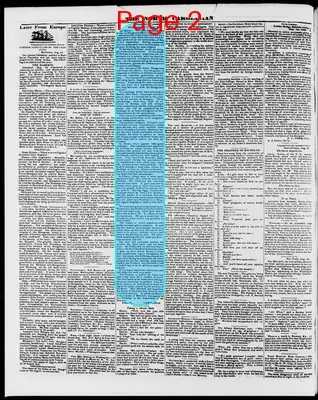
Letter to Editor
September 8, 1849
The North Carolinian
Fayetteville, Cumberland County, North Carolina
What is this article about?
Correspondent 'CAROLINUS' from Washington, D.C., on Sept. 3, 1849, discusses the Hungarian struggle for independence against Austria and Russia as a battle of civilization vs. barbarism, notes American sympathy meetings, and reports on European events in Ireland, Rome, and France, plus U.S. news including President Taylor's health, a Cuban expedition, and local weather impacts.
Clipping

OCR Quality
98%
Excellent
Full Text
Correspondence of the Carolinian.
Washington, D. C. Sept. 3.
Mr Editor:
We were discussing very freely on Hungarian affairs in our last communication (two weeks since) when we were compelled to stop rather abruptly from the effect produced by the combination of fire, oil and imprudence. Having recovered, and our goose quill once more in hand, we propose pursuing the same subject.
To the whole civilized world, the struggle is one of deep interest. To the people of Europe, it is one of magnitude and importance -- it is neither more nor less than a contest between civilization and barbarism; -- the Hungarians being the defenders of the former, against the combined powers of Austria and Russia.
The success of the brave Hungarians will insure life, liberty, and the pursuit of happiness to millions on millions of people now, and countless generations yet unborn. The triumph of the combined forces will bring death, degradation, chains and slavery. These being the ends contended for, can there be a republican who does not, from his heart, wish the Hungarians success?
The meetings which have been held in Boston, New York, Cincinnati and other places, show the interest felt in this country for the success of Hungary. These proceedings, when they shall be received in Europe, will add strength to the soldier's arm and fire to his patriotic breast, and will be considered as the harbinger of an acknowledgment of their Independence by this government.
Their success in establishing their liberties already entitle them to be recognized as an independent nation.
The accounts of Queen Victoria's visit to Ireland, are very contradictory, -- some state she was very cooly received while others (doubtless her hired admirers) say she was very warmly and loyally received. Presume the latter is correct, as there are always enough to be found to bow and cheer those who in reality are their oppressors.
In Rome, there appears to be great confusion. The commissioners appointed by the Pope are ruling the city with vengeance, -- the prisons are said to be full with patriots who defended the place against the French, and they are still making arrests. They have cried down the paper money issued during the ascendency of the republicans, -- that which was worth 100 piastres is now only worth 65.
We think it will take a long time, if ever, for the Pope to feel as secure as formerly. There is a rumor by the last arrival that he (the Pope) had been assassinated.
In France, things wear a more quiet appearance than they have for some time previous. The President has returned from his tour south. A good anecdote is related which goes to show what some of their own people think of the present ruling powers. During foggy weather the telegraph cannot be used; it is therefore said, the people at a distance from the capital at such a time do not know whether they are ruled by a President or a King. The signal telegraph is used in that country.
We must now give you some home news. We perceive that President Taylor's health, instead of improving, rather gets worse. He is still at Erie, N. Y., where he had the last attack. We see it stated that he intends to return to this city privately as soon as able.
The Cuban or secret expedition still seems to create quite a sensation. It said that the leaders have eminent lawyers to advise them, so that they will not be very likely to do any act contrary to law; and once on the sea they are safe. We rather think something will yet come out of it -- time however will tell.
Our city still continues healthy, the weather has been quite cool for some days. On Friday last we had very heavy rains, -- we don't recollect to have ever seen it pour so as it did on Friday; -- it has done considerable injury throughout the city. Our canal, which is being cleaned out, a part of it having been dammed, the water pumped out and the cleaning progressing rapidly, but Friday's rain knocked it into a cocked hat, or as we printers would say into pie.
It is a heavy loss to the contractors and will delay the work very much.
The Potomac is said to be lower now than it has been for a number of years. The merchants of our sister town (Georgetown) are receiving no produce from the back country, on account of no water being in the canal, caused by the lowness of the River.
Mrs Mitchell and daughters, the family of the Irish exile Mitchell, have arrived in this city. It will be recollected that a brother of Mitchell, was appointed to a clerkship in the department of the Interior.
Yours &c.
CAROLINUS.
Washington, D. C. Sept. 3.
Mr Editor:
We were discussing very freely on Hungarian affairs in our last communication (two weeks since) when we were compelled to stop rather abruptly from the effect produced by the combination of fire, oil and imprudence. Having recovered, and our goose quill once more in hand, we propose pursuing the same subject.
To the whole civilized world, the struggle is one of deep interest. To the people of Europe, it is one of magnitude and importance -- it is neither more nor less than a contest between civilization and barbarism; -- the Hungarians being the defenders of the former, against the combined powers of Austria and Russia.
The success of the brave Hungarians will insure life, liberty, and the pursuit of happiness to millions on millions of people now, and countless generations yet unborn. The triumph of the combined forces will bring death, degradation, chains and slavery. These being the ends contended for, can there be a republican who does not, from his heart, wish the Hungarians success?
The meetings which have been held in Boston, New York, Cincinnati and other places, show the interest felt in this country for the success of Hungary. These proceedings, when they shall be received in Europe, will add strength to the soldier's arm and fire to his patriotic breast, and will be considered as the harbinger of an acknowledgment of their Independence by this government.
Their success in establishing their liberties already entitle them to be recognized as an independent nation.
The accounts of Queen Victoria's visit to Ireland, are very contradictory, -- some state she was very cooly received while others (doubtless her hired admirers) say she was very warmly and loyally received. Presume the latter is correct, as there are always enough to be found to bow and cheer those who in reality are their oppressors.
In Rome, there appears to be great confusion. The commissioners appointed by the Pope are ruling the city with vengeance, -- the prisons are said to be full with patriots who defended the place against the French, and they are still making arrests. They have cried down the paper money issued during the ascendency of the republicans, -- that which was worth 100 piastres is now only worth 65.
We think it will take a long time, if ever, for the Pope to feel as secure as formerly. There is a rumor by the last arrival that he (the Pope) had been assassinated.
In France, things wear a more quiet appearance than they have for some time previous. The President has returned from his tour south. A good anecdote is related which goes to show what some of their own people think of the present ruling powers. During foggy weather the telegraph cannot be used; it is therefore said, the people at a distance from the capital at such a time do not know whether they are ruled by a President or a King. The signal telegraph is used in that country.
We must now give you some home news. We perceive that President Taylor's health, instead of improving, rather gets worse. He is still at Erie, N. Y., where he had the last attack. We see it stated that he intends to return to this city privately as soon as able.
The Cuban or secret expedition still seems to create quite a sensation. It said that the leaders have eminent lawyers to advise them, so that they will not be very likely to do any act contrary to law; and once on the sea they are safe. We rather think something will yet come out of it -- time however will tell.
Our city still continues healthy, the weather has been quite cool for some days. On Friday last we had very heavy rains, -- we don't recollect to have ever seen it pour so as it did on Friday; -- it has done considerable injury throughout the city. Our canal, which is being cleaned out, a part of it having been dammed, the water pumped out and the cleaning progressing rapidly, but Friday's rain knocked it into a cocked hat, or as we printers would say into pie.
It is a heavy loss to the contractors and will delay the work very much.
The Potomac is said to be lower now than it has been for a number of years. The merchants of our sister town (Georgetown) are receiving no produce from the back country, on account of no water being in the canal, caused by the lowness of the River.
Mrs Mitchell and daughters, the family of the Irish exile Mitchell, have arrived in this city. It will be recollected that a brother of Mitchell, was appointed to a clerkship in the department of the Interior.
Yours &c.
CAROLINUS.
What sub-type of article is it?
Informative
Persuasive
Political
What themes does it cover?
Politics
Military War
What keywords are associated?
Hungarian Revolution
Austria Russia
Hungarian Independence
Queen Victoria Ireland
Pope Rome
President Taylor Health
Cuban Expedition
Washington Dc Weather
What entities or persons were involved?
Carolinus
Mr Editor
Letter to Editor Details
Author
Carolinus
Recipient
Mr Editor
Main Argument
the hungarian struggle represents civilization against barbarism, deserving american support and recognition of independence; the letter also reports on european unrest and u.s. domestic news.
Notable Details
American Meetings In Boston, New York, Cincinnati Supporting Hungary
Contradictory Accounts Of Queen Victoria's Reception In Ireland
Confusion In Rome Under Pope's Commissioners, Rumor Of Pope's Assassination
Anecdote About French Telegraph And Uncertainty Of Rule
President Taylor's Worsening Health At Erie, N.Y.
Cuban Secret Expedition Advised By Lawyers
Heavy Rains Damaging Washington Canal Cleaning
Arrival Of Mrs. Mitchell And Daughters In Washington