Thank you for visiting SNEWPapers!
Sign up free
Literary
June 28, 1922
The Guthrie Daily Leader
Guthrie, Logan County, Oklahoma
What is this article about?
In this frontier narrative, young Erskine, a white boy raised by Indians, returns to his adoptive tribe after visiting settlers. He recalls his mother's capture and death, encounters tribal tensions, a defiant warrior, a new prophet, and a white woman captive slated for burning. He bonds with his horse Firefly amid wilderness journeys.
Clipping
OCR Quality
95%
Excellent
Full Text
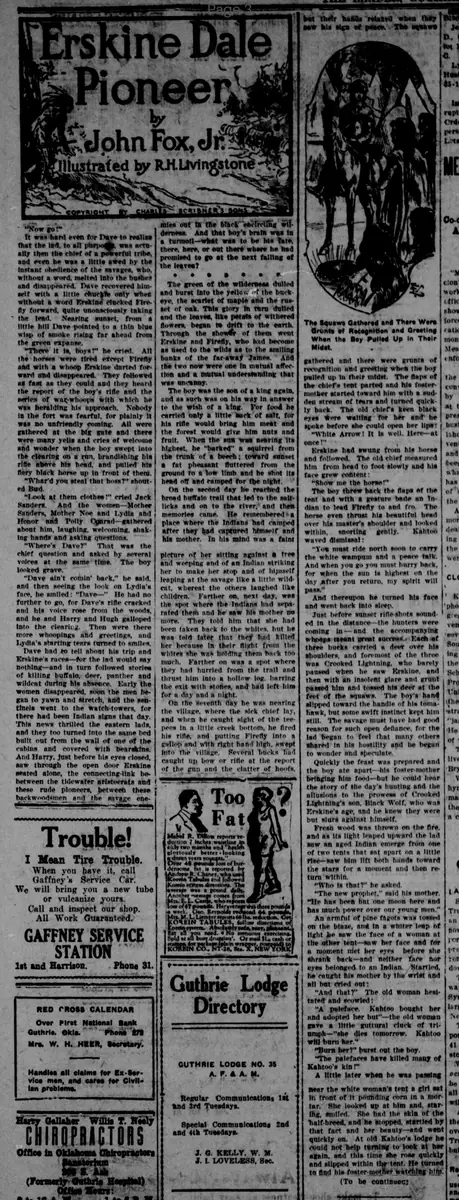
It was hard even for Dave to realize that the lad, to all purposes, was actually then the chief of a powerful tribe, and even he was a little awed by the instant obedience of the savages, who, without a word, melted into the bushes and disappeared. Dave recovered himself with a little chuckle only when without a word Erskine clucked Firefly forward, quite unconsciously taking the lead. Nearing sunset, from a little hill Dave pointed to a thin blue wisp of smoke rising far ahead from the green expanse.
"There it is, boys!" he cried. And the horses were tired except Firefly and with a whoop Erskine darted forward and disappeared. They followed as fast as they could and they heard the report of the boy's rifle and the series of war-whoops with which he was heralding his approach. Nobody in the fort was fearful, for plainly it was no unfriendly coming. All were gathered at the big gate and there were many yells and cries of welcome and wonder when the boy swept into the clearing on a run, brandishing his rifle above his head, and pulled his fiery black horse up in front of them.
"Where'd you steal that horse?" shouted Bud.
"Look at them clothes!" cried Jack Sanders. And the women—Mother Sanders, Mother Noe and Lydia and Honor and Polly Conrad—gathered about him, laughing, welcoming, shaking hands and asking questions.
"Where's Dave?" That was the chief question and asked by several voices at the same time. The boy looked grave.
"Dave ain't comin' back," he said, and then seeing the look on Lydia's face, he smiled: "Dave—" He had no further to go, for Dave's rifle cracked and his voice rose from the woods, and he and Harry and Hugh galloped into the clearing. Then were there more whoopings and greetings, and Lydia's starting tears turned to smiles. Dave had to tell about his trip and Erskine's races—for the lad would say nothing—and in turn followed stories of killing buffalo, deer, panther and wildcat during his absence. Early the women disappeared, soon the men began to yawn and stretch, and the sentinels went to the watch-towers, for there had been Indian signs that day. This news thrilled the eastern lads, and they too turned into the same bed built out from the wall of one of the cabins and covered with bearskins. And Harry, just before his eyes closed, saw through the open door Erskine seated alone, the connecting-link between the tidewater aristocrats and these rude pioneers, between these backwoodsmen and the savage enemies.
miles out in the black encircling wilderness. And that boy's brain was in a turmoil—what was to be his fate there, here, or out there where he had promised to go at the next falling of the leaves?
The green of the wilderness dulled and burst into the yellow of the buckeye, the scarlet of maple and the russet of oak. This glory in turn dulled and the leaves, like petals of withered flowers, began to drift to the earth. Through the shower of them went Erskine and Firefly, who had become as used to the wilds as to the smiling banks of the far-away James. And the two now were one in mutual affection and a mutual understanding that was uncanny.
The boy was the son of a king again, and as such was on his way in answer to the wish of a king. For food he carried only a little sack of salt, for his rifle would bring him meat and the forest would give him nuts and fruit. When the sun was nearing its highest, he "barked" a squirrel from the trunk of a beech; toward sunset a fat pheasant fluttered from the ground to a low limb and he shot its head off and camped for the night.
On the second day he reached the broad buffalo trail that led to the salt licks and on to the river, and then memories came. He remembered a place where the Indians had camped after they had captured himself and his mother. In his mind was a faint picture of her sitting against a tree and weeping and of an Indian striking her to make her stop and of himself leaping at the savage like a little wildcat, whereat the others laughed like children. Farther on, next day, was the spot where the Indians had separated them and he saw his mother no more. They told him that she had been taken back to the whites, but he was told later that they had killed her because in their flight from the whites she was holding them back too much. Farther on was a spot where they had hurried from the trail and thrust him into a hollow log, barring the exit with stones, and had left him for a day and a night.
On the seventh day he was nearing the village, where the sick chief lay, and when he caught sight of the tepees in a little creek bottom, he fired his rifle, and putting Firefly into a gallop and with right hand high, swept into the village. Several bucks had caught up bow or rifle at the report of the gun and the clatter of hoofs, but their hands relaxed when they saw his sign of peace. The squaws gathered and there were grunts of recognition and greeting when the boy pulled up in their midst. The flaps of the chief's tent parted and his foster-mother started toward him with a sudden stream of tears and turned quickly back. The old chief's keen black eyes were waiting for her and he spoke before she could open her lips:
"White Arrow! It is well. Here—at once!"
Erskine had swung from his horse and followed. The old chief measured him from head to foot slowly and his face grew content:
"Show me the horse!"
The boy threw back the flaps of the tent and with a gesture bade an Indian to lead Firefly to and fro. The horse even thrust his beautiful head over his master's shoulder and looked within, snorting gently. Kahtoo waved dismissal:
"You must ride north soon to carry the white wampum and a peace talk. And when you go you must hurry back, for when the sun is highest on the day after you return, my spirit will pass."
And thereupon he turned his face and went back into sleep.
Just before sunset rifle-shots sounded in the distance—the hunters were coming in—and the accompanying whoops meant great success. Each of three bucks carried a deer over his shoulders, and foremost of the three was Crooked Lightning, who barely paused when he saw Erskine, and then with an insolent glare and grunt passed him and tossed his deer at the feet of the squaws. The boy's hand slipped toward the handle of his tomahawk, but some swift instinct kept him still. The savage must have had good reason for such open defiance, for the lad began to feel that many others shared in his hostility and he began to wonder and speculate.
Quickly the feast was prepared and the boy ate apart—his foster-mother bringing him food—but he could hear the story of the day's hunting and the allusions to the prowess of Crooked Lightning's son, Black Wolf, who was Erskine's age, and he knew they were but slurs against himself.
Fresh wood was thrown on the fire, and as its light leaped upward the lad saw an aged Indian emerge from one of two tents that sat apart on a little rise—saw him lift both hands toward the stars for a moment and then return within.
"Who is that?" he asked.
"The new prophet," said his mother. "He has been but one moon here and has much power over our young men."
An armful of pine fagots was tossed on the blaze, and in a whiter leap of light he saw the face of a woman at the other tent—saw her face and for a moment met her eyes before she shrank back—and neither face nor eyes belonged to an Indian. Startled, he caught his mother by the wrist and all but cried out:
"And that?" The old woman hesitated and scowled:
"A paleface. Kahtoo bought her and adopted her but"—the old woman gave a little guttural cluck of triumph—"she dies tomorrow. Kahtoo will burn her."
"Burn her?" burst out the boy. "The palefaces have killed many of Kahtoo's kin!"
A little later when he was passing near the white woman's tent a girl sat in front of it pounding corn in a mortar. She looked up at him and, starting, smiled. She had the skin of the half-breed, and he stopped, startled by that fact and her beauty—and went quickly on. At old Kahtoo's lodge he could not help turning to look at her again, and this time she rose quickly and slipped within the tent. He turned to find his foster-mother watching him.
(To be continued)
"There it is, boys!" he cried. And the horses were tired except Firefly and with a whoop Erskine darted forward and disappeared. They followed as fast as they could and they heard the report of the boy's rifle and the series of war-whoops with which he was heralding his approach. Nobody in the fort was fearful, for plainly it was no unfriendly coming. All were gathered at the big gate and there were many yells and cries of welcome and wonder when the boy swept into the clearing on a run, brandishing his rifle above his head, and pulled his fiery black horse up in front of them.
"Where'd you steal that horse?" shouted Bud.
"Look at them clothes!" cried Jack Sanders. And the women—Mother Sanders, Mother Noe and Lydia and Honor and Polly Conrad—gathered about him, laughing, welcoming, shaking hands and asking questions.
"Where's Dave?" That was the chief question and asked by several voices at the same time. The boy looked grave.
"Dave ain't comin' back," he said, and then seeing the look on Lydia's face, he smiled: "Dave—" He had no further to go, for Dave's rifle cracked and his voice rose from the woods, and he and Harry and Hugh galloped into the clearing. Then were there more whoopings and greetings, and Lydia's starting tears turned to smiles. Dave had to tell about his trip and Erskine's races—for the lad would say nothing—and in turn followed stories of killing buffalo, deer, panther and wildcat during his absence. Early the women disappeared, soon the men began to yawn and stretch, and the sentinels went to the watch-towers, for there had been Indian signs that day. This news thrilled the eastern lads, and they too turned into the same bed built out from the wall of one of the cabins and covered with bearskins. And Harry, just before his eyes closed, saw through the open door Erskine seated alone, the connecting-link between the tidewater aristocrats and these rude pioneers, between these backwoodsmen and the savage enemies.
miles out in the black encircling wilderness. And that boy's brain was in a turmoil—what was to be his fate there, here, or out there where he had promised to go at the next falling of the leaves?
The green of the wilderness dulled and burst into the yellow of the buckeye, the scarlet of maple and the russet of oak. This glory in turn dulled and the leaves, like petals of withered flowers, began to drift to the earth. Through the shower of them went Erskine and Firefly, who had become as used to the wilds as to the smiling banks of the far-away James. And the two now were one in mutual affection and a mutual understanding that was uncanny.
The boy was the son of a king again, and as such was on his way in answer to the wish of a king. For food he carried only a little sack of salt, for his rifle would bring him meat and the forest would give him nuts and fruit. When the sun was nearing its highest, he "barked" a squirrel from the trunk of a beech; toward sunset a fat pheasant fluttered from the ground to a low limb and he shot its head off and camped for the night.
On the second day he reached the broad buffalo trail that led to the salt licks and on to the river, and then memories came. He remembered a place where the Indians had camped after they had captured himself and his mother. In his mind was a faint picture of her sitting against a tree and weeping and of an Indian striking her to make her stop and of himself leaping at the savage like a little wildcat, whereat the others laughed like children. Farther on, next day, was the spot where the Indians had separated them and he saw his mother no more. They told him that she had been taken back to the whites, but he was told later that they had killed her because in their flight from the whites she was holding them back too much. Farther on was a spot where they had hurried from the trail and thrust him into a hollow log, barring the exit with stones, and had left him for a day and a night.
On the seventh day he was nearing the village, where the sick chief lay, and when he caught sight of the tepees in a little creek bottom, he fired his rifle, and putting Firefly into a gallop and with right hand high, swept into the village. Several bucks had caught up bow or rifle at the report of the gun and the clatter of hoofs, but their hands relaxed when they saw his sign of peace. The squaws gathered and there were grunts of recognition and greeting when the boy pulled up in their midst. The flaps of the chief's tent parted and his foster-mother started toward him with a sudden stream of tears and turned quickly back. The old chief's keen black eyes were waiting for her and he spoke before she could open her lips:
"White Arrow! It is well. Here—at once!"
Erskine had swung from his horse and followed. The old chief measured him from head to foot slowly and his face grew content:
"Show me the horse!"
The boy threw back the flaps of the tent and with a gesture bade an Indian to lead Firefly to and fro. The horse even thrust his beautiful head over his master's shoulder and looked within, snorting gently. Kahtoo waved dismissal:
"You must ride north soon to carry the white wampum and a peace talk. And when you go you must hurry back, for when the sun is highest on the day after you return, my spirit will pass."
And thereupon he turned his face and went back into sleep.
Just before sunset rifle-shots sounded in the distance—the hunters were coming in—and the accompanying whoops meant great success. Each of three bucks carried a deer over his shoulders, and foremost of the three was Crooked Lightning, who barely paused when he saw Erskine, and then with an insolent glare and grunt passed him and tossed his deer at the feet of the squaws. The boy's hand slipped toward the handle of his tomahawk, but some swift instinct kept him still. The savage must have had good reason for such open defiance, for the lad began to feel that many others shared in his hostility and he began to wonder and speculate.
Quickly the feast was prepared and the boy ate apart—his foster-mother bringing him food—but he could hear the story of the day's hunting and the allusions to the prowess of Crooked Lightning's son, Black Wolf, who was Erskine's age, and he knew they were but slurs against himself.
Fresh wood was thrown on the fire, and as its light leaped upward the lad saw an aged Indian emerge from one of two tents that sat apart on a little rise—saw him lift both hands toward the stars for a moment and then return within.
"Who is that?" he asked.
"The new prophet," said his mother. "He has been but one moon here and has much power over our young men."
An armful of pine fagots was tossed on the blaze, and in a whiter leap of light he saw the face of a woman at the other tent—saw her face and for a moment met her eyes before she shrank back—and neither face nor eyes belonged to an Indian. Startled, he caught his mother by the wrist and all but cried out:
"And that?" The old woman hesitated and scowled:
"A paleface. Kahtoo bought her and adopted her but"—the old woman gave a little guttural cluck of triumph—"she dies tomorrow. Kahtoo will burn her."
"Burn her?" burst out the boy. "The palefaces have killed many of Kahtoo's kin!"
A little later when he was passing near the white woman's tent a girl sat in front of it pounding corn in a mortar. She looked up at him and, starting, smiled. She had the skin of the half-breed, and he stopped, startled by that fact and her beauty—and went quickly on. At old Kahtoo's lodge he could not help turning to look at her again, and this time she rose quickly and slipped within the tent. He turned to find his foster-mother watching him.
(To be continued)
What sub-type of article is it?
Prose Fiction
Journey Narrative
What themes does it cover?
Political
War Peace
Nature
What keywords are associated?
Frontier Adventure
Native American Tribe
White Captive
Tribal Tensions
Wilderness Journey
Horse Bond
Peace Mission
Literary Details
Key Lines
"White Arrow! It Is Well. Here—At Once!"
"You Must Ride North Soon To Carry The White Wampum And A Peace Talk. And When You Go You Must Hurry Back, For When The Sun Is Highest On The Day After You Return, My Spirit Will Pass."
"A Paleface. Kahtoo Bought Her And Adopted Her But"—The Old Woman Gave A Little Guttural Cluck Of Triumph—"She Dies Tomorrow. Kahtoo Will Burn Her."
"Burn Her?" Burst Out The Boy. "The Palefaces Have Killed Many Of Kahtoo's Kin!"