Thank you for visiting SNEWPapers!
Sign up free
Alexandria Daily Advertiser
Alexandria, Virginia
What is this article about?
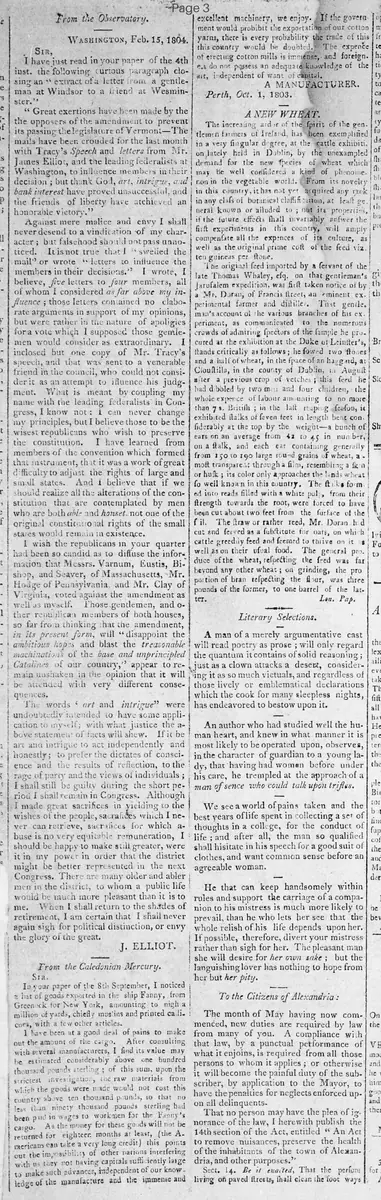
A manufacturer from Perth analyzes the export of cotton goods on the ship Fanny from Greenock to New York, estimating the cargo's value at over £100,000 with £90,000 in wages. He argues that prohibiting cotton yarn exports would double Britain's trade due to capital, machinery, and knowledge advantages over foreigners.
Clipping
OCR Quality
Full Text
SIR,
In your paper of the 5th September, I noticed a list of goods exported in the ship Fanny, from Greenock for New York, amounting to nigh a million of yards, chiefly muslins and printed calicoes, with a few other articles.
I have been at a good deal of pains to make out the amount of the cargo. After consulting with several manufacturers, I find its value may be estimated considerably above one hundred thousand pounds sterling; of this sum, upon the strictest investigation, the raw materials from which the goods were made would not cost this country above ten thousand pounds, so that no less than ninety thousand pounds sterling had been put in wages to workmen for the Fanny's cargo. As the money for these goods will not be returned for eighteen months at least, (the Americans can take a very long credit) this points out the impossibility of other nations interfering with us they not having capitals sufficiently large to make such advances, independent of our knowledge of the manufacture and the immense and excellent machinery, we enjoy. If the government would prohibit the exportation of our cotton yarns, there is every probability the trade of this country would be doubled. The expense of erecting cotton mills is immense, - and foreigners do not possess an adequate knowledge of the art, independent of want of capital.
A MANUFACTURER.
Perth, Oct. 1, 1803.
What sub-type of article is it?
What themes does it cover?
What keywords are associated?
What entities or persons were involved?
Letter to Editor Details
Author
A Manufacturer.
Recipient
Sir,
Main Argument
britain's cotton trade benefits from high labor value, long credit terms to america, superior machinery, and knowledge, making competition difficult; prohibiting cotton yarn exports would likely double the trade by preventing foreigners from establishing mills due to capital and expertise shortages.
Notable Details