Thank you for visiting SNEWPapers!
Sign up free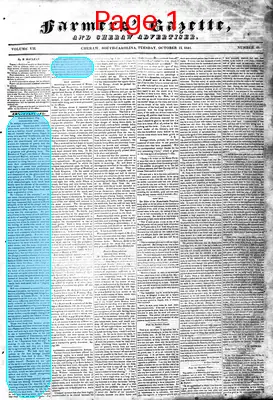
Story
October 11, 1842
Farmers' Gazette, And Cheraw Advertiser
Cheraw, Chesterfield County, South Carolina
What is this article about?
An essay contrasting the romanticized poetic depictions of rural life by city poets like Virgil and Horace with the harsh realities of farming, yet advocating for agriculture as a healthy, moral, and productive existence over urban decay, especially in troubled times.
Clipping
OCR Quality
98%
Excellent
Full Text
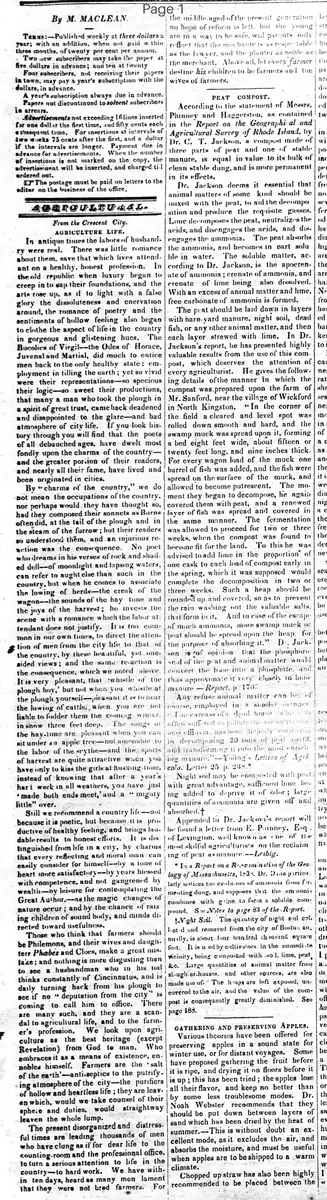
AGRICULTURAL.
From the Crescent City
AGRICULTURE LIFE.
In antique times the labors of husbandry were real. There was little romance about them, save that which lives attendant on a healthy, honest profession. In the old republic when luxury began to creep in to sap their foundations, and the arts rose up, as if to light with a false glory the dissoluteness and enervation around, the romance of poetry and the sentiments of hollow feeling also began to clothe the aspect of life in the country in gorgeous and glistening hues. The Bucolics of Virgil--the Odes of Horace, Juvenal and Martial, did much to entice men back to the only healthy state: employment in tilling the earth; yet so vivid were their representations--so specious their logic--so sweet their productions, that many a man who took the plough in a spirit of great trust, came back deadened and disappointed to the glare and bad atmosphere of city life. If you look history through you will find that the poets of all debauched ages, have dwelt most fondly upon the charms of the country-- and the greater portion of their readers, and nearly all their fame, have lived and been originated in cities.
By "charms of the country," we do not mean the occupations of the country, nor perhaps would they have thought so, had they composed their sonnets as Burns often did, at the tail of the plough and in the steam of the furrow; but their readers so understood them, and an injurious reaction was the consequence. No poet who dreams in his verses of rock and shaded dell--of moonlight and lapsing waters, can refer to aught else than such in the country, but when he comes to associate the lowing of herds--the creak of the wagon--the sounds of the hay tune and the joys of the harvest; he invests the scene with a romance which the labor attendant does not justify. It is too common in our own times, to direct the attention of men from the city life to that of the country, by these beautiful, yet one-sided views; and the same reaction is the consequence, which we noted above.
It is very pleasant, that whistle of the ploughboy, but not when you whistle at the plough yourself--pleasant it is to hear the lowing of cattle, when you are not liable to fodder them the coming winter, in snow three feet deep. The songs of the hay-time are pleasant when you can sit under an apple tree--not amenable to the labor of the scythe--and the sports of harvest are quite attractive when you have only to kiss the girls at husking-time, instead of knowing that after a year's hard work in all weathers, you have just made both ends meet, and a "mighty little" over.
Still we recommend a country life--not because it is poetic, but because it is productive of healthy feeling, and brings laudable results to honest efforts. It is distinguished from life in a city, by charms that every reflecting and moral man can easily consider for himself--by a tone of heart more satisfactory--by years blessed with competence, and not gangrened by wealth--by leisure for contemplating the Great Author, as the magic changes of nature occur; and by the chance of raising children of sound body, and minds directed toward usefulness.
Those who think that farmers should be Philemons, and their wives and daughters Phæbes and Cloes, make a great mistake; and nothing is more disgusting than to see a husbandman who in his toil thinks constantly of Cincinnatus, and is daily turning back from his plough to see if no "deputation from the city" is coming to call him to office. There are many such, and they are a scandal to agricultural life, and to the farmer's profession. We look upon agriculture as the best heritage (except Revelation) from God to man. Who embraces it as a means of existence, ennobles himself. Farmers are the salt of the earth--antiseptics to the putrifying atmosphere of the city--the purifiers of hollow and heartless life; they are leaven which, would we take counsel of their sphere and duties, would straightway leaven the whole lump.
The present disorganized and distressful times are leading thousands of men who have clung as if for dear life to the counting-room and the professional office, to turn a serious attention to life in the country--to hard work. We have within ten days, heard as many men lament that they were not bred farmers. For the middle aged of the present generation no hope of reform is left, but the young are in a way to be safe, will parents only reflect that the mechanic is as respectable as the lawyer, and the planter as noble as the merchant. Above all, let every farmer destine his children to be farmers and the wives of farmers.
From the Crescent City
AGRICULTURE LIFE.
In antique times the labors of husbandry were real. There was little romance about them, save that which lives attendant on a healthy, honest profession. In the old republic when luxury began to creep in to sap their foundations, and the arts rose up, as if to light with a false glory the dissoluteness and enervation around, the romance of poetry and the sentiments of hollow feeling also began to clothe the aspect of life in the country in gorgeous and glistening hues. The Bucolics of Virgil--the Odes of Horace, Juvenal and Martial, did much to entice men back to the only healthy state: employment in tilling the earth; yet so vivid were their representations--so specious their logic--so sweet their productions, that many a man who took the plough in a spirit of great trust, came back deadened and disappointed to the glare and bad atmosphere of city life. If you look history through you will find that the poets of all debauched ages, have dwelt most fondly upon the charms of the country-- and the greater portion of their readers, and nearly all their fame, have lived and been originated in cities.
By "charms of the country," we do not mean the occupations of the country, nor perhaps would they have thought so, had they composed their sonnets as Burns often did, at the tail of the plough and in the steam of the furrow; but their readers so understood them, and an injurious reaction was the consequence. No poet who dreams in his verses of rock and shaded dell--of moonlight and lapsing waters, can refer to aught else than such in the country, but when he comes to associate the lowing of herds--the creak of the wagon--the sounds of the hay tune and the joys of the harvest; he invests the scene with a romance which the labor attendant does not justify. It is too common in our own times, to direct the attention of men from the city life to that of the country, by these beautiful, yet one-sided views; and the same reaction is the consequence, which we noted above.
It is very pleasant, that whistle of the ploughboy, but not when you whistle at the plough yourself--pleasant it is to hear the lowing of cattle, when you are not liable to fodder them the coming winter, in snow three feet deep. The songs of the hay-time are pleasant when you can sit under an apple tree--not amenable to the labor of the scythe--and the sports of harvest are quite attractive when you have only to kiss the girls at husking-time, instead of knowing that after a year's hard work in all weathers, you have just made both ends meet, and a "mighty little" over.
Still we recommend a country life--not because it is poetic, but because it is productive of healthy feeling, and brings laudable results to honest efforts. It is distinguished from life in a city, by charms that every reflecting and moral man can easily consider for himself--by a tone of heart more satisfactory--by years blessed with competence, and not gangrened by wealth--by leisure for contemplating the Great Author, as the magic changes of nature occur; and by the chance of raising children of sound body, and minds directed toward usefulness.
Those who think that farmers should be Philemons, and their wives and daughters Phæbes and Cloes, make a great mistake; and nothing is more disgusting than to see a husbandman who in his toil thinks constantly of Cincinnatus, and is daily turning back from his plough to see if no "deputation from the city" is coming to call him to office. There are many such, and they are a scandal to agricultural life, and to the farmer's profession. We look upon agriculture as the best heritage (except Revelation) from God to man. Who embraces it as a means of existence, ennobles himself. Farmers are the salt of the earth--antiseptics to the putrifying atmosphere of the city--the purifiers of hollow and heartless life; they are leaven which, would we take counsel of their sphere and duties, would straightway leaven the whole lump.
The present disorganized and distressful times are leading thousands of men who have clung as if for dear life to the counting-room and the professional office, to turn a serious attention to life in the country--to hard work. We have within ten days, heard as many men lament that they were not bred farmers. For the middle aged of the present generation no hope of reform is left, but the young are in a way to be safe, will parents only reflect that the mechanic is as respectable as the lawyer, and the planter as noble as the merchant. Above all, let every farmer destine his children to be farmers and the wives of farmers.
What sub-type of article is it?
Agricultural Essay
Moral Reflection
What themes does it cover?
Moral Virtue
Family
Triumph
What keywords are associated?
Agricultural Life
Romanticism Vs Reality
Country Vs City
Moral Virtue
Family Upbringing
Honest Labor
What entities or persons were involved?
Virgil
Horace
Juvenal
Martial
Burns
Cincinnatus
Where did it happen?
Country
Story Details
Key Persons
Virgil
Horace
Juvenal
Martial
Burns
Cincinnatus
Location
Country
Event Date
Antique Times
Story Details
The essay critiques romanticized views of rural life by poets, highlighting the hard labor involved, yet praises agriculture for fostering health, morality, and useful family upbringing over urban corruption.