Thank you for visiting SNEWPapers!
Sign up free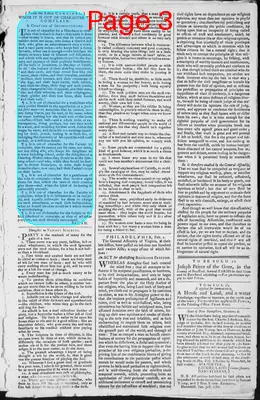
Literary
February 18, 1786
Fowle's New Hampshire Gazette And General Advertiser
Portsmouth, Rockingham County, New Hampshire
What is this article about?
Satirical essay from the Boston Centinel mocking merchants, tradesmen, farmers, lawyers, doctors, and others for complaining about scarce money and taxes while living extravagantly and indulging in luxuries.
Clipping
OCR Quality
95%
Excellent
Full Text
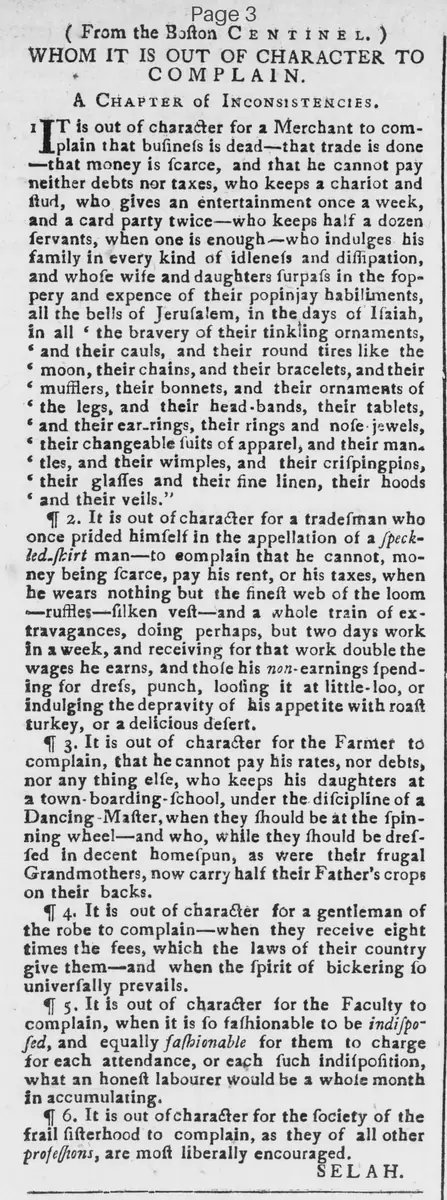
(From the Boston Centinel.)
WHOM IT IS OUT OF CHARACTER TO COMPLAIN.
A Chapter of Inconsistencies.
It is out of character for a Merchant to complain that business is dead—that trade is done—that money is scarce, and that he cannot pay neither debts nor taxes, who keeps a chariot and stud, who gives an entertainment once a week, and a card party twice—who keeps half a dozen servants, when one is enough—who indulges his family in every kind of idleness and dissipation, and whose wife and daughters surpass in the foppery and expense of their popinjay habiliments, all the bells of Jerusalem, in the days of Isaiah, in all the bravery of their tinkling ornaments, and their cauls, and their round tires like the moon, their chains, and their bracelets, and their mufflers, their bonnets, and their ornaments of the legs, and their head-bands, their tablets, and their ear-rings, their rings and nose jewels, their changeable suits of apparel, and their mantles, and their wimples, and their crisping pins, their glasses and their fine linen, their hoods and their veils."
2. It is out of character for a tradesman who once prided himself in the appellation of a speckled-shirt man—to complain that he cannot, money being scarce, pay his rent, or his taxes, when he wears nothing but the finest web of the loom, ruffles—silken vest and a whole train of extravagances, doing perhaps, but two days work in a week, and receiving for that work double the wages he earns, and those his non-earnings spending for dress, punch, loosing it at little-loo, or indulging the depravity of his appetite with roast turkey, or a delicious dessert.
3. It is out of character for the Farmer to complain, that he cannot pay his rates, nor debts, nor any thing else, who keeps his daughters at a town-boarding-school, under the discipline of a Dancing-Master, when they should be at the spinning wheel—and who, while they should be dressed in decent homespun, as were their frugal Grandmothers, now carry half their Father's crops on their backs.
4. It is out of character for a gentleman of the robe to complain—when they receive eight times the fees, which the laws of their country give them—and when the spirit of bickering so universally prevails.
5. It is out of character for the Faculty to complain, when it is so fashionable to be indisposed, and equally fashionable for them to charge for each attendance, or each such indisposition, what an honest labourer would be a whole month in accumulating.
6. It is out of character for the society of the frail sisterhood to complain, as they of all other professions, are most liberally encouraged.
SELAH.
WHOM IT IS OUT OF CHARACTER TO COMPLAIN.
A Chapter of Inconsistencies.
It is out of character for a Merchant to complain that business is dead—that trade is done—that money is scarce, and that he cannot pay neither debts nor taxes, who keeps a chariot and stud, who gives an entertainment once a week, and a card party twice—who keeps half a dozen servants, when one is enough—who indulges his family in every kind of idleness and dissipation, and whose wife and daughters surpass in the foppery and expense of their popinjay habiliments, all the bells of Jerusalem, in the days of Isaiah, in all the bravery of their tinkling ornaments, and their cauls, and their round tires like the moon, their chains, and their bracelets, and their mufflers, their bonnets, and their ornaments of the legs, and their head-bands, their tablets, and their ear-rings, their rings and nose jewels, their changeable suits of apparel, and their mantles, and their wimples, and their crisping pins, their glasses and their fine linen, their hoods and their veils."
2. It is out of character for a tradesman who once prided himself in the appellation of a speckled-shirt man—to complain that he cannot, money being scarce, pay his rent, or his taxes, when he wears nothing but the finest web of the loom, ruffles—silken vest and a whole train of extravagances, doing perhaps, but two days work in a week, and receiving for that work double the wages he earns, and those his non-earnings spending for dress, punch, loosing it at little-loo, or indulging the depravity of his appetite with roast turkey, or a delicious dessert.
3. It is out of character for the Farmer to complain, that he cannot pay his rates, nor debts, nor any thing else, who keeps his daughters at a town-boarding-school, under the discipline of a Dancing-Master, when they should be at the spinning wheel—and who, while they should be dressed in decent homespun, as were their frugal Grandmothers, now carry half their Father's crops on their backs.
4. It is out of character for a gentleman of the robe to complain—when they receive eight times the fees, which the laws of their country give them—and when the spirit of bickering so universally prevails.
5. It is out of character for the Faculty to complain, when it is so fashionable to be indisposed, and equally fashionable for them to charge for each attendance, or each such indisposition, what an honest labourer would be a whole month in accumulating.
6. It is out of character for the society of the frail sisterhood to complain, as they of all other professions, are most liberally encouraged.
SELAH.
What sub-type of article is it?
Satire
Essay
What themes does it cover?
Social Manners
Taxation Oppression
Commerce Trade
What keywords are associated?
Satire
Extravagance
Complaints
Taxes
Merchants
Tradesmen
Farmers
Luxury
What entities or persons were involved?
From The Boston Centinel.
Literary Details
Title
Whom It Is Out Of Character To Complain. A Chapter Of Inconsistencies.
Author
From The Boston Centinel.
Subject
Satire On Economic Complaints Amid Extravagance.
Form / Style
Satirical Essay In Numbered Paragraphs.
Key Lines
It Is Out Of Character For A Merchant To Complain That Business Is Dead—That Trade Is Done—That Money Is Scarce, And That He Cannot Pay Neither Debts Nor Taxes, Who Keeps A Chariot And Stud...
It Is Out Of Character For The Farmer To Complain, That He Cannot Pay His Rates, Nor Debts, Nor Any Thing Else, Who Keeps His Daughters At A Town Boarding School, Under The Discipline Of A Dancing Master...